
Pulp Fiction, 1865 · page 145 of 400
The Argosy — page 145: what you’re looking at
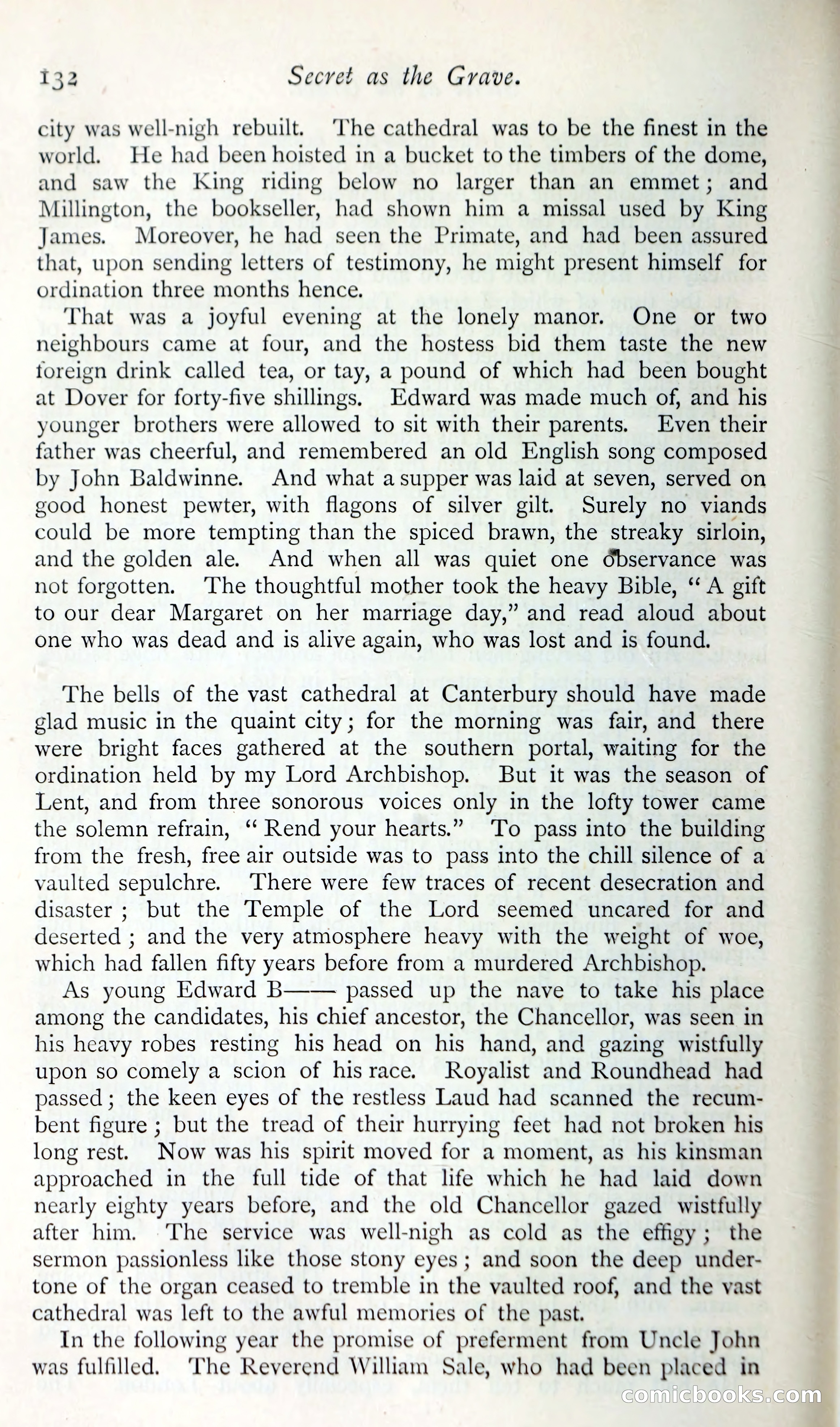
A restored page from Pulp Fiction, 1865. Page through the whole issue in the reader above.
📄 Transcribed text from this page (OCR, searchable)
Machine-transcribed from the original scan — historical spelling and the odd misread are preserved.
132 Secret as the Grave. city was well-nigh rebuilt. The cathedral was to be the finest in the world. He had been hoisted in a bucket to the timbers of the dome, and saw the King riding below no larger than an emmet; and Millington, the bookseller, had shown him a missal used by King James. Moreover, he had seen the Primate, and had been assured that, upon sending letters of testimony, he might present himself for ordination three months hence. That was a joyful evening at the lonely manor. One or two neighbours came at four, and the hostess bid them taste the new foreign drink called tea, or tay, a pound of which had been bought at Dover for forty-five shillings. Edward was made much of, and his younger brothers were allowed to sit with their parents. Even their father was cheerful, and remembered an old English song composed by John Baldwinne. And what asupper was laid at seven, served on good honest pewter, with flagons of silver gilt. Surely no viands could be more tempting than the spiced brawn, the streaky sirloin, and the golden ale. And when all was quiet one Observance was not forgotten. The thoughtful mother took the heavy Bible, ‘‘ A gift to our dear Margaret on her marriage day,” and read aloud about one who was dead and is alive again, who was lost and is found. The bells of the vast cathedral at Canterbury should have made glad music in the quaint city; for the morning was fair, and there were bright faces gathered at the southern portal, waiting for the ordination held by my Lord Archbishop. But it was the season of Lent, and from three sonorous voices only in the lofty tower came the solemn refrain, “‘ Rend your hearts.” To pass into the building from the fresh, free air outside was to pass into the chill silence of a vaulted sepulchre. ‘There were few traces of recent desecration and disaster; but the Temple of the Lord seemed uncared for and deserted ; and the very atmosphere heavy with the weight of woe, which had fallen fifty years before from a murdered Archbishop. As young Edward B—— passed up the nave to take his place among the candidates, his chief ancestor, the Chancellor, was seen in his heavy robes resting his head on his hand, and gazing wistfully upon so comely a scion of his race. Royalist and Roundhead had passed; the keen eyes of the restless Laud had scanned the recum- bent figure ; but the tread of their hurrying feet had not broken his long rest. Now was his spirit moved for a moment, as his kinsman approached in the full tide of that hfe which he had laid down nearly eighty years before, and the old Chancellor gazed wistfully after him. The service was well-nigh as cold as the effigy; the sermon passionless like those stony eyes; and soon the deep under- tone of the organ ceased to tremble in the vaulted roof, and the vast cathedral was left to the awful memories of the past. In the following year the promise of preferment from Uncle John was fulfilled. ‘The Reverend William Sale, who had been placed in EONNIE OOO KS (E(@)