
Pulp Fiction, 1865 · page 328 of 400
The Argosy — page 328: what you’re looking at
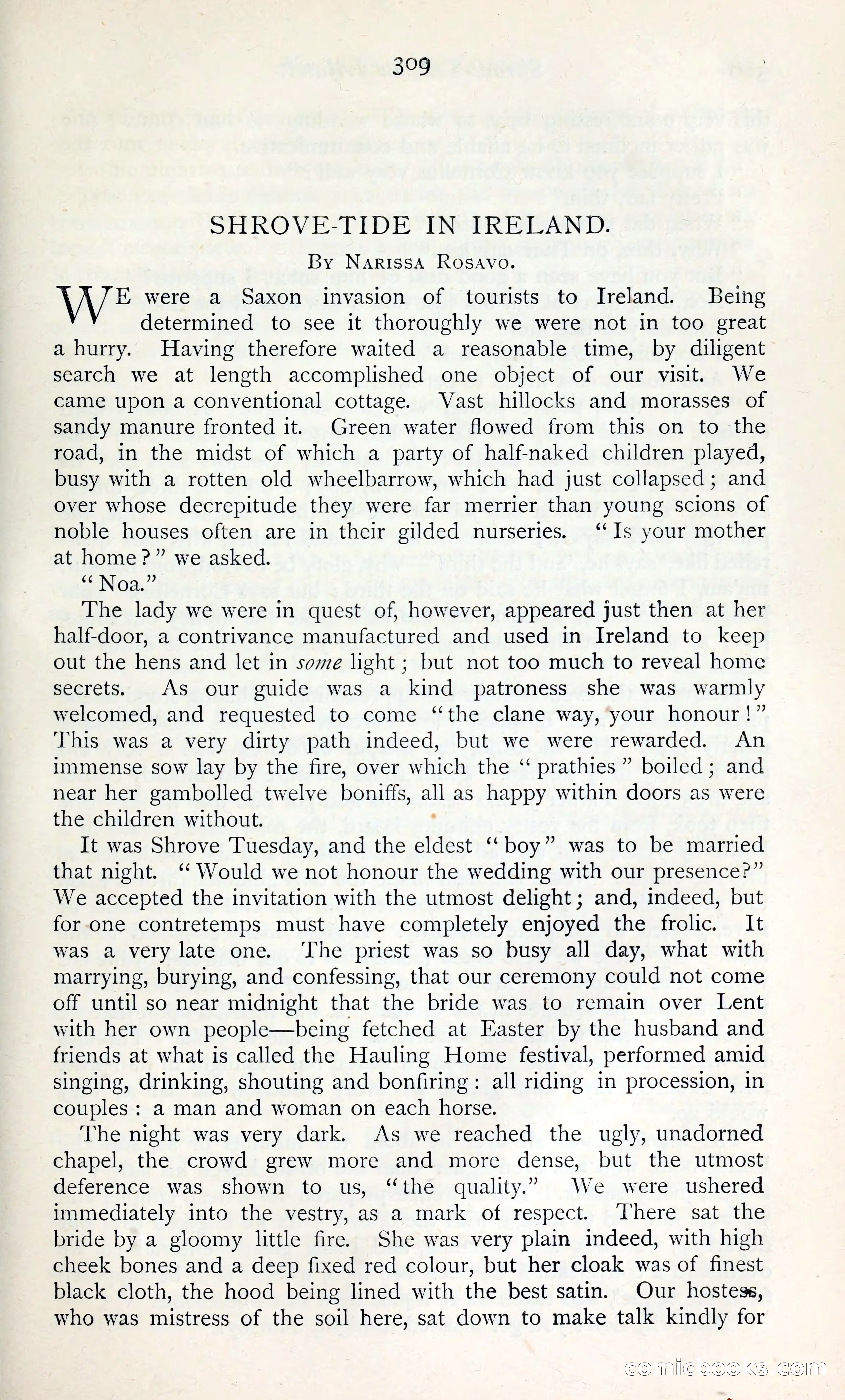
A restored page from Pulp Fiction, 1865. Page through the whole issue in the reader above.
📄 Transcribed text from this page (OCR, searchable)
Machine-transcribed from the original scan — historical spelling and the odd misread are preserved.
399 SHROVE-TIDE IN IRELAND. By Narissa Rosavo. E were a Saxon invasion of tourists to Ireland. Being determined to see it thoroughly we were not in too great a hurry. Having therefore waited a reasonable time, by diligent search we at length accomplished one object of our visit. We came upon a conventional cottage. Vast hillocks and morasses of sandy manure fronted it. Green water flowed from this on to the road, in the midst of which a party of half-naked children played, busy with a rotten old wheelbarrow, which had just collapsed; and over whose decrepitude they were far merrier than young scions of noble houses often are in their gilded nurseries. ‘‘Is your mother at home ?” we asked. ¢¢ Noa. ) The lady we were in quest of, however, appeared just then at her half-door, a contrivance manufactured and used in Ireland to keep out the hens and let in some light ; but not too much to reveal home secrets. As our guide was a kind patroness she was warmly welcomed, and requested to come ‘‘the clane way, your honour!” This was a very dirty path indeed, but we were rewarded. An immense sow lay by the fire, over which the “ prathies ” boiled; and near her gambolled twelve boniffs, = as happy within doors as were the children without. It was Shrove Tuesday, and the eldest ‘‘ boy” was to be married that night. ‘‘ Would we not honour the wedding with our presence?” We accepted the invitation with the utmost delight; and, indeed, but for one contretemps must have completely enjoyed the frolic. It was a very late one. The priest was so busy all day, what with marrying, burying, and confessing, that our ceremony could not come off until so near midnight that the bride was to remain over Lent with her own people—being fetched at Easter by the husband and friends at what is called the Hauling Home festival, performed amid singing, drinking, shouting and bonfiring: all riding in procession, in couples : a man and woman on each horse. The night was very dark. As we reached the ugly, unadorned chapel, the crowd grew more and more dense, but the utmost deference was shown to us, “the quality.” We were ushered immediately into the vestry, as a mark of respect. There sat the bride by a gloomy little fire. She was very plain indeed, with high cheek bones and a deep fixed red colour, but her cloak was of finest black cloth, the hood being lined with the best satin. Our hostess, who was mistress of the soil here, sat down to make talk kindly for CoOnniclooolkks (C(O) ~~.