
Pulp Fiction, 1865 · page 303 of 400
The Argosy — page 303: what you’re looking at
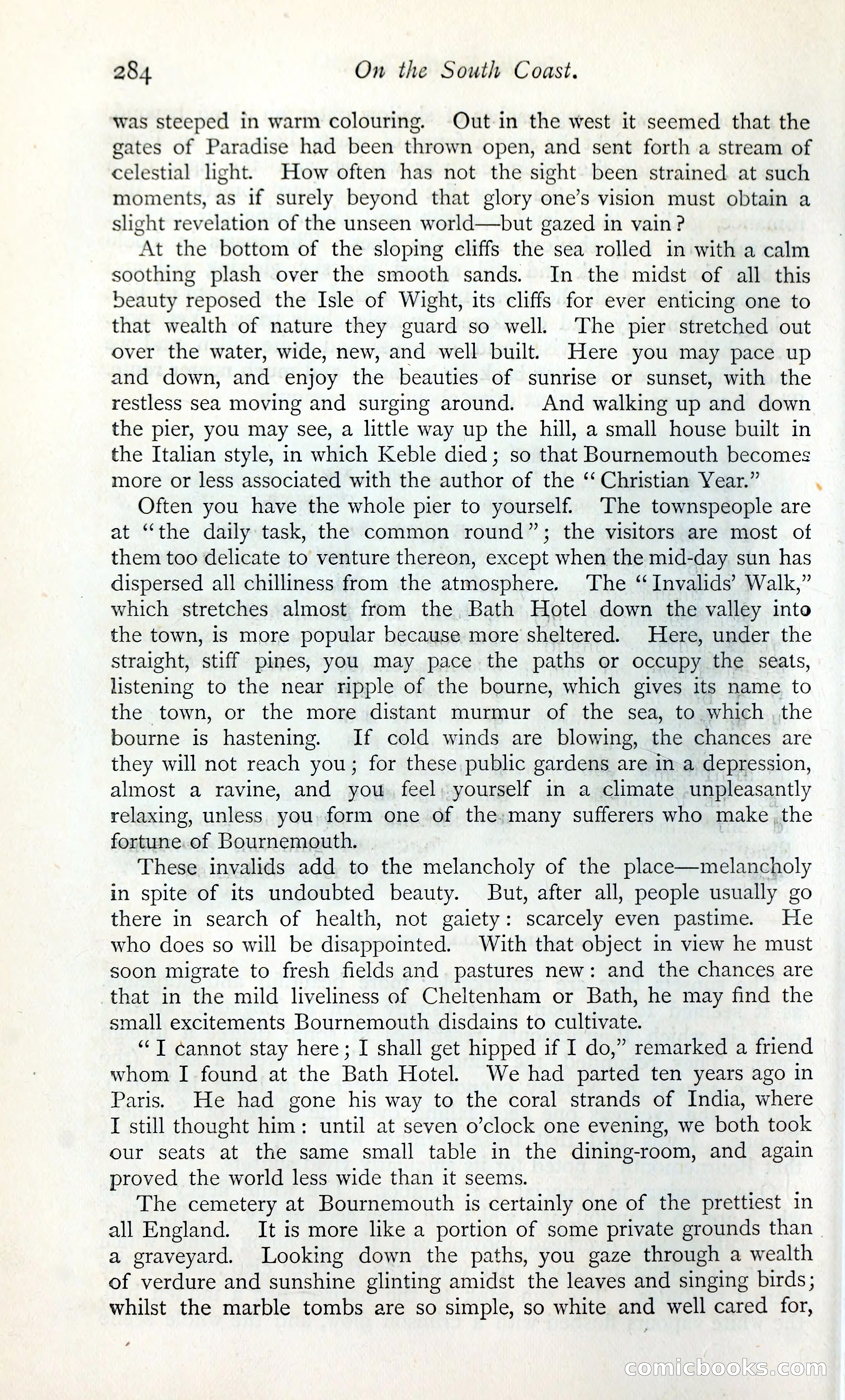
A restored page from Pulp Fiction, 1865. Page through the whole issue in the reader above.
📄 Transcribed text from this page (OCR, searchable)
Machine-transcribed from the original scan — historical spelling and the odd misread are preserved.
284 On the South Coast. was steeped in warm colouring. Out in the west it seemed that the gates of Paradise had been thrown open, and sent forth a stream of celestial light. How often has not the sight been strained at such moments, as 1f surely beyond that glory one’s vision must obtain a slight revelation of the unseen world—but gazed in vain? At the bottom of the sloping cliffs the sea rolled in with a calm soothing plash over the smooth sands. In the midst of all this beauty reposed the Isle of Wight, its cliffs for ever enticing one to that wealth of nature they guard so well. ‘The pier stretched out over the water, wide, new, and well built. Here you may pace up and down, and enjoy the beauties of sunrise or sunset, with the restless sea moving and surging around. And walking up and down the pier, you may see, a little way up the hill, a small house built in the Italian style, in which Keble died; so that Bournemouth becomes more or less associated with the author of the ‘‘ Christian Year.” : Often you have the whole pier to yourself. The townspeople are at “the daily task, the common round”; the visitors are most of them too delicate to venture thereon, except when the mid-day sun has dispersed all chilliness from the atmosphere. The “ Invalids’ Walk,” which stretches almost from the Bath Hotel down the valley into the town, is more popular because more sheltered. Here, under the straight, stiff pines, you may pace the paths or occupy the seats, listening to the near ripple of the bourne, which gives its name to the town, or the more distant murmur of the sea, to which , the bourne is hastening. If cold winds are blowing, the chances are they will not reach you; for these public gardens are in a depression, almost a ravine, and you feel. yourself in a climate unpleasantly relaxing, unless you form one of the;many sufferers who make ,the fortune. of Bournemouth. | These invalids add to the melancholy of the place—melancholy in spite of its undoubted beauty. But, after all, people usually go there in search of health, not gaiety: scarcely even pastime. He who does so will be disappointed. With that object in view he must soon migrate to fresh fields and pastures new: and the chances are that in the mild liveliness of Cheltenham or Bath, he may find the small excitements Bournemouth disdains to cultivate. ‘JT cannot stay here; I shall get hipped if I do,” remarked a friend whom I found at the Bath Hotel. We had parted ten years ago in Paris. He had gone his way to the coral strands of India, where I still thought him: until at seven o’clock one evening, we both took our seats at the same small table in the dining-room, and again proved the world less wide than it seems. The cemetery at Bournemouth is certainly one of the prettiest in all England. It is more like a portion of some private grounds than | a graveyard. Looking down the paths, you gaze through a wealth of verdure and sunshine glinting amidst the leaves and singing birds; whilst the marble tombs are so simple, so white and well cared for, ECONNIECOOOKS. Com