
Pulp Fiction, 1865 · page 142 of 400
The Argosy — page 142: what you’re looking at
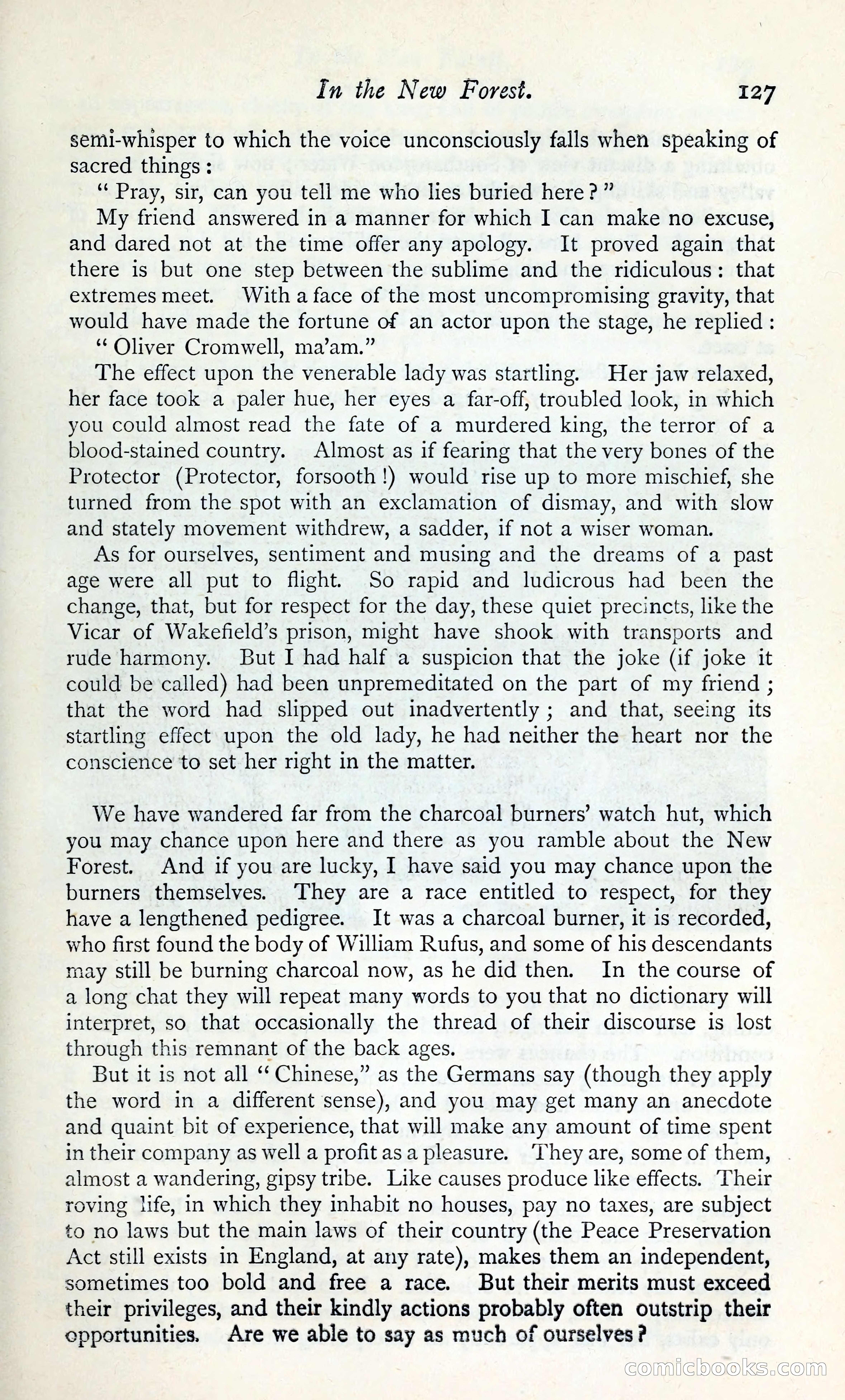
A restored page from Pulp Fiction, 1865. Page through the whole issue in the reader above.
📄 Transcribed text from this page (OCR, searchable)
Machine-transcribed from the original scan — historical spelling and the odd misread are preserved.
In the New Forest. 127 semi-whisper to which the voice unconsciously falls when speaking of sacred things: ‘“‘ Pray, sir, can you tell me who lies buried here?” My friend answered in a manner for which I can make no excuse, and dared not at the time offer any apology. It proved again that there is but one step between the sublime and the ridiculous: that extremes meet. With a face of the most uncompromising gravity, that would have made the fortune of an actor upon the stage, he replied : ‘ Oliver Cromwell, ma’am.” The effect upon the venerable lady was startling. Her jaw relaxed, her face took a paler hue, her eyes a far-off, troubled look, in which you could almost read the fate of a murdered king, the terror of a blood-stained country. Almost as if fearing that the very bones of the Protector (Protector, forsooth!) would rise up to more mischief, she turned from the spot with an exclamation of dismay, and with slow and stately movement withdrew, a sadder, if not a wiser woman. As for ourselves, sentiment and musing and the dreams of a past age were all put to flight. So rapid and ludicrous had been the change, that, but for respect for the day, these quiet precincts, like the Vicar of Wakefield’s prison, might have shook with transports and rude harmony. But I had half a suspicion that the joke (if joke it could be called) had been unpremeditated on the part of my friend ; that the word had slipped out inadvertently ; and that, seeing its startling effect upon the old lady, he had neither the heart nor the conscience to set her right in the matter. We have wandered far from the charcoal burners’ watch hut, which you may chance upon here and there as you ramble about the New Forest. And if you are lucky, I have said you may chance upon the burners themselves. They are a race entitled to respect, for they have a lengthened pedigree. It was a charcoal burner, it is recorded, who first found the body of William Rufus, and some of his descendants may still be burning charcoal now, as he did then. In the course of a long chat they will repeat many words to you that no dictionary will interpret, so that occasionally the thread of their discourse is lost through this remnant of the back ages. But it is not all “‘ Chinese,” as the Germans say (though they apply the word in a different sense), and you may get many an anecdote and quaint bit of experience, that will make any amount of time spent in their company as well a profitasa pleasure. ‘They are, some of them, almost a wandering, gipsy tribe. Like causes produce like effects. Their roving life, in which they inhabit no houses, pay no taxes, are subject to no laws but the main laws of their country (the Peace Preservation Act still exists in England, at any rate), makes them an independent, sometimes too bold and free a race. JBut their merits must exceed their privileges, and their kindly actions probably often outstrip their opportunities, Are we able to say as much of ourselves? conniclooolks (C(O)