
Pulp Fiction, 1865 · page 140 of 400
The Argosy — page 140: what you’re looking at
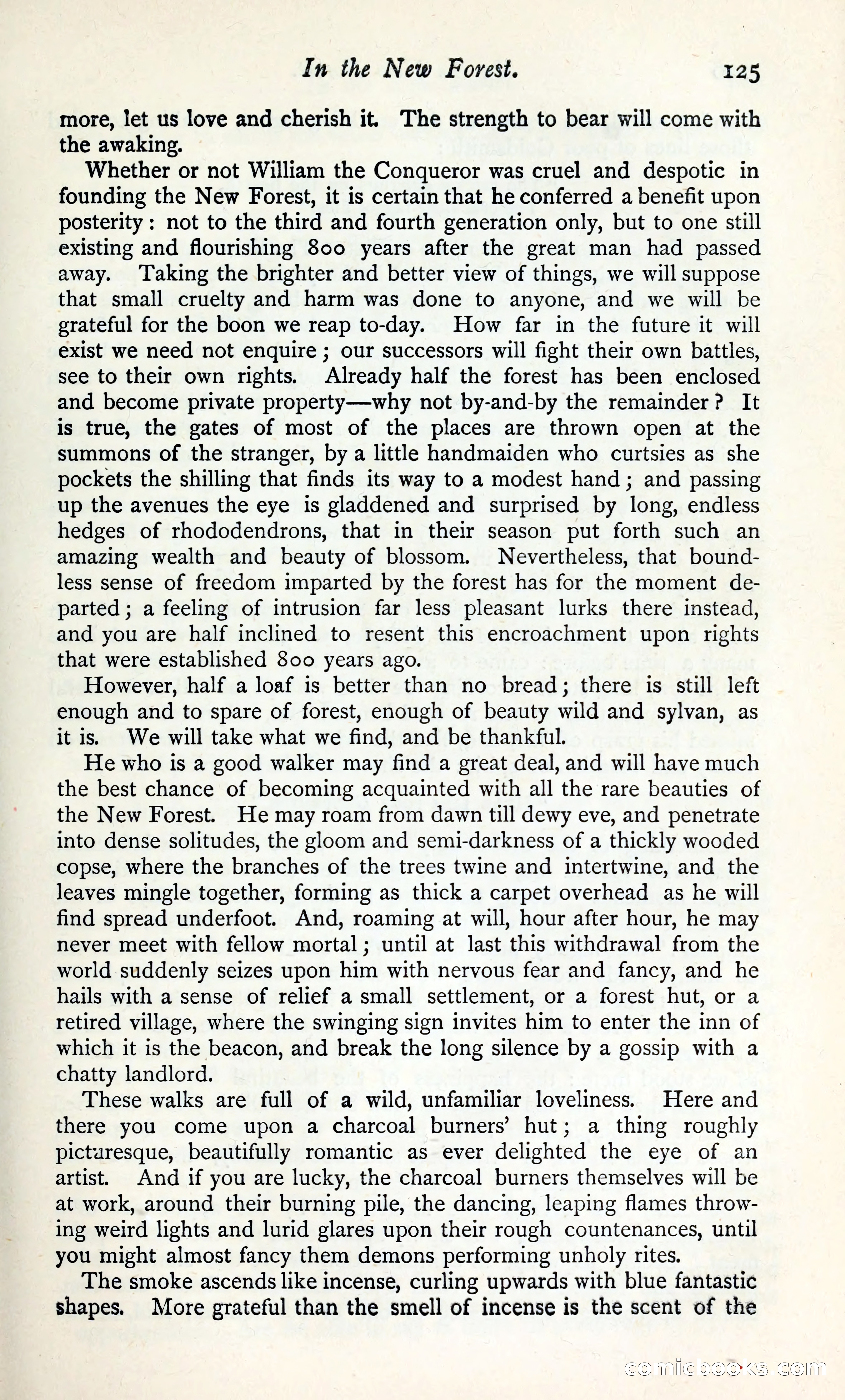
A restored page from Pulp Fiction, 1865. Page through the whole issue in the reader above.
📄 Transcribed text from this page (OCR, searchable)
Machine-transcribed from the original scan — historical spelling and the odd misread are preserved.
In the New Forest. 125 more, let us love and cherish it. The strength to bear will come with the awaking. Whether or not William the Conqueror was cruel and despotic in founding the New Forest, it is certain that he conferred a benefit upon posterity : not to the third and fourth generation only, but to one still existing and flourishing 800 years after the great man had passed away. ‘Taking the brighter and better view of things, we will suppose that small cruelty and harm was done to anyone, and we will be grateful for the boon we reap to-day. How far in the future it will exist we need not enquire ; our successors will fight their own battles, see to their own rights. Already half the forest has been enclosed and become private property—why not by-and-by the remainder? It is true, the gates of most of the places are thrown open at the summons of the stranger, by a little handmaiden who curtsies as she pockets the shilling that finds its way to a modest hand; and passing up the avenues the eye is gladdened and surprised by long, endless hedges of rhododendrons, that in their season put forth such an amazing wealth and beauty of blossom. Nevertheless, that bound- less sense of freedom imparted by the forest has for the moment de- parted ; a feeling of intrusion far less pleasant lurks there instead, and you are half inclined to resent this encroachment upon rights that were established 800 years ago. However, half a loaf is better than no bread; there is still left enough and to spare of forest, enough of beauty wild and sylvan, as itis. We will take what we find, and be thankful. He who 1s a good walker may find a great deal, and will have much the best chance of becoming acquainted with all the rare beauties of the New Forest. He may roam from dawn till dewy eve, and penetrate into dense solitudes, the gloom and semi-darkness of a thickly wooded copse, where the branches of the trees twine and intertwine, and the leaves mingle together, forming as thick a carpet overhead as he will find spread underfoot. And, roaming at will, hour after hour, he may never meet with fellow mortal; until at last this withdrawal from the world suddenly seizes upon him with nervous fear and fancy, and he hails with a sense of relief a small settlement, or a forest hut, or a retired village, where the swinging sign invites him to enter the inn of which it is the beacon, and break the long silence by a gossip with a chatty landlord. These walks are full of a wild, unfamiliar loveliness. Here and there you come upon a charcoal burners’ hut; a thing roughly picturesque, beautifully romantic as ever delighted the eye of an artist. And if you are lucky, the charcoal burners themselves will be at work, around their burning pile, the dancing, leaping flames throw- ing weird lights and lurid glares upon their rough countenances, until you might almost fancy them demons performing unholy rites. The smoke ascends like incense, curling upwards with blue fantastic shapes. More grateful than the smell of incense is the scent of the CoOnnicloooks (C(O)