
Pulp Fiction, 1865 · page 168 of 400
The Argosy — page 168: what you’re looking at
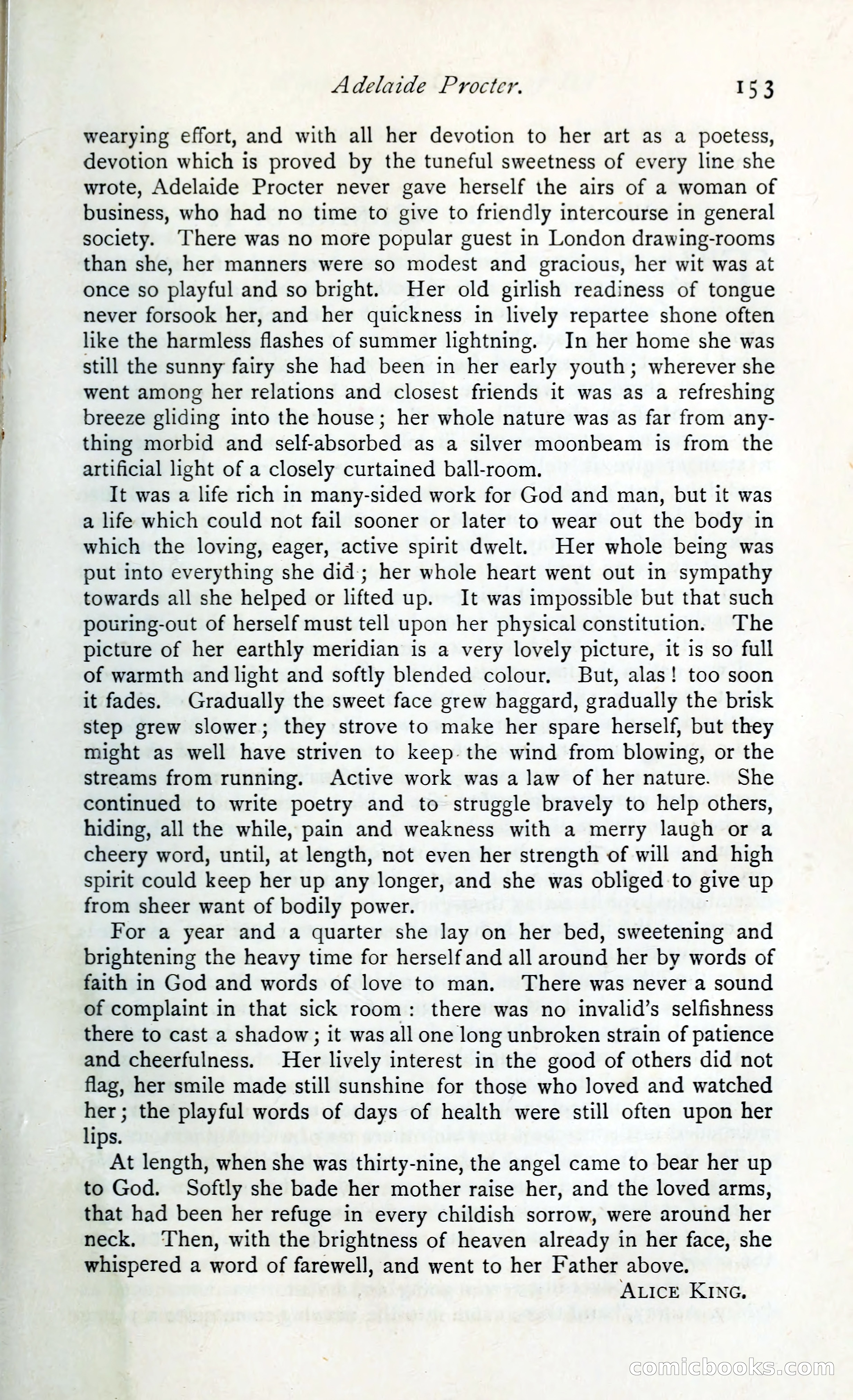
A restored page from Pulp Fiction, 1865. Page through the whole issue in the reader above.
📄 Transcribed text from this page (OCR, searchable)
Machine-transcribed from the original scan — historical spelling and the odd misread are preserved.
Adelaide Procter. 153 wearying effort, and with all her devotion to her art as a poetess, devotion which is proved by the tuneful sweetness of every line she wrote, Adelaide Procter never gave herself the airs of a woman of business, who had no time to give to friendly intercourse in general society. ‘There was no more popular guest in London drawing-rooms than she, her manners were so modest and gracious, her wit was at once so playful and so bright. Her old girlish readiness of tongue never forsook her, and her quickness in lively repartee shone often like the harmless flashes of summer lightning. In her home she was still the sunny fairy she had been in her early youth; wherever she went among her relations and closest friends it was as a refreshing breeze gliding into the house; her whole nature was as far from any- thing morbid and self-absorbed as a silver moonbeam is from the artificial light of a closely curtained ball-room. It was a life rich in many-sided work for God and man, but it was a life which could not fail sooner or later to wear out the body in which the loving, eager, active spirit dwelt. Her whole being was put into everything she did-; her whole heart went out in sympathy towards all she helped or lifted up. It was impossible but that such pouring-out of herself must tell upon her physical constitution. The picture of her earthly meridian is a very lovely picture, it is so full of warmth and light and softly blended colour. But, alas! too soon it fades. Gradually the sweet face grew haggard, gradually the brisk step grew slower; they strove to make her spare herself, but they might as well have striven to keep. the wind from blowing, or the streams from running. Active work was a law of her nature. She continued to write poetry and to struggle bravely to help others, hiding, all the while, pain and weakness with a merry laugh or a cheery word, until, at length, not even her strength of will and high spirit could keep her up any longer, and she was obliged to give up from sheer want of bodily power. For a year and a quarter she lay on her bed, sweetening and brightening the heavy time for herself and all around her by words of faith in God and words of love to man. There was never a sound of complaint in that sick room: there was no invalid’s selfishness there to cast a shadow; it was all one long unbroken strain of patience and cheerfulness. Her lively interest in the good of others did not flag, her smile made still sunshine for those who loved and watched her; the playful words of days of health were still often upon her lips. ) At length, when she was thirty-nine, the angel came to bear her up to God. Softly she bade her mother raise her, and the loved arms, that had been her refuge in every childish sorrow, were around her neck. ‘Then, with the brightness of heaven already in her face, she whispered a word of farewell, and went to her Father above. ALICE KING, CoOnniclooolkks (CO) am 3)