
Pulp Fiction, 1865 · page 165 of 400
The Argosy — page 165: what you’re looking at
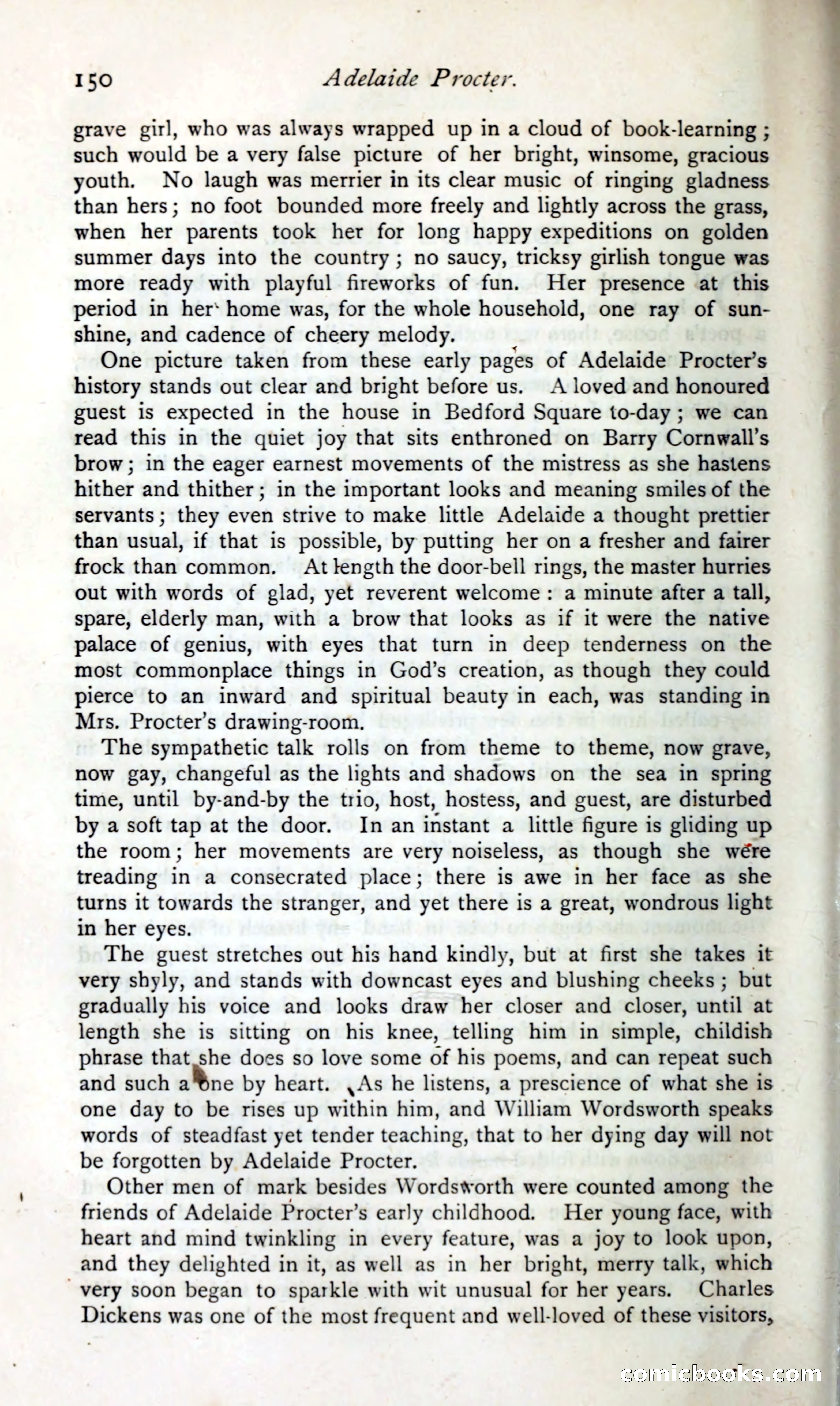
A restored page from Pulp Fiction, 1865. Page through the whole issue in the reader above.
📄 Transcribed text from this page (OCR, searchable)
Machine-transcribed from the original scan — historical spelling and the odd misread are preserved.
I50 Adelaide Procter. grave girl, who was always wrapped up in a cloud of book-learning ; such would be a very false picture of her bright, winsome, gracious youth. No laugh was merrier in its clear music of ringing gladness than hers; no foot bounded more freely and lightly across the grass, when her parents took her for long happy expeditions on golden summer days into the country; no saucy, tricksy girlish tongue was more ready with playful fireworks of fun. Her presence at this period in her‘ home was, for the whole household, one ray of sun- shine, and cadence of cheery melody. One picture taken from these early pages of Adelaide Procter’s history stands out clear and bright before us. A loved and honoured guest is expected in the house in Bedford Square to-day ; we can read this in the quiet joy that sits enthroned on Barry Cornwall’s brow; in the eager earnest movements of the mistress as she hastens hither and thither; in the important looks and meaning smiles of the servants ; they even strive to make little Adelaide a thought prettier than usual, if that is possible, by putting her on a fresher and fairer frock than common. At tength the door-bell rings, the master hurries out with words of glad, yet reverent welcome: a minute after a tall, spare, elderly man, with a brow that looks as if it were the native palace of genius, with eyes that turn in deep tenderness on the most commonplace things in God’s creation, as though they could pierce to an inward and spiritual beauty in each, was standing in Mrs. Procter’s drawing-room. The sympathetic talk rolls on from theme to theme, now grave, now gay, changeful as the lights and shadows on the sea in spring time, until by-and-by the trio, host, hostess, and guest, are disturbed by a soft tap at the door. In an instant a little figure is gliding up the room; her movements are very noiseless, as though she wére treading in a consecrated place; there is awe in her face as she turns it towards the stranger, and yet there is a great, wondrous light in her eyes. The guest stretches out his hand kindly, but at first she takes it very shyly, and stands with downcast eyes and blushing cheeks ; but . gradually his voice and looks draw her closer and closer, until at : length she is sitting on his knee, telling him in simple, childish phrase that.she does so love some of his poems, and can repeat such and such a’®ne by heart. ,As he listens, a prescience of what she is one day to be rises up within him, and William Wordsworth speaks words of steadfast yet tender teaching, that to her dying day will not be forgotten by Adelaide Procter. Other men of mark besides Wordsworth were counted among the friends of Adelaide Procter’s early childhood. Her young face, with heart and mind twinkling in every feature, was a joy to look upon, | and they delighted in it, as well as in her bright, merry talk, which -very soon began to sparkle with wit unusual for her years. Charles } Dickens was one of the most frequent and well-loved of these visitors, Gomichbooks.;com