
Pulp Fiction, 1875 · page 382 of 400
The Argosy — page 382: what you’re looking at
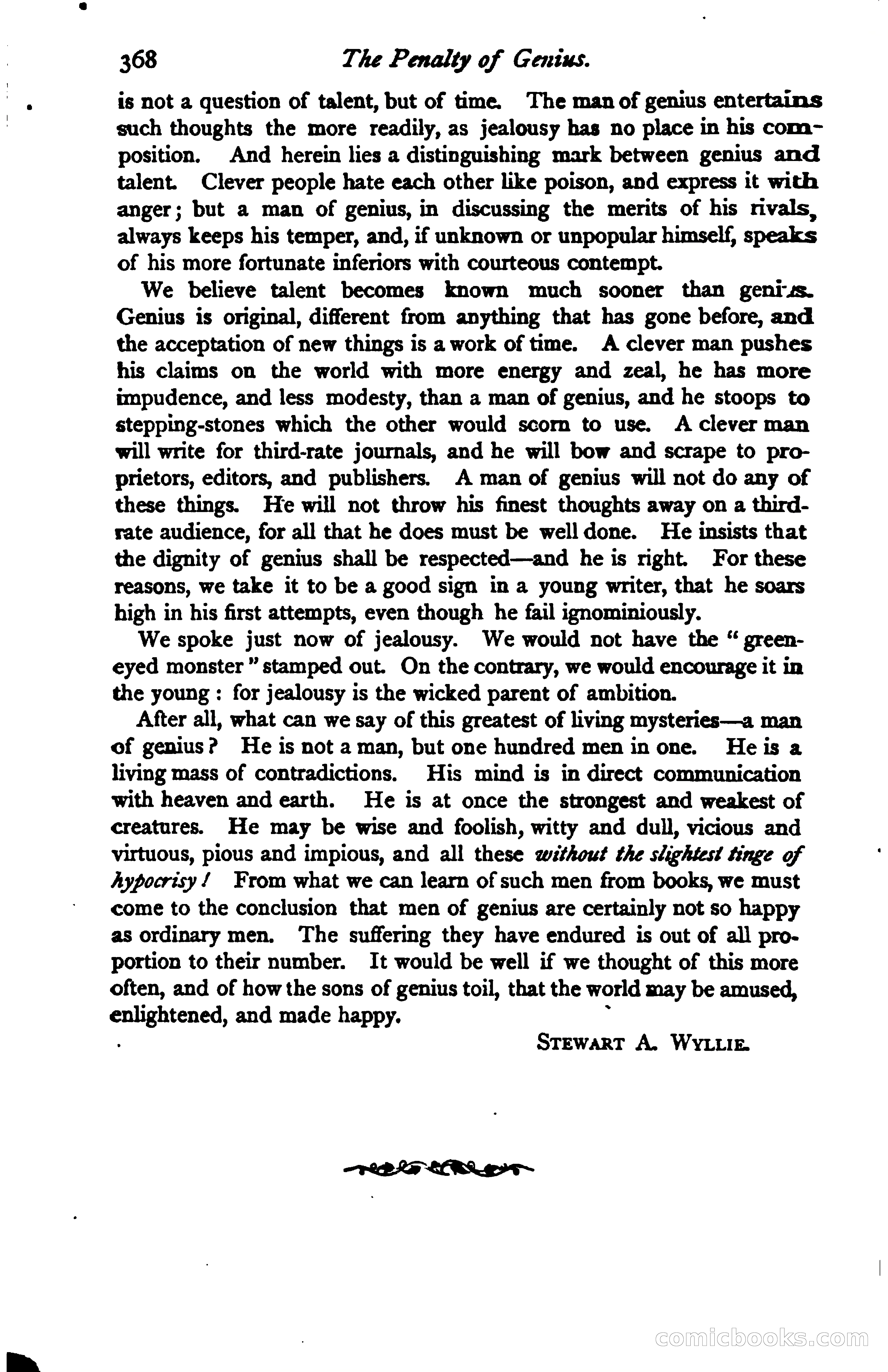
A restored page from Pulp Fiction, 1875. Page through the whole issue in the reader above.
📄 Transcribed text from this page (OCR, searchable)
Machine-transcribed from the original scan — historical spelling and the odd misread are preserved.
368 The Penalty of Genius. is not a question of talent, but of time. The man of genius entertains such thoughts the more readily, as jealousy has no place in his com- position. And herein lies a distinguishing mark between genius and talent. Clever people hate each other like poison, and express it with anger; but a man of genius, in discussing the merits of his rivals, always keeps his temper, and, if unknown or unpopular himself, speaks of his more fortunate inferiors with courteous contempt. We believe talent becomes known much sooner than genrss. Genius is original, different from anything that has gone before, and the acceptation of new things is a work of time. A clever man pushes his claims on the world with more energy and zeal, he has more impudence, and less modesty, than a man of genius, and he stoops to stepping-stones which the other would scorn to use. A clever man will write for third-rate journals, and he will bow and scrape to pro- prietors, editors, and publishers. A man of genius will not do any of these things. He will not throw his finest thoughts away on a third- rate audience, for all that he does must be well done. He insists that the dignity of genius shall be respected—and he is right. For these reasons, we take it to be a good sign in a young writer, that he soars high in his first attempts, even though he fail ignominiously. We spoke just now of jealousy. We would not have the “ green- eyed monster ” stamped out. On the contrary, we would encourage it in the young : for jealousy is the wicked parent of ambition. After all, what can we say of this greatest of living mysteries—a man of genius? He is not a man, but one hundred men inone. Heis a living mass of contradictions. His mind is in direct communication with heaven and earth. He is at once the strongest and weakest of creatures. He may be wise and foolish, witty and dull, vicious and virtuous, pious and impious, and all these without the slightest tinge of hypocrisy! From what we can learn of such men from books, we must come to the conclusion that men of genius are certainly not so happy as ordinary men. The suffering they have endured is out of all pro- portion to their number. It would be well if we thought of this more often, and of how the sons of genius toil, that the world may be amused, enlightened, and made happy. STEWART A. WYLLIE. CORnniclooolkks (CO)