
Pulp Fiction, 1875 · page 381 of 400
The Argosy — page 381: what you’re looking at
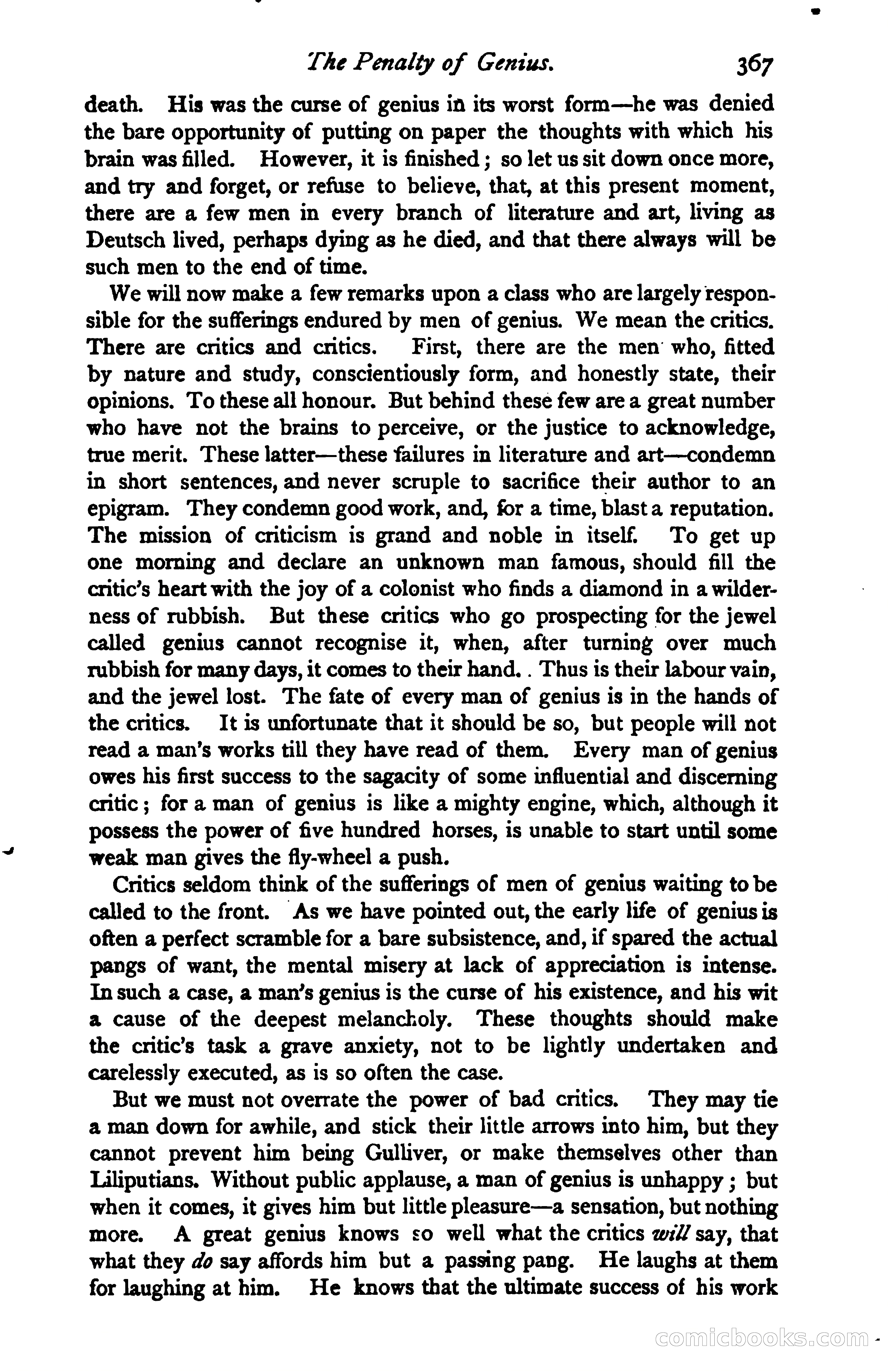
A restored page from Pulp Fiction, 1875. Page through the whole issue in the reader above.
📄 Transcribed text from this page (OCR, searchable)
Machine-transcribed from the original scan — historical spelling and the odd misread are preserved.
Lhe Penalty of Genius. 367 death. His was the curse of genius in its worst form—he was denied the bare opportunity of putting on paper the thoughts with which his brain was filled. However, it is finished ; so let us sit down once more, and try and forget, or refuse to believe, that, at this present moment, there are a few men in every branch of literature and art, living as Deutsch lived, perhaps dying as he died, and that there always will be such men to the end of time. We will now make a few remarks upon a class who are largely respon- sible for the sufferings endured by men of genius. We mean the critics. There are critics and cniics. First, there are the men who, fitted by nature and study, conscientiously form, and honestly state, their opinions. To these all honour. But behind these few are a great number who have not the brains to perceive, or the justice to acknowledge, true merit. These latter—these failures in literature and art—condemn in short sentences, and never scruple to sacrifice their author to an epigram. They condemn good work, and, for a time, blast a reputation. The mission of criticism is grand and noble in itself. To get up one morning and declare an unknown man famous, should fill the critic’s heart with the joy of a colonmist who finds a diamond in a wilder- ness of rubbish. But these critics who go prospecting for the jewel called genius cannot recognise it, when, after turning over much rubbish for many days, it comes to their hand. . Thus is their labour vain, and the jewel lost. The fate of every man of genius is in the hands of the critics. It 1s unfortunate that it should be so, but people will not read a man’s works till they have read of them. Every man of genius owes his first success to the sagacity of some influential and discerning critic; fora man of genius is like a mighty engine, which, although it possess the power of five hundred horses, is unable to start until some weak man gives the fly-wheel a push. Critics seldom think of the sufferings of men of genius waiting to be called to the front. As we have pointed out, the early life of genius is often a perfect scramble for a bare subsistence, and, if spared the actual pangs of want, the mental misery at lack of appreciation is intense. In such a case, a man’s genius is the curse of his existence, and his wit a cause of the deepest melancholy. These thoughts should make the critic’s task a grave anxiety, not to be lightly undertaken and carelessly executed, as 1s so often the case. But we must not overrate the power of bad critics. They may tie a man down for awhile, and stick their little arrows into him, but they cannot prevent him being Gulliver, or make themselves other than Liliputians. Without public applause, a man of genius is unhappy ; but when it comes, it gives him but little pleasure—a sensation, but nothing more. <A great genius knows so well what the critics wi say, that what they do say affords him but a passing pang. He laughs at them for laughing at him. He knows that the ultimate success of his work GONMGIOO SS (CO)