
Pulp Fiction, 1875 · page 383 of 400
The Argosy — page 383: what you’re looking at
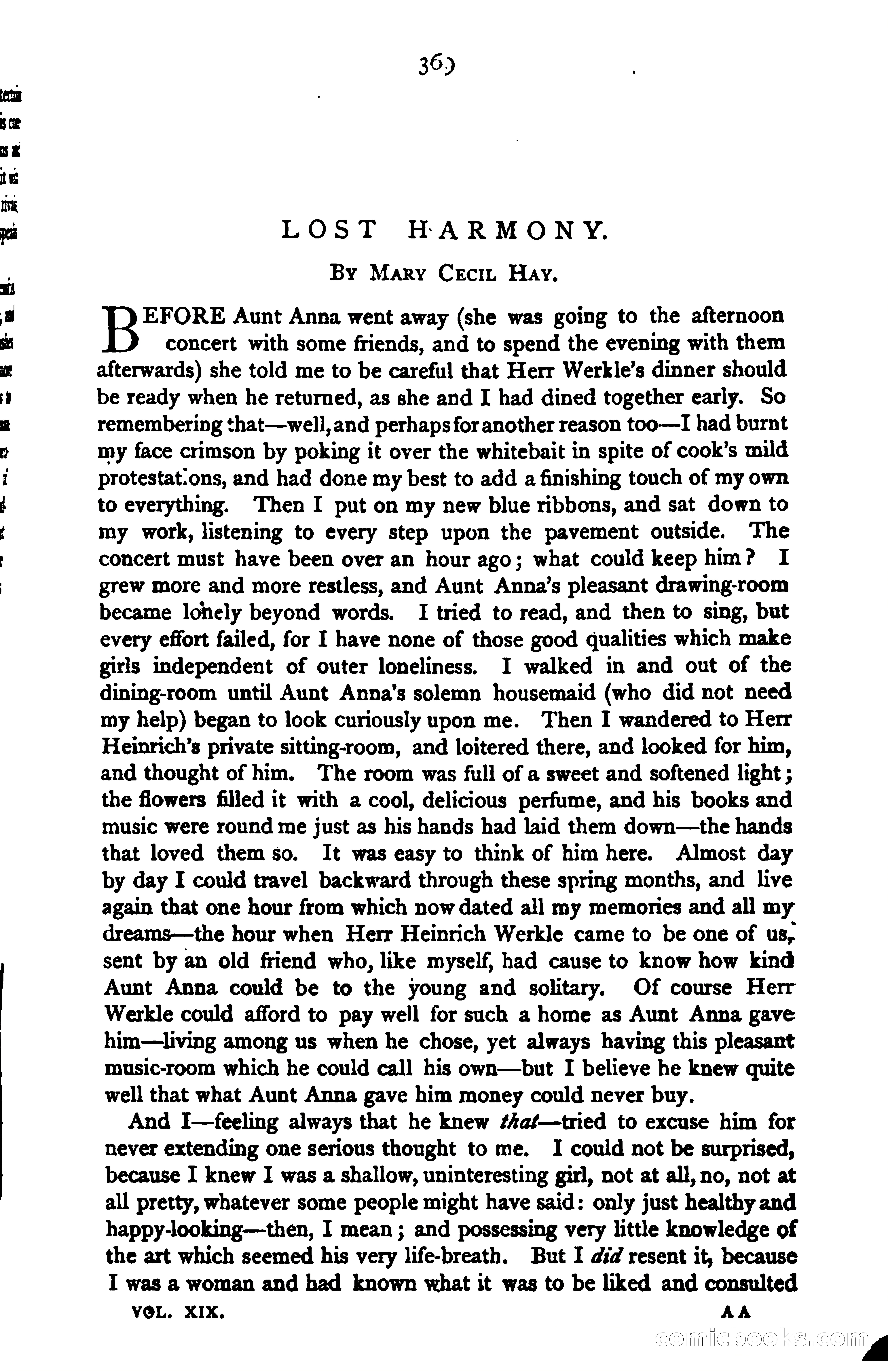
A restored page from Pulp Fiction, 1875. Page through the whole issue in the reader above.
📄 Transcribed text from this page (OCR, searchable)
Machine-transcribed from the original scan — historical spelling and the odd misread are preserved.
B- 2 mom w B. ma oS ge &- rns mee — aes a | LOST HARMONY. By Mary Cecit Hay. EFORE Aunt Anna went away (she was going to the afternoon concert with some friends, and to spend the evening with them afterwards) she told me to be careful that Herr Werkle’s dinner should be ready when he returned, as she and J had dined together early. So remembering that—well, and perhaps foranother reason too—I had burnt my face crimson by poking it over the whitebait in spite of cook’s mild protestat.ons, and had done my best to add a finishing touch of my own to everything. Then I put on my new blue ribbons, and sat down to my work, listening to every step upon the pavement outside. The concert must have been over an hour ago; what could keep him? I grew more and more restless, and Aunt Anna’s pleasant drawing-room became lonely beyond words. I tried to read, and then to sing, but every effort failed, for I have none of those good qualities which make girls independent of outer loneliness. I walked in and out of the dining-room until Aunt Anna’s solemn housemaid (who did not need my help) began to look curiously upon me. Then I wandered to Herr Heinrich’s private sitting-room, and loitered there, and looked for him, and thought of him. The room was full of a sweet and softened light ; the flowers filled it with a cool, delicious perfume, and his books and music were round me just as his hands had laid them down—the hands that loved them so. It was easy to think of him here. Almost day by day I could travel backward through these spring months, and live again that one hour from which now dated all my memories and all my dreams—the hour when Herr Heinrich Werkle came to be one of us, sent by an old friend who, like myself, had cause to know how kind Aunt Anna could be to the young and solitary. Of course Herr Werkle could afford to pay well for such a home as Aunt Anna gave him—living among us when he chose, yet always having this pleasant music-room which he could call his own—but I believe he knew quite well that what Aunt Anna gave him money could never buy. And I—feeling always that he knew ¢4af—tried to excuse him for never extending one serious thought to me. I could not be surprised, because I knew I was a shallow, uninteresting girl, not at all, no, not at all pretty, whatever some people might have said: only just healthy and happy-looking—then, I mean ; and possessing very little knowledge of the art which seemed his very life-breath. But I asd resent it, because I was a woman and had known what it was to be liked and consulted VOL. XIX. AA CORnniclooolkks