
Pulp Fiction, 1875 · page 218 of 400
The Argosy — page 218: what you’re looking at
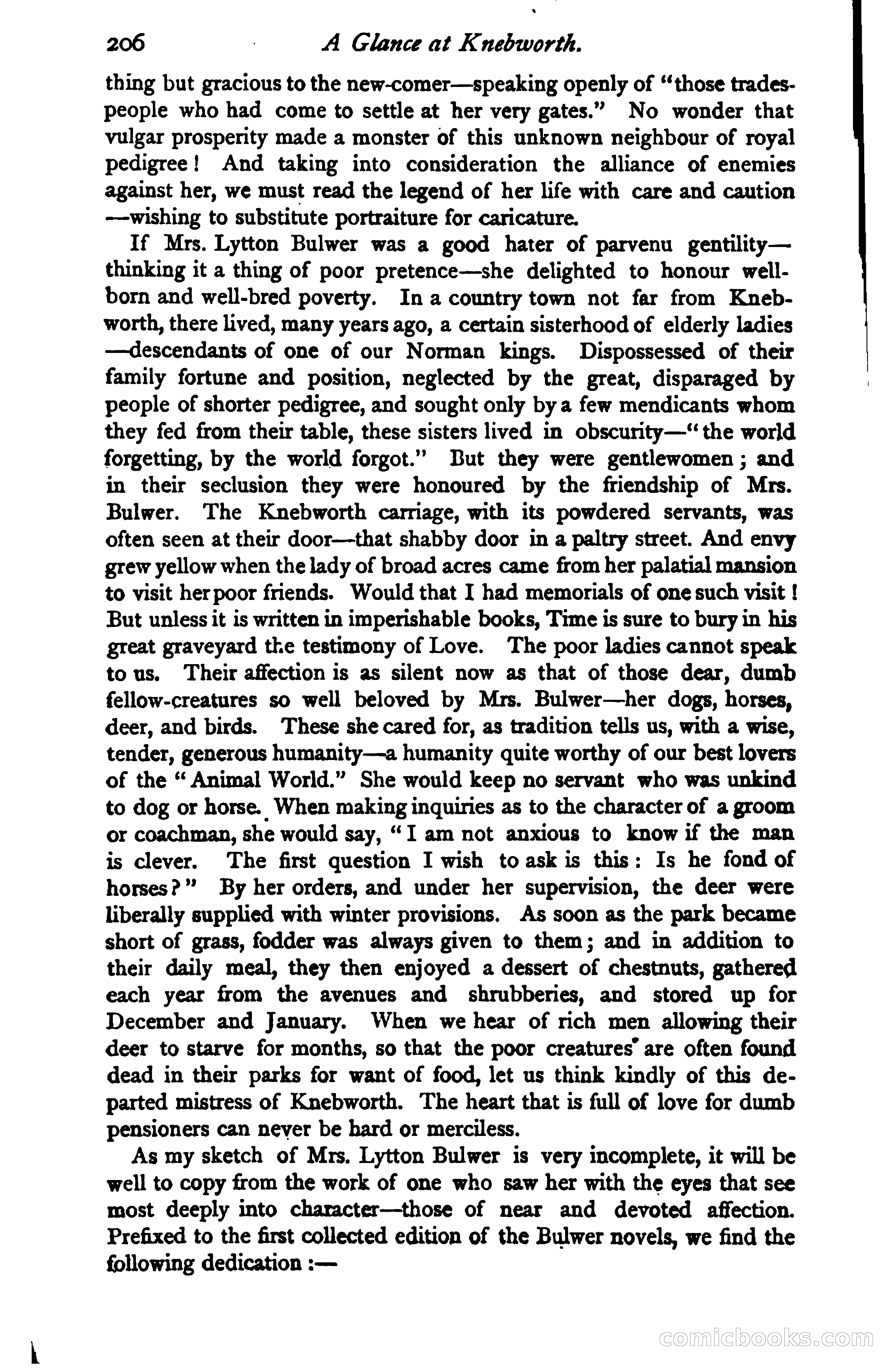
A restored page from Pulp Fiction, 1875. Page through the whole issue in the reader above.
📄 Transcribed text from this page (OCR, searchable)
Machine-transcribed from the original scan — historical spelling and the odd misread are preserved.
206 . 4A Glance at Knebworth. thing but gracious to the new-comer—speaking openly of “those trades- people who had come to settle at her very gates.” No wonder that vulgar prosperity made a monster of this unknown neighbour of royal pedigree! And taking into consideration the alliance of enemies against her, we must read the legend of her life with care and caution —wishing to substitute portraiture for caricature. If Mrs. Lytton Bulwer was a good hater of parvenu gentility— thinking it a thing of poor pretence—she delighted to honour well- born and well-bred poverty. Ina country town not far from Kneb- worth, there lived, many years ago, a certain sisterhood of elderly ladies —descendants of one of our Norman kings. Dispossessed of their family fortune and position, neglected by the great, disparaged by people of shorter pedigree, and sought only by a few mendicants whom they fed from their table, these sisters lived in obscurity—“ the world forgetting, by the world forgot.”” But they were gentlewomen ; and in their seclusion they were honoured by the friendship of Mrs. Bulwer. The Knebworth carriage, with its powdered servants, was often seen at their door—that shabby door in a paltry street. And envy grew yellow when the lady of broad acres came from her palatial mansion to visit her poor friends. Would that I had memorials of one such visit ! But unless it is written in imperishable books, Time is sure to bury in his great graveyard the testimony of Love. The poor ladies cannot speak tous. Their affection is as silent now as that of those dear, dumb fellow-creatures so well beloved by Mrs. Bulwer—her dogs, horses, deer, and birds. These she cared for, as tradition tells us, with a wise, tender, generous humanity—a humanity quite worthy of our best lovers of the “ Animal World.” She would keep no servant who was unkind to dog or horse. When making inquiries as to the character of a groom or coachman, she would say, “I am not anxious to know if the man is clever. The first question I wish to ask is this: Is he fond of horses?” By her orders, and under her supervision, the deer were liberally supplied with winter provisions. As soon as the park became short of grass, fodder was always given to them; and in addition to their daily meal, they then enjoyed a dessert of chestnuts, gathered each year from the avenues and shrubberies, and stored up for December and January. When we hear of rich men allowing their deer to starve for months, so that the poor creatures are often found dead in their parks for want of food, let us think kindly of this de- parted mistress of Knebworth. The heart that is full of love for dumb pensioners can never be hard or merciless. As my sketch of Mrs. Lytton Bulwer is very incomplete, it will be well to copy from the work of one who saw her with the eyes that see most deeply into character—those of near and devoted affection. Prefixed to the first collected edition of the Bulwer novels, we find the following dedication :— ecomniclooolkks _ (CO)