
Pulp Fiction, 1887 · page 36 of 399
The Argosy — page 36: what you’re looking at
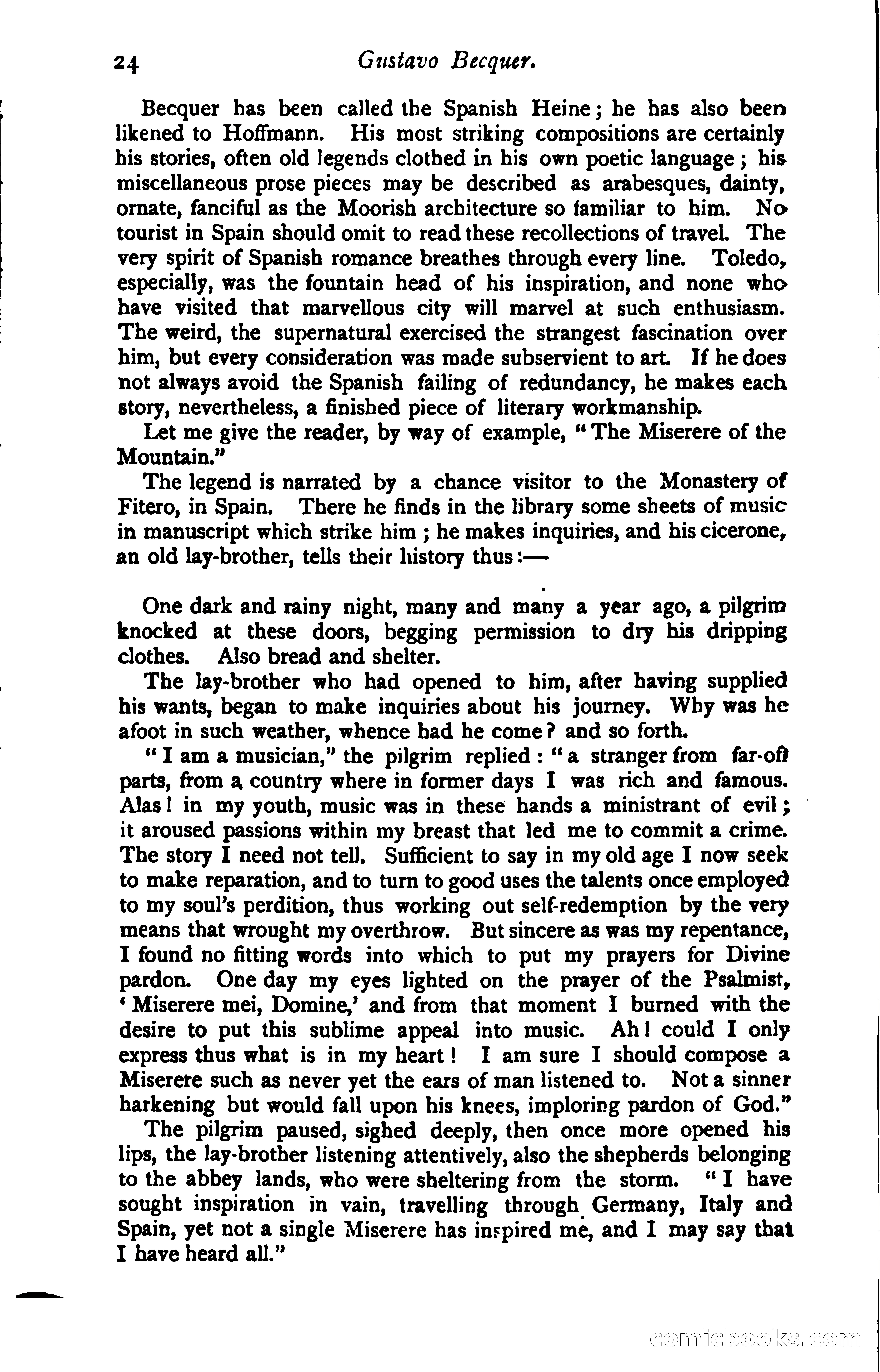
A restored page from Pulp Fiction, 1887. Page through the whole issue in the reader above.
📄 Transcribed text from this page (OCR, searchable)
Machine-transcribed from the original scan — historical spelling and the odd misread are preserved.
on aie Sai SU A I i I, ae, ee _ so 24 Gustavo Becquer. Becquer has been called the Spanish Heine; he has also been likened to Hoffmann. His most striking compositions are certainly his stories, often old legends clothed in his own poetic language ; his miscellaneous prose pieces may be described as arabesques, dainty, ornate, fanciful as the Moorish architecture so familiar to him. No tourist in Spain should omit to read these recollections of travel. The very spirit of Spanish romance breathes through every line. Toledo, especially, was the fountain head of his inspiration, and none who have visited that marvellous city will marvel at such enthusiasm. The weird, the supernatural exercised the strangest fascination over him, but every consideration was made subservient to art. If he does not always avoid the Spanish failing of redundancy, he makes each story, nevertheless, a finished piece of literary workmanship. Let me give the reader, by way of example, “The Miserere of the Mountain.” The legend is narrated by a chance visitor to the Monastery of Fitero, in Spain. There he finds in the library some sheets of music in manuscript which strike him ; he makes inquiries, and his cicerone, an old lay-brother, tells their history thus :— One dark and rainy night, many and many a year ago, a pilgrim knocked at these doors, begging permission to dry his dripping clothes. Also bread and shelter. The lay-brother who had opened to him, after having supplied his wants, began to make inquiries about his journey. Why was he afoot in such weather, whence had he come? and so forth. “Tam a musician,” the pilgrim replied : “a stranger from far-ofi parts, from a country where in former days I was rich and famous. Alas! in my youth, music was in these hands a ministrant of evil; it aroused passions within my breast that led me to commit a crime. The story I need not tell. Sufficient to say in my old age I now seek to make reparation, and to turn to good uses the talents once employed to my soul’s perdition, thus working out self-redemption by the very means that wrought my overthrow. But sincere as was my repentance, I found no fitting words into which to put my prayers for Divine pardon. One day my eyes lighted on the prayer of the Psalmist, ‘ Miserere mei, Domine,’ and from that moment I burned with the desire to put this sublime appeal into music. Ah! could I only express thus what is in my heart! I am sure I should compose a Miserere such as never yet the ears of man listened to. Nota sinner harkening but would fall upon his knees, imploring pardon of God.” The pilgrim paused, sighed deeply, then once more opened his lips, the lay-brother listening attentively, also the shepherds belonging to the abbey lands, who were sheltering from the storm. “I have sought inspiration in vain, travelling through Germany, Italy and Spain, yet not a single Miserere has inspired me, and I may say that I have heard all.” conniclooolkks CO