
Pulp Fiction, 1887 · page 37 of 399
The Argosy — page 37: what you’re looking at
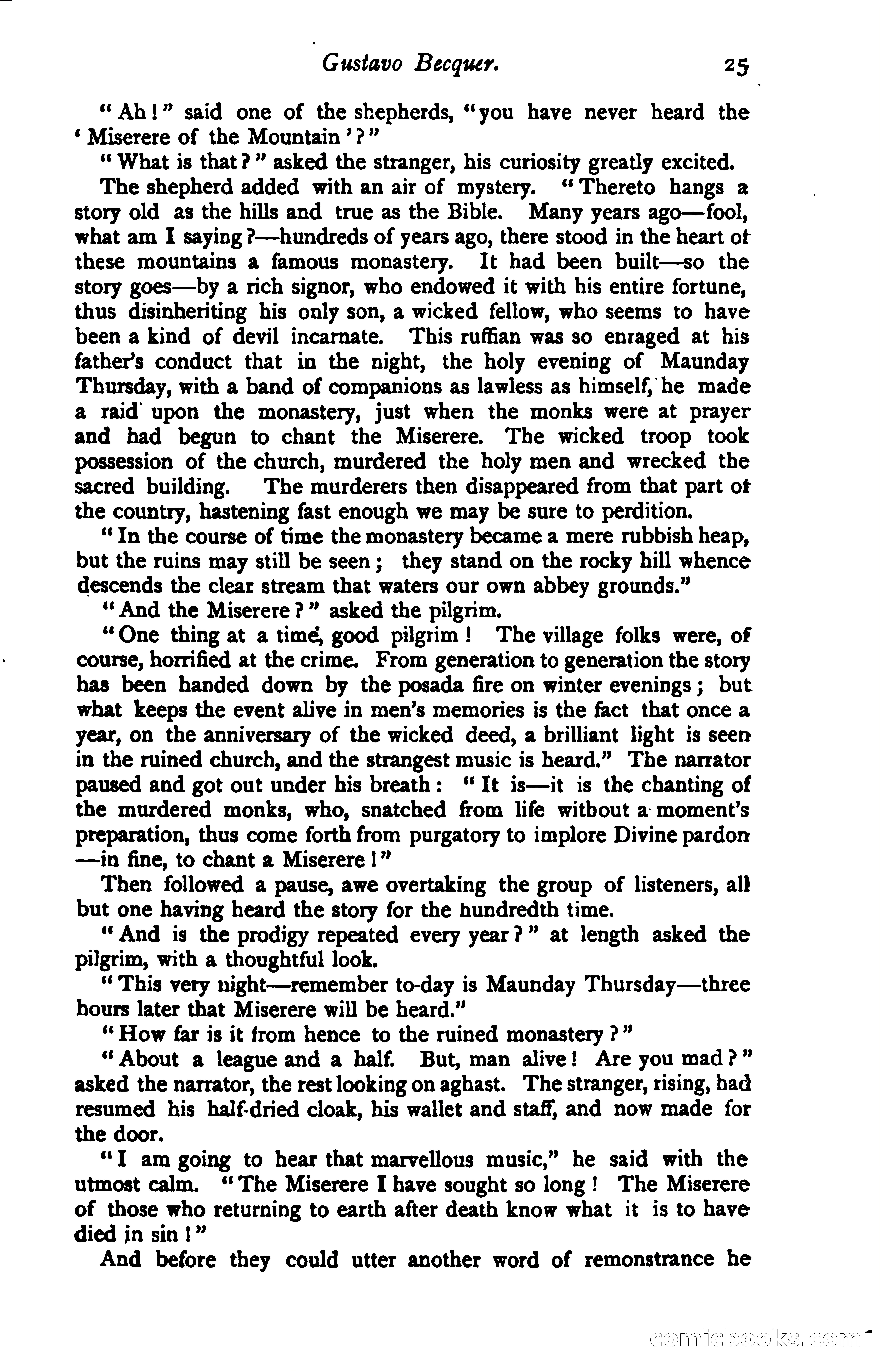
A restored page from Pulp Fiction, 1887. Page through the whole issue in the reader above.
📄 Transcribed text from this page (OCR, searchable)
Machine-transcribed from the original scan — historical spelling and the odd misread are preserved.
“Gustavo Becquer. 25 Ah!” said one of the shepherds, “you have never heard the ‘ Miserere of the Mountain ’?” ‘What is that?” asked the stranger, his curiosity greatly excited. The shepherd added with an air of mystery. ‘“‘ Thereto hangs a story old as the hills and true as the Bible. Many years ago—fool, what am I saying >—hundreds of years ago, there stood in the heart of these mountains a famous monastery. It had been built—so the story goes—by a rich signor, who endowed it with his entire fortune, thus disinheriting his only son, a wicked fellow, who seems to have been a kind of devil incarnate. This ruffian was so enraged at his father’s conduct that in the night, the holy evening of Maunday Thursday, with a band of companions as lawless as himself, he made a raid upon the monastery, just when the monks were at prayer and had begun to chant the Miserere. The wicked troop took possession of the church, murdered the holy men and wrecked the sacred building. The murderers then disappeared from that part of the country, hastening fast enough we may be sure to perdition. ‘In the course of time the monastery became a mere rubbish heap, but the ruins may still be seen; they stand on the rocky hill whence descends the clear stream that waters our own abbey grounds.” ‘And the Miserere ?” asked the pilgrim. “One thing at a time, good pilgrim! The village folks were, of course, horrified at the crime. From generation to generation the story has been handed down by the posada fire on winter evenings; but what keeps the event alive in men’s memories is the fact that once a year, on the anniversary of the wicked deed, a brilliant light is seen in the ruined church, and the strangest music is heard.” The narrator paused and got out under his breath: ‘It is—it is the chanting of the murdered monks, who, snatched from life witbout a moment’s preparation, thus come forth from purgatory to implore Divine pardon —1in fine, to chant a Miserere !” Then followed a pause, awe overtaking the group of listeners, all but one having heard the story for the hundredth time. ‘“‘ And is the prodigy repeated every year?” at length asked the pilgrim, with a thoughtful look. ‘‘ This very night—remember to-day is Maunday Thursday—three hours later that Miserere will be heard.” ‘* How far is it from hence to the ruined monastery ?” “About a league and a half. But, man alive! Are you mad?” asked the narrator, the rest looking on aghast. The stranger, rising, had resumed his half-dried cloak, his wallet and staff, and now made for the door. “I am going to hear that marvellous music,” he said with the utmost calm. ‘The Miserere I have sought so long! The Miserere of those who returning to earth after death know what it is to have died jin sin }” And before they could utter another word of remonstrance he GOnnGaoOo SS CO