
Pulp Fiction, 1887 · page 35 of 399
The Argosy — page 35: what you’re looking at
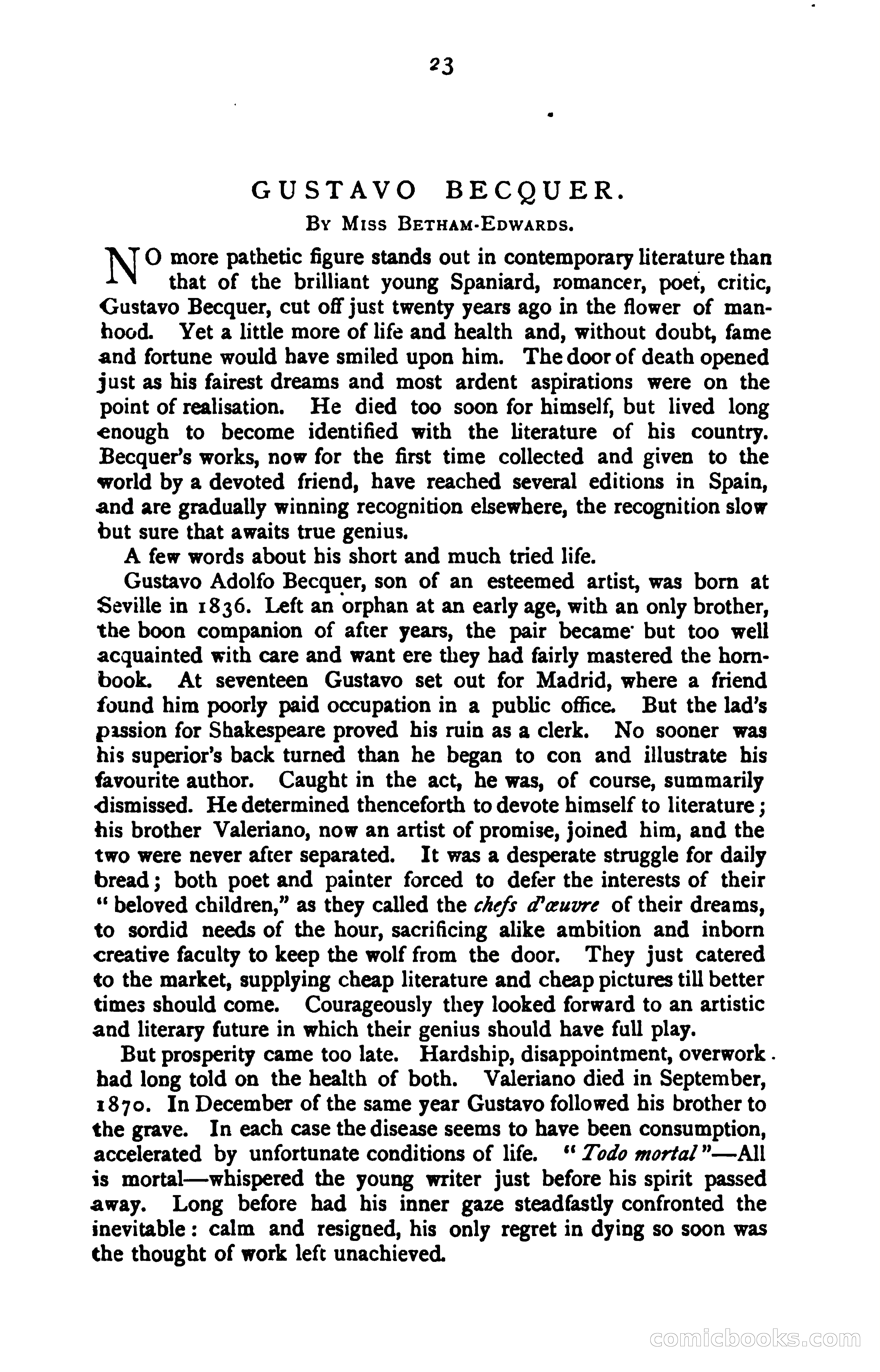
A restored page from Pulp Fiction, 1887. Page through the whole issue in the reader above.
📄 Transcribed text from this page (OCR, searchable)
Machine-transcribed from the original scan — historical spelling and the odd misread are preserved.
23 GUSTAVO BECQUER. By Miss BETHAM-EDWARDS. N O more pathetic figure stands out in contemporary literature than that of the brilliant young Spaniard, romancer, poet, critic, Gustavo Becquer, cut off just twenty years ago in the flower of man- hood. Yet a little more of life and health and, without doubt, fame and fortune would have smiled upon him. The door of death opened just as his fairest dreams and most ardent aspirations were on the point of realisation. He died too soon for himself, but lived long enough to become identified with the literature of his country. Becquer’s works, now for the first time collected and given to the world by a devoted friend, have reached several editions in Spain, and are gradually winning recognition elsewhere, the recognition slow but sure that awaits true genius, A few words about his short and much tried life. Gustavo Adolfo Becquer, son of an esteemed artist, was born at Seville in 1836. Left an orphan at an early age, with an only brother, the boon companion of after years, the pair became’ but too well acquainted with care and want ere they had fairly mastered the horn- book. At seventeen Gustavo set out for Madrid, where a friend found him poorly paid occupation in a public office. But the lad’s passion for Shakespeare proved his ruin as a clerk. No sooner was his superior’s back turned than he began to con and illustrate his favourite author. Caught in the act, he was, of course, summarily dismissed. He determined thenceforth to devote himself to literature ; his brother Valeriano, now an artist of promise, joined him, and the two were never after separated. It was a desperate struggle for daily bread; both poet and painter forced to defer the interests of their ‘‘ beloved children,” as they called the chefs d’euvre of their dreams, to sordid needs of the hour, sacrificing alike ambition and inborn creative faculty to keep the wolf from the door. They just catered to the market, supplying cheap literature and cheap pictures till better times should come. Courageously they looked forward to an artistic and literary future in which their genius should have full play. But prosperity came too late. Hardship, disappointment, overwork . had long told on the health of both. Valeriano died in September, 1870. In December of the same year Gustavo followed his brother to the grave. In each case the disease seems to have been consumption, accelerated by unfortunate conditions of life. ‘* Zodo mortal”—All is mortal—whispered the young writer just before his spirit passed away. Long before had his inner gaze steadfastly confronted the inevitable: calm and resigned, his only regret in dying so soon was the thought of work left unachieved. GOnnGaoOo SS CO