
Pulp Fiction, 1887 · page 356 of 399
The Argosy — page 356: what you’re looking at
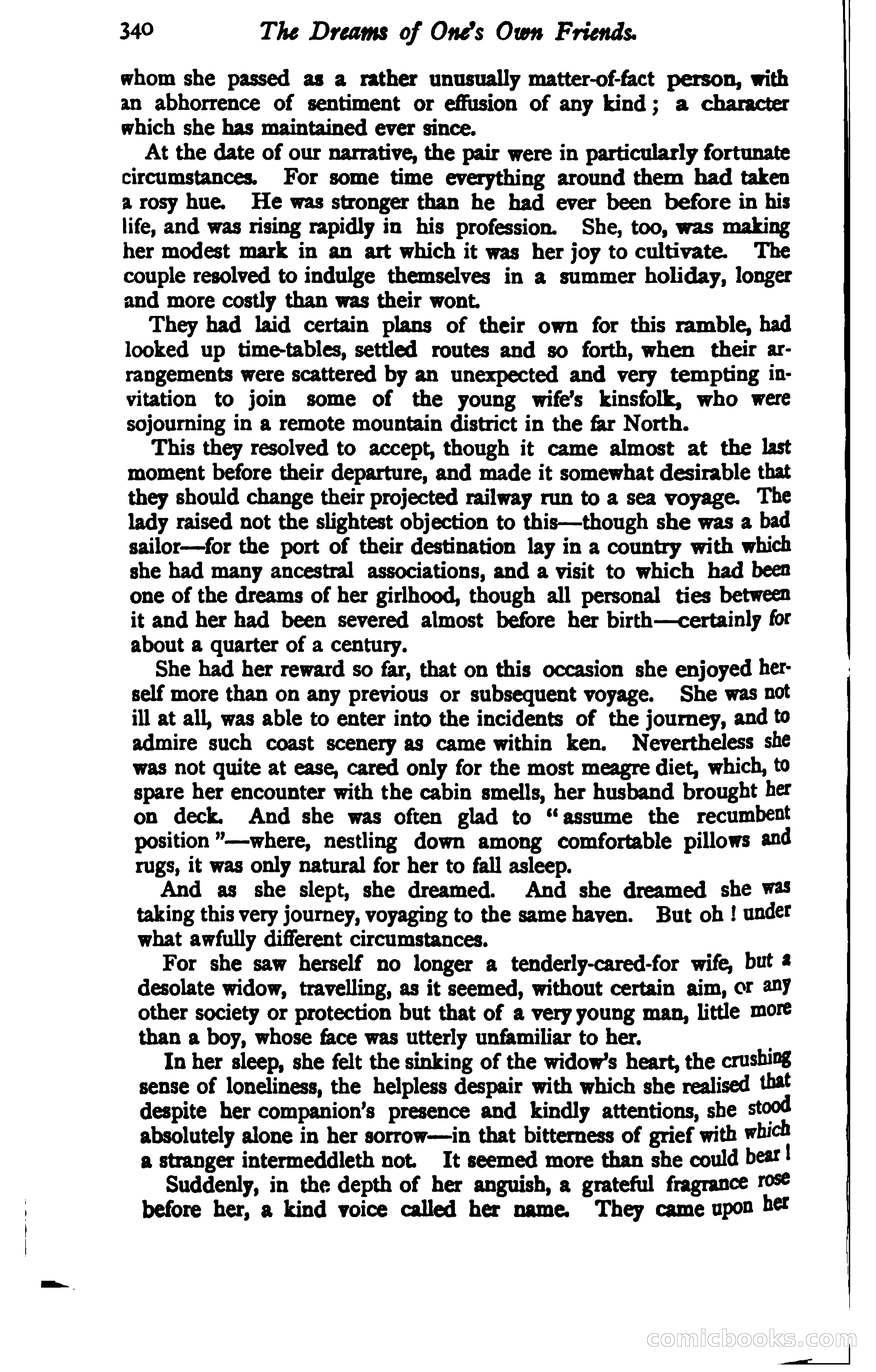
A restored page from Pulp Fiction, 1887. Page through the whole issue in the reader above.
📄 Transcribed text from this page (OCR, searchable)
Machine-transcribed from the original scan — historical spelling and the odd misread are preserved.
340 The Dreams of One’s Own Friends. whom she passed as a rather unusually matter-of-fact person, with an abhorrence of sentiment or effusion of any kind; a character which she has maintained ever since. At the date of our narrative, the pair were in particularly fortunate circumstances. For some time everything around them had taken a rosy hue. He was stronger than he had ever been before in his life, and was rising rapidly in his profession. She, too, was making her modest mark in an art which it was her joy to cultivate. The couple resolved to indulge themselves in a summer holiday, longer and more costly than was their wont. They had laid certain plans of their own for this ramble, had looked up time-tables, settled routes and so forth, when their ar- rangements were scattered by an unexpected and very tempting in- vitation to join some of the young wife’s kinsfolk, who were sojourning in a remote mountain district in the far North. This they resolved to accept, though it came almost at the last moment before their departure, and made it somewhat desirable that they should change their projected railway run to a sea voyage. The lady raised not the slightest objection to this—though she was a bad sailor—for the port of their destination lay in a country with which she had many ancestral associations, and a visit to which had been one of the dreams of her girlhood, though all personal ties between it and her had been severed almost before her birth—certainly for about a quarter of a century. She had her reward so far, that on this occasion she enjoyed her- self more than on any previous or subsequent voyage. She was not ill at all, was able to enter into the incidents of the journey, and to admire such coast scenery as came within ken. Nevertheless she was not quite at ease, cared only for the most meagre diet, which, to spare her encounter with the cabin smells, her husband brought her on deck. And she was often glad to “assume the recumbent position ”—-where, nestling down among comfortable pillows and rugs, it was only natural for her to fall asleep. And as she slept, she dreamed. And she dreamed she was taking this very journey, voyaging to the same haven. But ob! undet what awfully different circumstances. For she saw herself no longer a tenderly-cared-for wife, but 4 desolate widow, travelling, as it seemed, without certain aim, or any other society or protection but that of a very young man, little more than a boy, whose face was utterly unfamiliar to her. In her sleep, she felt the sinking of the widow’s heart, the crushing sense of loneliness, the helpless despair with which she realised that despite her companion’s presence and kindly attentions, she sto absolutely alone in her sorrow—in that bitterness of grief with which a stranger intermeddleth not. It seemed more than she could bear Suddenly, in the depth of her anguish, a grateful fragrance rose before her, a kind voice called her name. They came upon be CORNICE LOOKS (GO)