
Pulp Fiction, 1887 · page 333 of 399
The Argosy — page 333: what you’re looking at
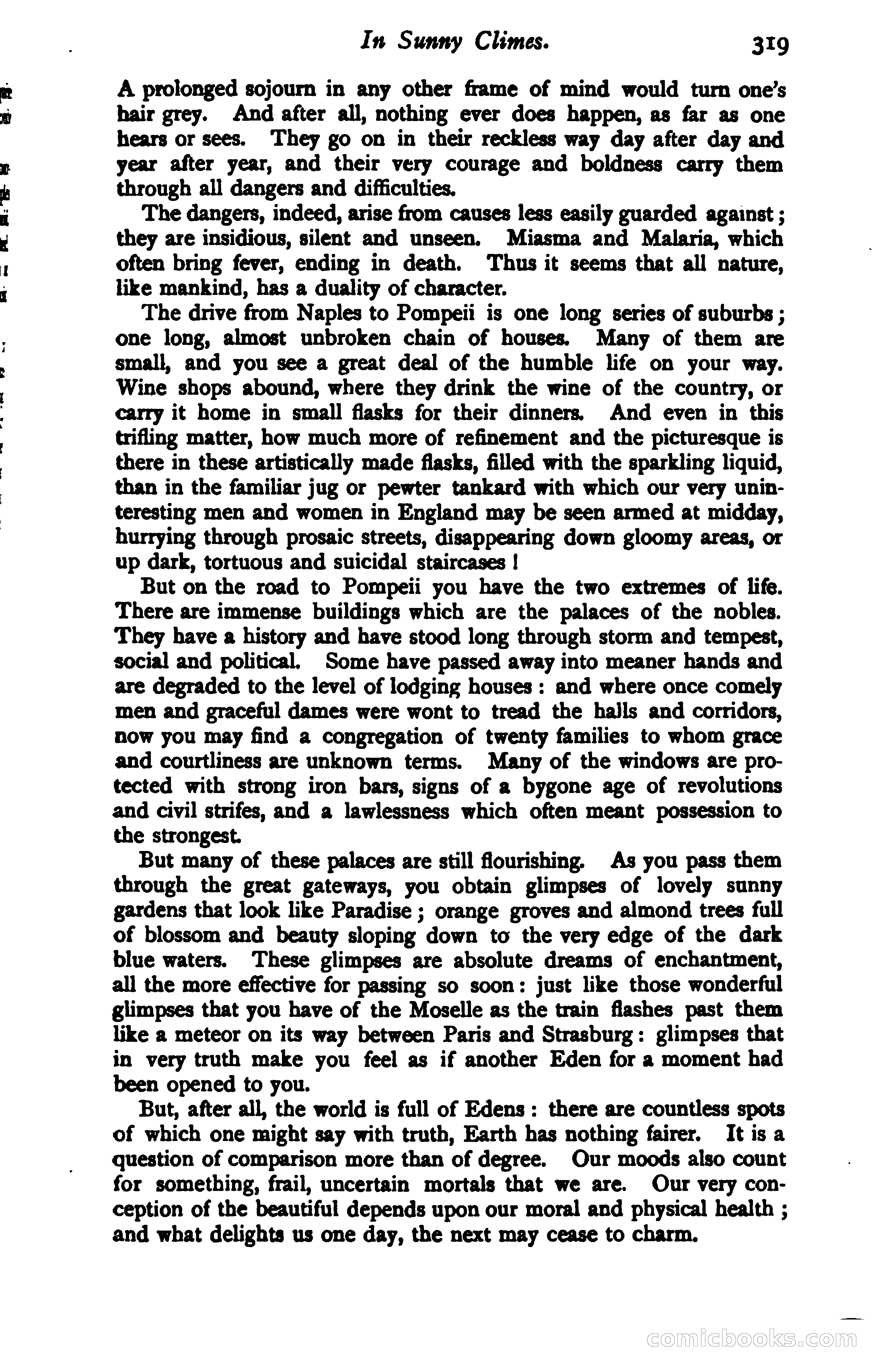
A restored page from Pulp Fiction, 1887. Page through the whole issue in the reader above.
📄 Transcribed text from this page (OCR, searchable)
Machine-transcribed from the original scan — historical spelling and the odd misread are preserved.
a. i: eS @: ee In Sunny Climes. 319 A prolonged sojourn in any other frame of mind would turn one’s hair grey. And after all, nothing ever does happen, as far as one hears or sees. They go on in their reckless way day after day and year after year, and their very courage and boldness carry them through all dangers and difficulties. The dangers, indeed, arise from causes less easily guarded against ; they are insidious, silent and unseen. Miasma and Malaria, which often bring fever, ending in death. Thus it seems that all nature, like mankind, has a duality of character. The drive from Naples to Pompeii is one long series of suburbs ; one long, almost unbroken chain of houses. Many of them are small, and you see a great deal of the humble life on your way. Wine shops abound, where they drink the wine of the country, or carry it home in small flasks for their dinners. And even in this trifling matter, how much more of refinement and the picturesque is there in these artistically made flasks, filled with the sparkling liquid, than in the familiar jug or pewter tankard with which our very unin- teresting men and women in England may be seen armed at midday, hurrying through prosaic streets, disappearing down gloomy areas, or up dark, tortuous and suicidal staircases ! But on the road to Pompeli you have the two extremes of life. There are immense buildings which are the palaces of the nobles. They have a history and have stood long through storm and tempest, social and political. Some have passed away into meaner hands and are degraded to the level of lodging houses: and where once comely men and graceful dames were wont to tread the halls and corridors, now you may find a congregation of twenty families to whom grace and courtliness are unknown terms. Many of the windows are pro- tected with strong iron bars, signs of a bygone age of revolutions and civil strifes, and a lawlessness which often meant possession to the strongest. But many of these palaces are still flourishing. As you pass them through the great gateways, you obtain glimpses of lovely sunny gardens that look like Paradise ; orange groves and almond trees full of blossom and beauty sloping down to the very edge of the dark blue waters. These glimpses are absolute dreams of enchantment, all the more effective for passing so soon: just like those wonderful glimpses that you have of the Moselle as the train flashes past them like a meteor on its way between Paris and Strasburg: glimpses that in very truth make you feel as if another Eden for a moment had been opened to you. But, after all, the world is full of Edens: there are countless spots of which one might say with truth, Earth has nothing fairer. It isa question of comparison more than of degree. Our moods also count for something, frail, uncertain mortals that we are. Our very con- ception of the beautiful depends upon our moral and physical health ; and what delights us one day, the next may cease to charm. CORNICE LOOKS (GO) i