
Pulp Fiction, 1887 · page 332 of 399
The Argosy — page 332: what you’re looking at
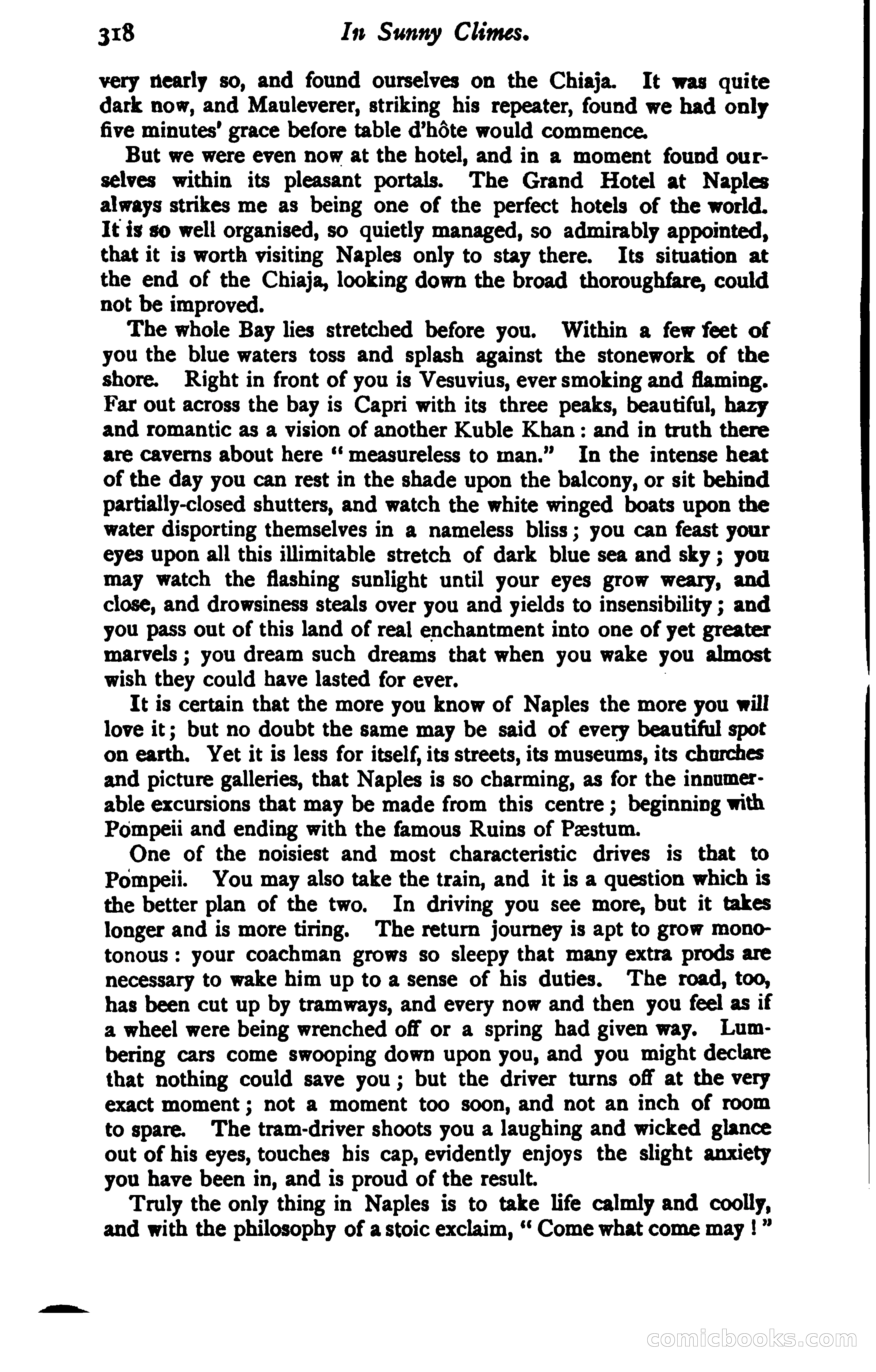
A restored page from Pulp Fiction, 1887. Page through the whole issue in the reader above.
📄 Transcribed text from this page (OCR, searchable)
Machine-transcribed from the original scan — historical spelling and the odd misread are preserved.
318 In Sunny Climes. very nearly so, and found ourselves on the Chiaja. It was quite dark now, and Mauleverer, striking his repeater, found we had only five minutes’ grace before table d’hote would commence. But we were even now at the hotel, and in a moment found our- selves within its pleasant portals. The Grand Hotel at Naples always strikes me as being one of the perfect hotels of the world. It is so well organised, so quietly managed, so admirably appointed, that it is worth visiting Naples only to stay there. Its situation at the end of the Chiaja, looking down the broad thoroughfare, could not be improved. The whole Bay lies stretched before you. Within a few feet of you the blue waters toss and splash against the stonework of the shore. Right in front of you is Vesuvius, ever smoking and flaming. Far out across the bay is Capri with its three peaks, beautiful, hazy and romantic as a vision of another Kuble Khan: and in truth there are caverns about here ‘‘ measureless to man.” In the intense heat of the day you can rest in the shade upon the balcony, or sit behind partially-closed shutters, and watch the white winged boats upon the water disporting themselves in a nameless bliss; you can feast your eyes upon all this illimitable stretch of dark blue sea and sky; you may watch the flashing sunlight until your eyes grow weary, and close, and drowsiness steals over you and yields to insensibility ; and you pass out of this land of real enchantment into one of yet greater marvels ; you dream such dreams that when you wake you almost wish they could have lasted for ever. It is certain that the more you know of Naples the more you will love it; but no doubt the same may be said of every beautiful spot on earth. Yet it is less for itself, its streets, its museums, its churches and picture galleries, that Naples is so charming, as for the innumer- able excursions that may be made from this centre ; beginning with Pompeii and ending with the famous Ruins of Pzstum. One of the noisiest and most characteristic drives is that to Pompeii. You may also take the train, and it is a question which is the better plan of the two. In driving you see more, but it takes longer and is more tiring. The return journey is apt to grow mono- tonous : your coachman grows so sleepy that many extra prods are necessary to wake him up to a sense of his duties. ‘The road, too, has been cut up by tramways, and every now and then you feel as if a wheel were being wrenched off or a spring had given way. Lum- bering cars come swooping down upon you, and you might declare that nothing could save you; but the driver turns off at the very exact moment; not a moment too soon, and not an inch of room to spare. The tram-driver shoots you a laughing and wicked glance out of his eyes, touches his cap, evidently enjoys the slight anxiety you have been in, and is proud of the result. Truly the only thing in Naples is to take life calmly and coolly, and with the philosophy of a stoic exclaim, ‘‘ Come what come may !” EOMRRIC OOO SS (GO)