
Pulp Fiction, 1887 · page 334 of 399
The Argosy — page 334: what you’re looking at
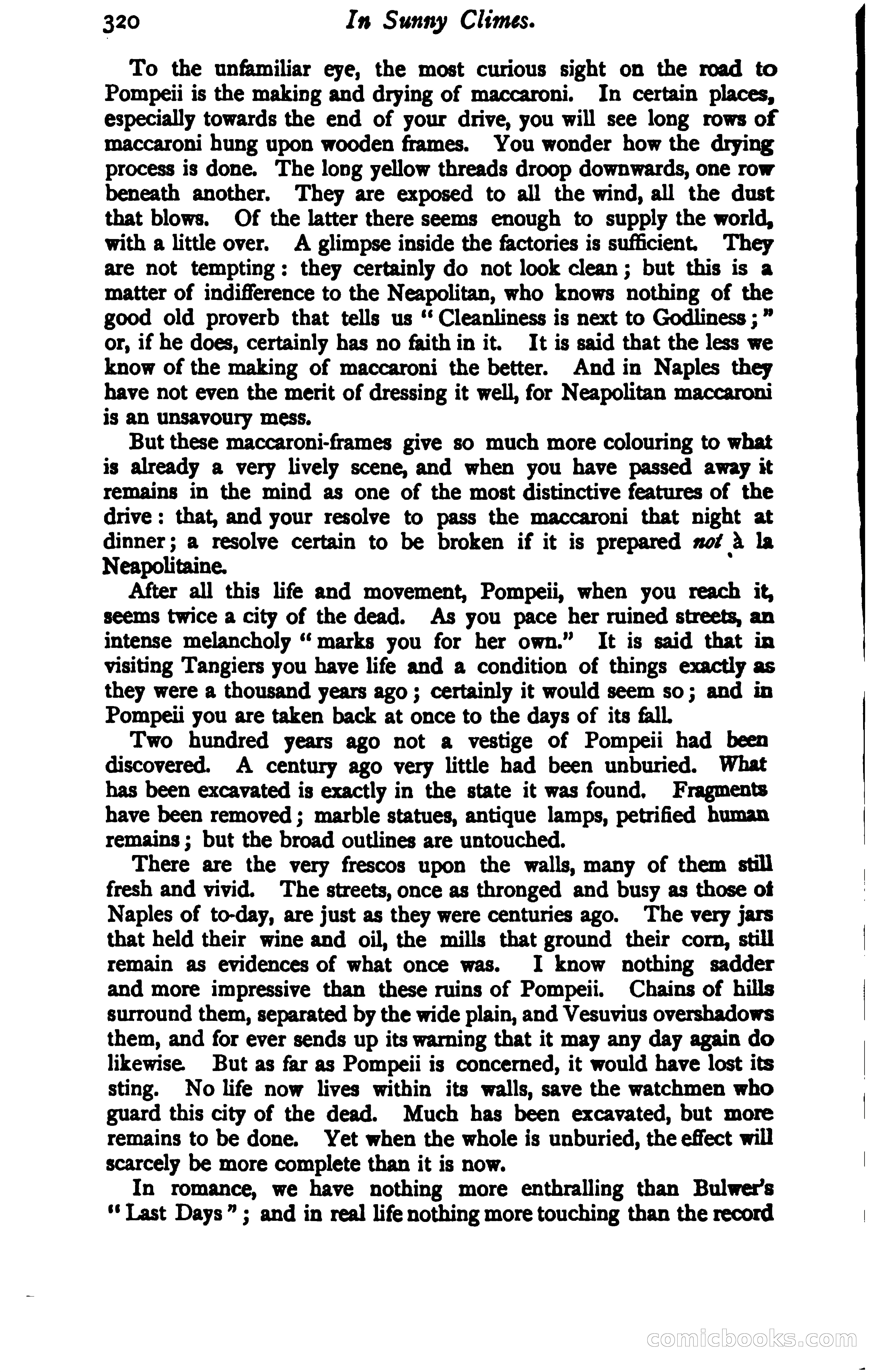
A restored page from Pulp Fiction, 1887. Page through the whole issue in the reader above.
📄 Transcribed text from this page (OCR, searchable)
Machine-transcribed from the original scan — historical spelling and the odd misread are preserved.
320 In Sunny Climes. To the unfamiliar eye, the most curious sight on the road to Pompeii is the making and drying of maccaroni. In certain places, especially towards the end of your drive, you will see long rows of maccaroni hung upon wooden frames. You wonder how the drying process is done. The long yellow threads droop downwards, one row beneath another. They are exposed to all the wind, all the dust that blows. Of the latter there seems enough to supply the world, with a little over. A glimpse inside the factories is sufficient. They are not tempting: they certainly do not look clean; but this is a matter of indifference to the Neapolitan, who knows nothing of the good old proverb that tells us ‘‘ Cleanliness is next to Godliness ; ” or, if he does, certainly has no faithin it. It is said that the less we know of the making of maccaroni the better. And in Naples they have not even the merit of dressing it well, for Neapolitan maccaroni ig an unsavoury mess, But these maccaroni-frames give so much more colouring to what is already a very lively scene, and when you have passed away it remains in the mind as one of the most distinctive features of the drive : that, and your resolve to pass the maccaroni that night at dinner; a resolve certain to be broken if it is prepared mof a la Neapolitaine. After all this life and movement, Pompeii, when you reach it, seems twice a city of the dead. As you pace her ruined streets, an intense melancholy “‘ marks you for her own.” It is said that in visiting Tangiers you have life and a condition of things exactly as they were a thousand years ago ; certainly it would seem so; and in Pompeii you are taken back at once to the days of its fall. Two hundred years ago not a vestige of Pompeii had been discovered. A century ago very little had been unburied. What has been excavated is exactly in the state it was found, Fragments have been removed ; marble statues, antique lamps, petrified human remains ; but the broad outlines are untouched. There are the very frescos upon the walls, many of them stil fresh and vivid. The streets, once as thronged and busy as those of Naples of to-day, are just as they were centuries ago. The very Jars that held their wine and oil, the mills that ground their corn, still | remain as evidences of what once was. I know nothing sadder | and more impressive than these ruins of Pompeii. Chains of hills surround them, separated by the wide plain, and Vesuvius overshadows them, and for ever sends up its warning that it may any day again do likewise. But as far as Pompeii is concerned, it would have lost its sting. No life now lives within its walls, save the watchmen who guard this city of the dead. Much has been excavated, but more remains to be done. Yet when the whole is unburied, the effect will scarcely be more complete than it is now. In romance, we have nothing more enthralling than Bulwer’s ‘Last Days”; and in real life nothing more touching than the record ECOMicbooolkxs.com