
Pulp Fiction, 1901 · page 372 of 400
The Argosy — page 372: what you’re looking at
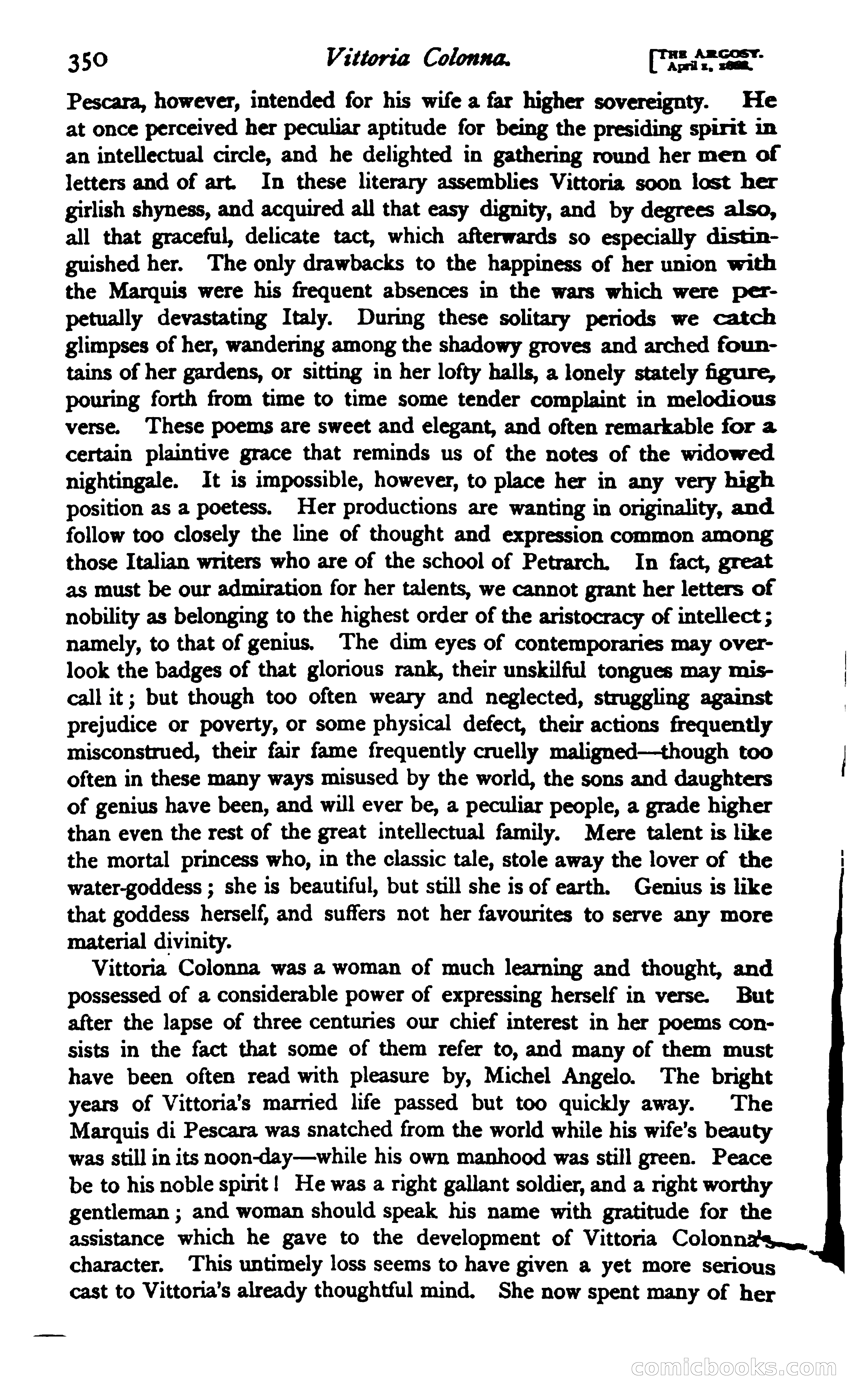
A restored page from Pulp Fiction, 1901. Page through the whole issue in the reader above.
📄 Transcribed text from this page (OCR, searchable)
Machine-transcribed from the original scan — historical spelling and the odd misread are preserved.
350 Vittoria Colonna. ee AmGOSY. Pescara, however, intended for his wife a far higher sovereignty. He at once perceived her peculiar aptitude for being the presiding spirit in an intellectual circle, and he delighted in gathering round her men of letters and of art. In these literary assemblies Vittoria soon lost her girlish shyness, and acquired all that easy dignity, and by degrees also, all that graceful, delicate tact, which afterwards so especially distin- guished her. The only drawbacks to the happiness of her union with the Marquis were his frequent absences in the wars which were per- petually devastating Italy. During these solitary periods we catch glimpses of her, wandering among the shadowy groves and arched foun- tains of her gardens, or sitting in her lofty halls, a lonely stately figure, pouring forth from time to time some tender complaint in melodious verse. These poems are sweet and elegant, and often remarkable for a certain plaintive grace that reminds us of the notes of the widowed nightingale. It is impossible, however, to place her in any very high position as a poetess. Her productions are wanting in originality, and follow too closely the line of thought and expression common among those Italian writers who are of the school of Petrarch. In fact, great as must be our admiration for her talents, we cannot grant her letters of nobility as belonging to the highest order of the aristocracy of intellect ; namely, to that of genius. The dim eyes of contemporaries may over- look the badges of that glorious rank, their unskilful tongues may mis- | call it; but though too often weary and neglected, struggling against prejudice or poverty, or some physical defect, their actions frequently misconstrued, their fair fame frequently cruelly maligned—though too | often in these many ways misused by the world, the sons and daughters of genius have been, and will ever be, a peculiar people, a grade higher than even the rest of the great intellectual family. Mere talent is like the mortal princess who, in the classic tale, stole away the lover of the | water-goddess ; she is beautiful, but still she is of earth. Genius is like that goddess herself, and suffers not her favourites to serve any more material divinity. Vittoria Colonna was a woman of much learning and thought, and possessed of a considerable power of expressing herself in verse. But after the lapse of three centuries our chief interest in her poems con- sists in the fact that some of them refer to, and many of them must have been often read with pleasure by, Michel Angelo. The bright years of Vittoria’s marned life passed but too quickly away. The Marquis di Pescara was snatched from the world while his wife’s beauty was still in its noon-day—while his own manhood was still green. Peace be to his noble spint! He was a right gallant soldier, and a nght worthy gentleman ; and woman should speak his name with gratitude for the assistance which he gave to the development of Vittoria Colonn2’s..,, character. This untimely loss seems to have given a yet more serious cast to Vittoria’s already thoughtful mind. She now spent many of her ECOMnicoOOkKS.CoOm _