
Pulp Fiction, 1924 · page 46 of 172
Argosy All-Story Weekly, October 25, 1924 — page 46: what you’re looking at
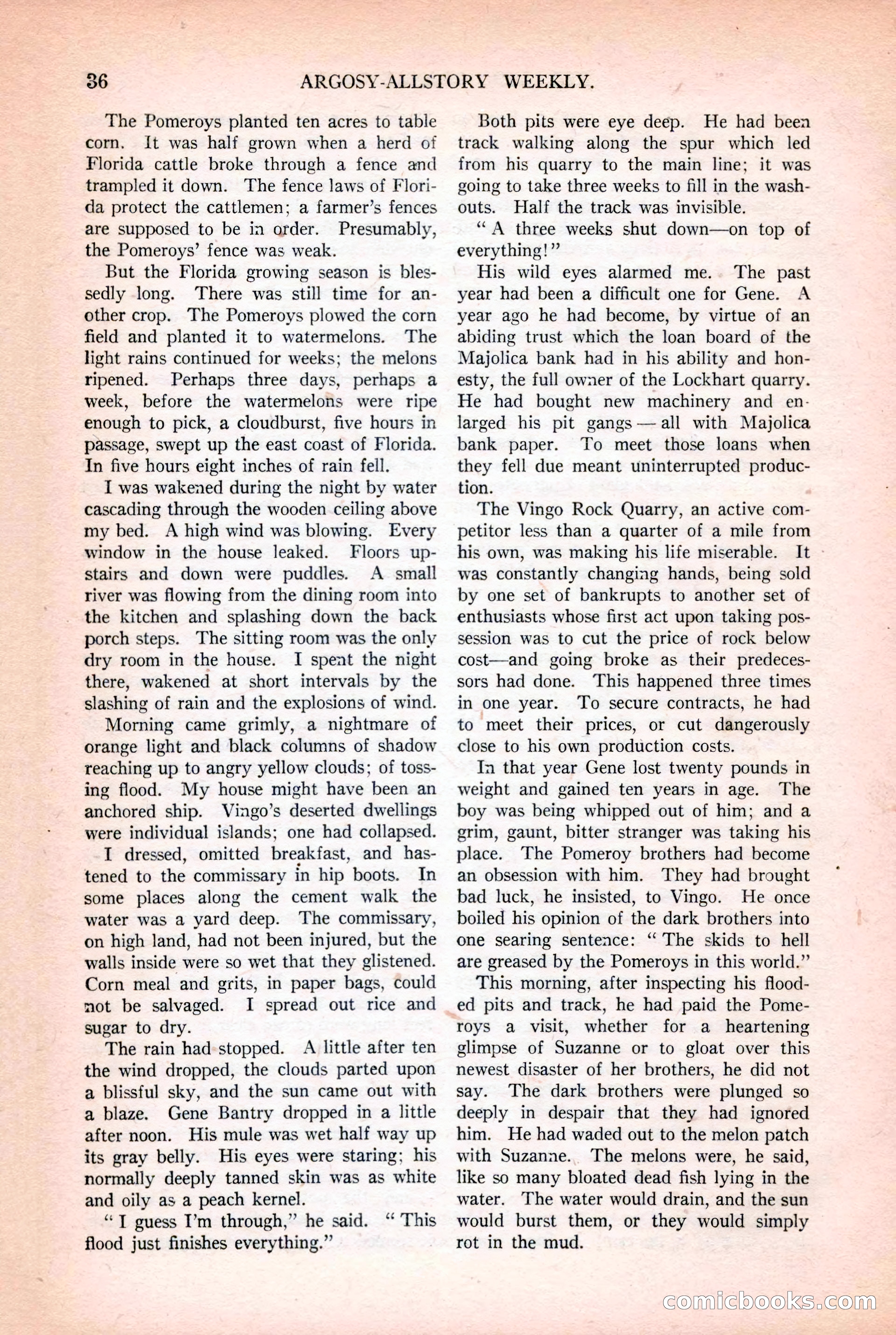
A restored page from Pulp Fiction, 1924. Page through the whole issue in the reader above.
📄 Transcribed text from this page (OCR, searchable)
Machine-transcribed from the original scan — historical spelling and the odd misread are preserved.
o6 The Pomeroys planted ten acres to table corn. it was half grown when a herd of Florida cattle broke through a fence and trampled it down. ‘The fence laws of Flori- da protect the cattlemen; a farmer’s fences are supposed to be in order. Presumably, the Pomeroys’ fence was weak. But the Florida growing season is bles- sedly long. ‘There was still time for an- other crop. The Pomeroys plowed the corn field and planted it to watermelons. The light rains continued for weeks; the melons ripened. Perhaps three days, perhaps a week, before the watermelons were ripe enough to pick, a cloudburst, five hours in passage, swept up the east coast of Florida. In five hours eight inches of rain fell. I was wakened during the night by water cascading through the wooden ceiling above my bed. A high wind was blowing. Every window in the house leaked. Floors up- stairs and down were puddles. A _ small river was flowing from the dining room into the kitchen and splashing down the back porch steps. The sitting room was the only dry room in the house. I spent the night there, wakened at short intervals by the slashing of rain and the explosions of wind. Morning came grimly, a nightmare of orange light and black columns of shadow reaching up to angry yellow clouds; of toss- ing flood. My house might have been an anchored ship. Vingo’s deserted dwellings were individual islands; one had collapsed. I dressed, omitted breakfast, and has- tened to the commissary in hip boots. In some places along the cement walk the water was a yard deep. The commissary, on high land, had not been injured, but the walls inside were so wet that they glistened. Corn meal and grits, in paper bags, could mot be salvaged. I spread out rice and sugar to dry. The rain had-stopped. A little after ten the wind dropped, the clouds parted upon a blissful sky, and the sun came out with a blaze. Gene Bantry dropped in a little after noon. His mule was wet half way up its gray belly. His eyes were staring; his normally deeply tanned skin was as white and oily as a peach kernel. “IT guess I’m through,” he said. “ This flood just finishes everything.” ARGOSY-ALLSTORY WEEKLY. Both pits were eye deep. He had beea track walking along the spur which led from his quarry to the main line; it was going to take three weeks to fill in the wash- outs. Half the track was invisible. “A three weeks shut down—on top of everything!” His wild eyes alarmed me. The past year had been a difficult one for Gene. A year ago he had become, by virtue of an abiding trust which the loan board of the Majolica bank had in his ability and hon- esty, the full owner of the Lockhart quarry. He had bought new machinery and en- larged his pit gangs —all with Majolica bank paper. To meet those loans when they fell due meant uninterrupted produc- tion. The Vingo Rock Quarry, an active com- petitor less than a quarter of a mile from his own, was making his life miserable. It was constantly changing hands, being sold by one set of bankrupts to another set of enthusiasts whose first act upon taking pos- session was to cut the price of rock below cost—and going broke as their predeces- sors had done. ‘This happened three times in one year. To secure contracts, he had to meet their prices, or cut dangerously close to his own production costs. In that year Gene lost twenty pounds in weight and gained ten years in age. The boy was being whipped out of him; and a grim, gaunt, bitter stranger was taking his place. The Pomeroy brothers had become an obsession with him. They had brought bad luck, he insisted, to Vingo. He once boiled his opinion of the dark brothers into one searing sentence: ‘“‘ The skids to hell are greased by the Pomeroys in this world.” This morning, after inspecting his flood- ed pits and track, he had paid the Pome- roys a visit, whether for a heartening glimpse of Suzanne or to gloat over this newest disaster of her brothers, he did not say. The dark brothers were plunged so deeply in despair that they had ignored him. He had waded out to the melon patch with Suzanne. The melons were, he said, like so many bloated dead fish lying in the water. The water would drain, and the sun would burst them, or they would simply rot in the mud. COmmicloool< (C@