
Pulp Fiction, 1938 · page 53 of 100
Air Stories — page 53: what you’re looking at
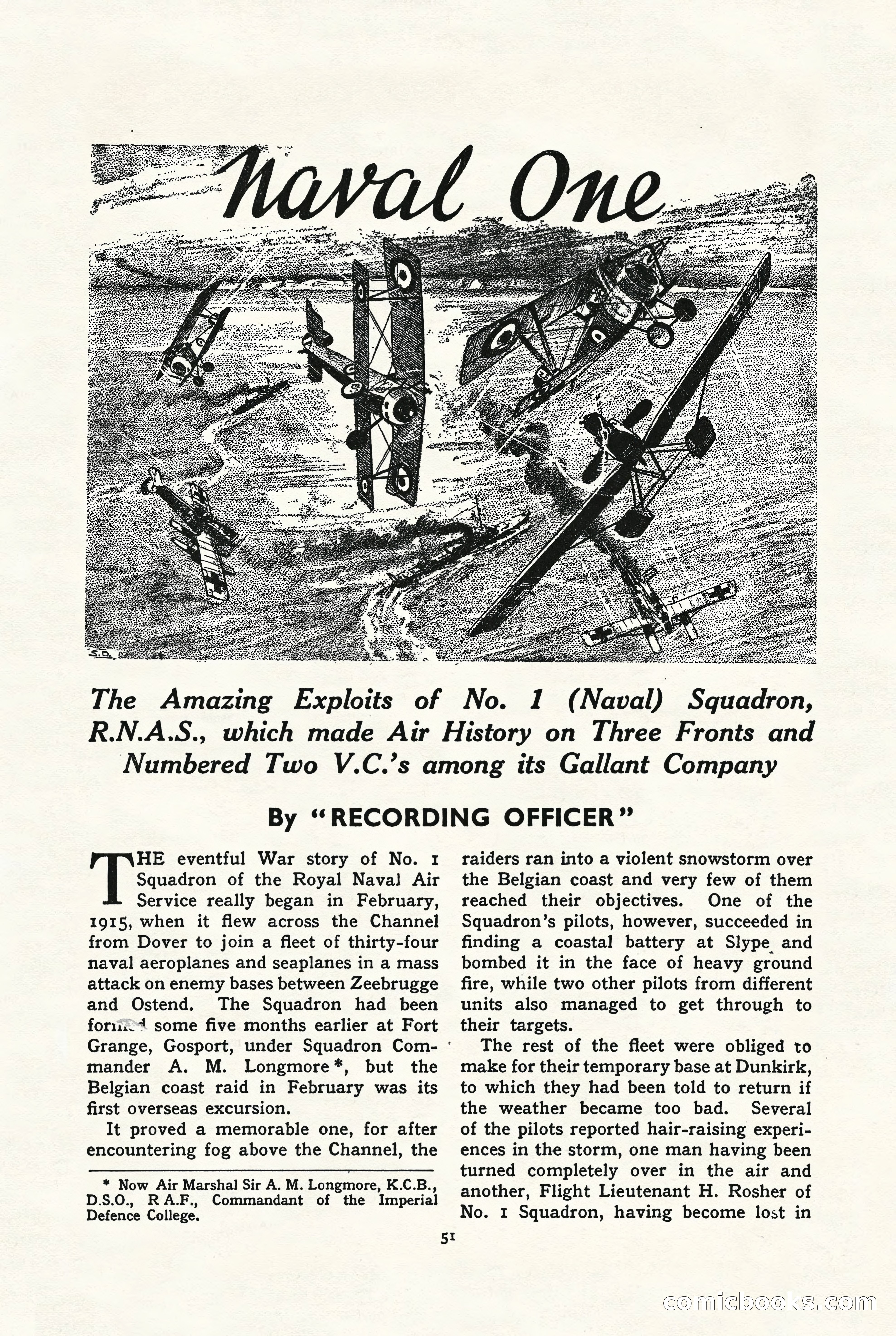
A restored page from Pulp Fiction, 1938. Page through the whole issue in the reader above.
📄 Transcribed text from this page (OCR, searchable)
Machine-transcribed from the original scan — historical spelling and the odd misread are preserved.
eat. 7 esi Leee + pete : an we Ss arr! fy RNS Bee" ohn ~~ os The Amazing Exploits of No. 1 (Naval) Squadron, R.N.A.S., which made Air History on Three Fronts and Numbered Two V.C.’s among its Gallant Company By “RECORDING OFFICER” HE eventful War story of No. 1 Squadron of the Royal Naval Air Service really began in February, 1915, when it flew across the Channel from Dover to join a fleet of thirty-four naval aeroplanes and seaplanes in a mass attack on enemy bases between Zeebrugge and Ostend. The Squadron had been foriic4 some five months earlier at Fort Grange, Gosport, under Squadron Com- mander A. M. Longmore*, but the Belgian coast raid in February was its first overseas excursion. It proved a memorable one, for after encountering fog above the Channel, the * Now Air Marshal Sir A. M. Longmore, K.C.B., D.S.0., RA.F., Commandant of the Imperial Defence College. 51 raiders ran into a violent snowstorm over the Belgian coast and very few of them reached their objectives. One of the Squadron’s pilots, however, succeeded in finding a coastal battery at Slype and bombed it in the face of heavy ground fire, while two other pilots from different units also managed to get through to their targets. The rest of the fleet were obliged to make for their temporary base at Dunkirk, to which they had been told to return if the weather became too bad. Several of the pilots reported hair-raising experi- ences in the storm, one man having been turned completely over in the air and another, Flight Lieutenant H. Rosher of No. 1 Squadron, having become lost in (C (© COMmicloo