
Pulp Fiction, 1926 · page 204 of 232
Adventure Magazine Cover — page 204: what you’re looking at
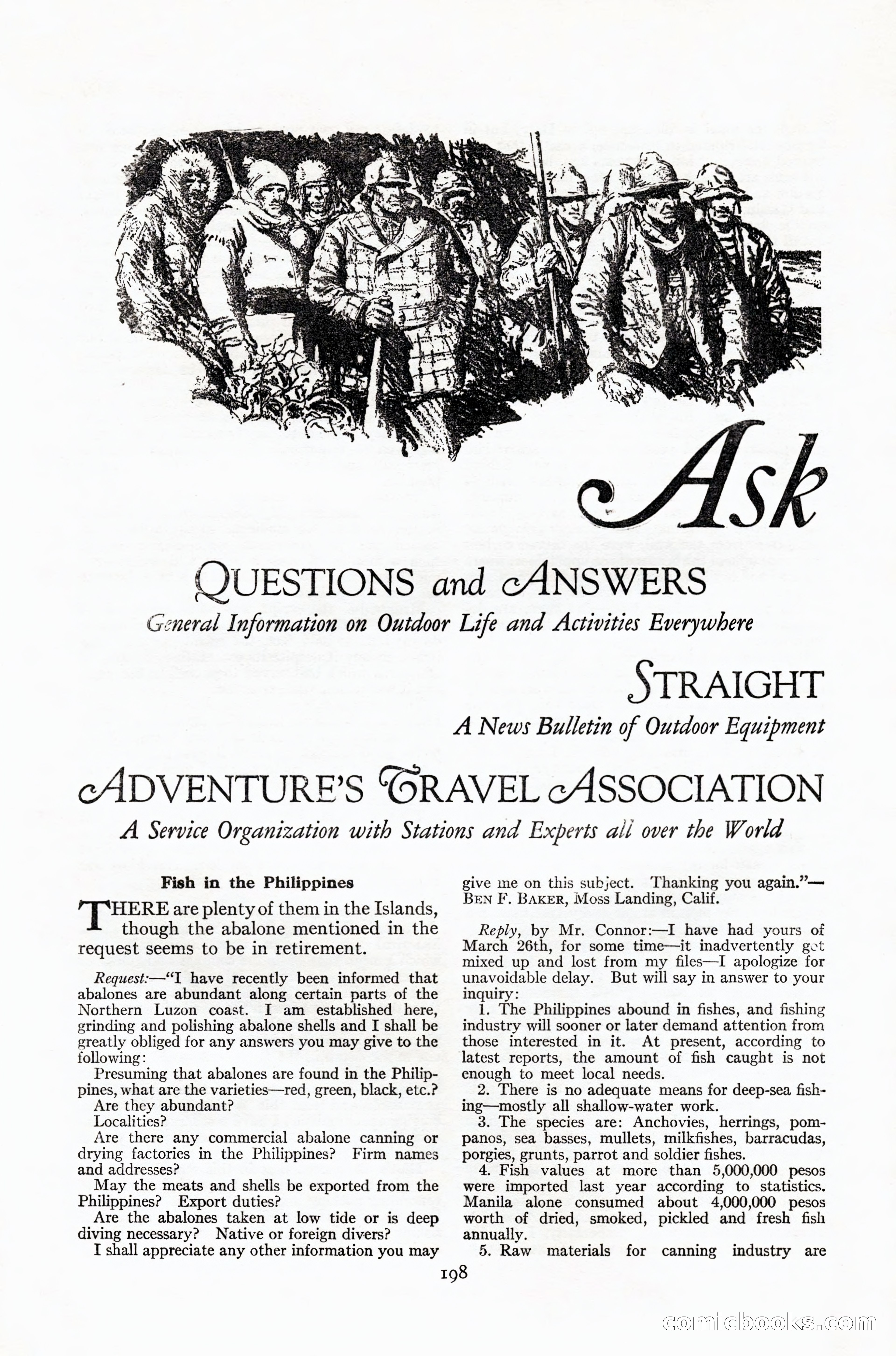
A restored page from Pulp Fiction, 1926. Page through the whole issue in the reader above.
📄 Transcribed text from this page (OCR, searchable)
Machine-transcribed from the original scan — historical spelling and the odd misread are preserved.
QUESTIONS and cANSWERS General Information on Outdoor Life and Activities Everywhere STRAIGHT A News Bulletin of Outdoor Equipment cADVENTURE’S “SRAVEL cASSOCIATION A Service Organization with Stations and Experts all over the Worla Fish in the Philippines rT HERE are plenty of them in the Islands, though the abalone mentioned in the request seems to be in retirement. Request:—“T have recently been informed that abalones are abundant along certain parts of the Northern Luzon coast. I am established here, grinding and polishing abalone shells and I shall be greatly obliged for any answers you may give to the following: Presuming that abalones are found in the Philip- pines, what are the varieties—red, green, black, etc.? Are they abundant? Localities? Are there any commercial abalone canning or drying factories in the Philippines? Firm names and addresses? May the meats and shells be exported from the Philippines? Export duties? Are the abalones taken at low tide or is deep diving necessary? Native or foreign divers? I shall appreciate any other information you may give me on this subject. Thanking you again.”— BEN F. BAKER, Moss Landing, Calif. Reply, by Mr. Connor:—I have had yours of March 26th, for some time—it inadvertently get mixed up and lost from my files—I apologize for unavoidable delay. But will say in answer to your inquiry: 1. The Philippines abound in fishes, and fishing industry will sooner or later demand attention from those interested in it. At present, according to latest reports, the amount of fish caught is not enough to meet local needs. 2. There is no adequate means for deep-sea fish- ing—mostly all shallow-water work. 3. The species are: Anchovies, herrings, pom- panos, sea basses, mullets, milkfishes, barracudas, porgies, grunts, parrot and soldier fishes. 4. Fish values at more than 5,000,000 pesos were imported last year according to statistics. Manila alone consumed about 4,000,000 pesos worth of dried, smoked, pickled and fresh fish annually. 5. Raw materials for canning industry are 198 COmiclboooks.c©