
Pulp Fiction, 1919 · page 121 of 208
Adventure Magazine Cover — page 121: what you’re looking at
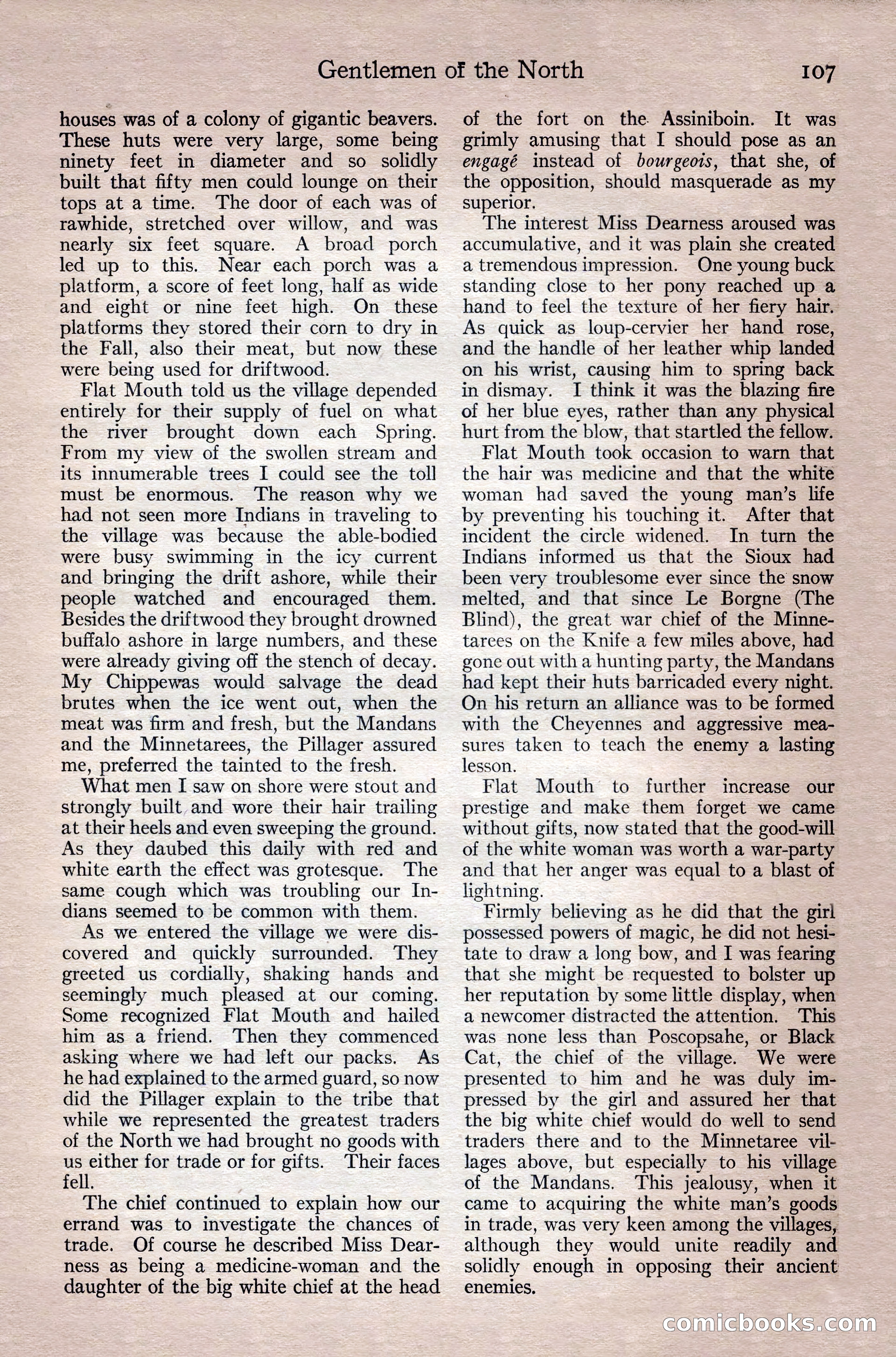
A restored page from Pulp Fiction, 1919. Page through the whole issue in the reader above.
📄 Transcribed text from this page (OCR, searchable)
Machine-transcribed from the original scan — historical spelling and the odd misread are preserved.
Gentlemen of the North houses was of a colony of gigantic beavers. These huts were very large, some being ninety feet in diameter and so _ solidly built that fifty men could lounge on their tops at a time. The door of each was of rawhide, stretched over willow, and was nearly six feet square. A broad porch led up to this. Near each porch was a platform, a score of feet long, half as wide and eight or nine feet high. On these platforms they stored their corn to dry in the Fall, also their meat, but now these were being used for driftwood. Flat Mouth told us the village depended entirely for their supply of fuel on what the river brought down each Spring. From my view of the swollen stream and its innumerable trees I could see the toll must be enormous. The reason why we had not seen more Indians in traveling to the village was because the able-bodied were busy swimming in the icy current and bringing the drift ashore, while their people watched and encouraged them. Besides the driftwood they brought drowned buffalo ashore in large numbers, and these were already giving off the stench of decay. My Chippewas would salvage the dead brutes when the ice went out, when the meat was firm and fresh, but the Mandans and the Minnetarees, the Pillager assured me, preferred the tainted to the fresh. What men I saw on shore were stout and strongly built and wore their hair trailing at their heels and even sweeping the ground. As they daubed this daily with red and white earth the effect was grotesque. The same cough which was troubling our In- dians seemed to be common with them. As we entered the village we were dis- covered and quickly surrounded. They greeted us cordially, shaking hands and seemingly much pleased at our coming. Some recognized Flat Mouth and hailed him as a friend. Then they commenced asking where we had left our packs. As he had explained to the armed guard, so now did the Pillager explain to the tribe that while we represented the greatest traders of the North we had brought no goods with us either for trade or for gifts. Their faces fell. The chief continued to explain how our errand was to investigate the chances of trade. Of course he described Miss Dear- ness as being a medicine-woman and the daughter of the big white chief at the head 107 of the fort on the Assiniboin. It was grimly amusing that I should pose as an engagé instead ot bourgeois, that she, of the opposition, should masquerade as my superior. The interest Miss Dearness aroused was accumulative, and it was plain she created a tremendous impression. One young buck standing close to her pony reached up a hand to feel the texture of her fiery hair. As quick as loup-cervier her hand rose, and the handle of her leather whip landed on his wrist, causing him to spring back in dismay. I think it was the blazing fire of her blue eyes, rather than any physical hurt from the blow, that startled the fellow. Flat Mouth took occasion to warn that the hair was medicine and that the white woman had saved the young man’s life by preventing his touching it. After that incident the circle widened. In turn the Indians informed us that the Sioux had been very troublesome ever since the snow melted, and that since Le Borgne (The Blind), the great war chief of the Minne- tarees on the Knife a few miles above, had gone out with a hunting party, the Mandans had kept their huts barricaded every night. On his return an alliance was to be formed with the Cheyennes and aggressive mea- sures taken to teach the enemy a lasting lesson. Flat Mouth to further increase our prestige and make them forget we came without gifts, now stated that the good-will of the white woman was worth a war-party and that her anger was equal to a blast of lightning. Firmly believing as he did that the girl possessed powers of magic, he did not hesi- tate to draw a long bow, and I was fearing that she might be requested to bolster up her reputation by some little display, when a newcomer distracted the attention. This was none less than Poscopsahe, or Black Cat, the chief of the village. We were presented to him and he was duly im- pressed by the girl and assured her that the big white chief would do well to send traders there and to the Minnetaree vil- lages above, but especially to his village of the Mandans. This jealousy, when it came to acquiring the white man’s goods in trade, was very keen among the villages, although they would unite readily and solidly enough in opposing their ancient enemies, com (@) ‘books.Gco =)