
Pulp Fiction, 1918 · page 147 of 194
Adventure Magazine Cover, April 3, 1918 — page 147: what you’re looking at
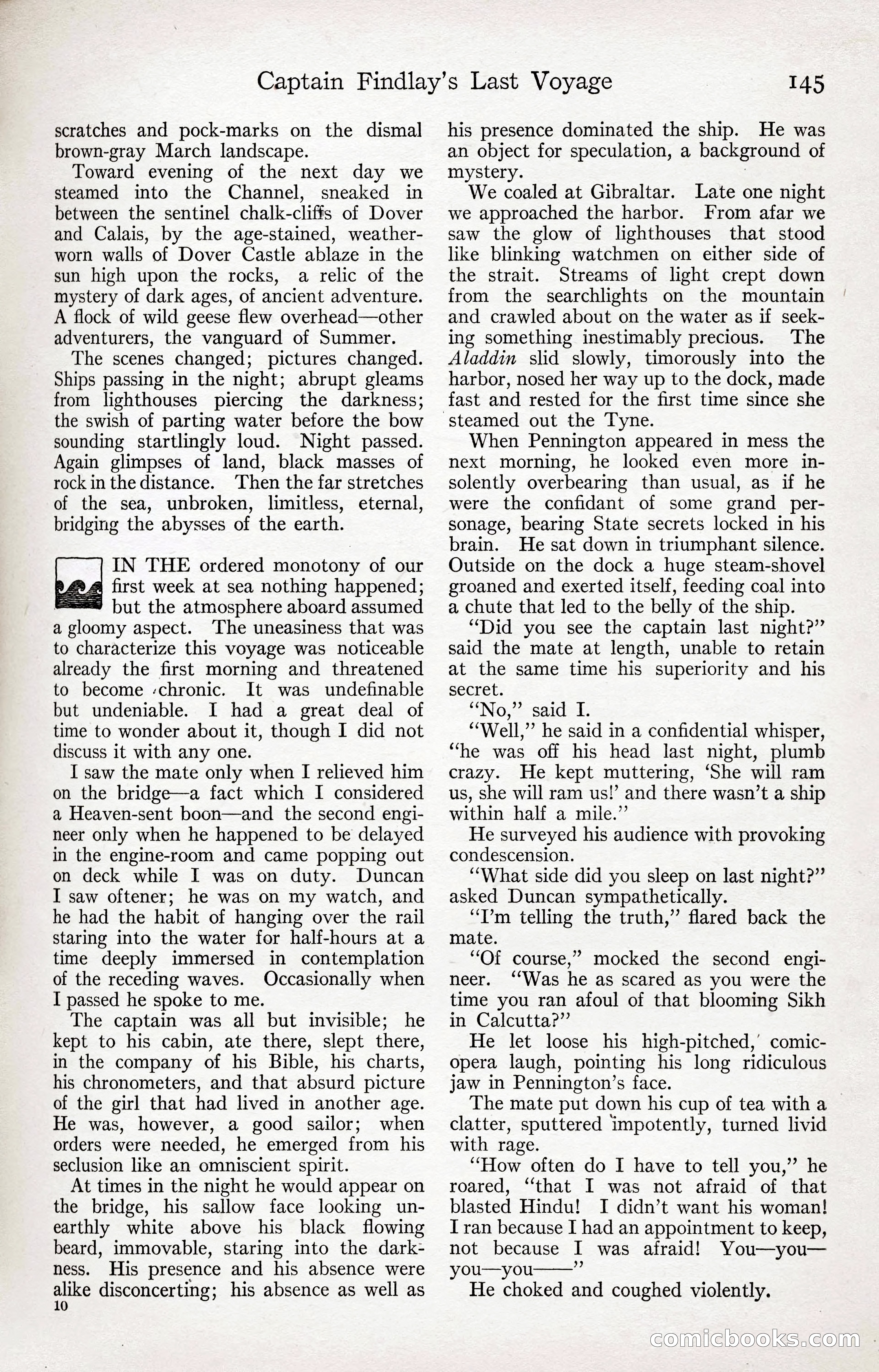
A restored page from Pulp Fiction, 1918. Page through the whole issue in the reader above.
📄 Transcribed text from this page (OCR, searchable)
Machine-transcribed from the original scan — historical spelling and the odd misread are preserved.
Captain Findlay’s Last Voyage scratches and pock-marks on the dismal brown-gray March landscape. Toward evening of the next day we steamed into the Channel, sneaked in between the sentinel chalk-cliffs of Dover and Calais, by the age-stained, weather- worn walls of Dover Castle ablaze in the sun high upon the rocks, a relic of the mystery of dark ages, of ancient adventure. A flock of wild geese flew overhead—other adventurers, the vanguard of Summer. The scenes changed; pictures changed. Ships passing in the night; abrupt gleams from lighthouses piercing the darkness; the swish of parting water before the bow sounding startlingly loud. Night passed. Again glimpses of land, black masses of rock in the distance. ‘Then the far stretches of the sea, unbroken, limitless, eternal, bridging the abysses of the earth. IN THE ordered monotony of our 2 4 first week at sea nothing happened; ==8 but the atmosphere aboard assumed a gloomy aspect. ‘The uneasiness that was to characterize this voyage was noticeable already the first morning and threatened to become -chronic. It was undefinable but undeniable. I had a great deal of time to wonder about it, though I did not discuss it with any one. I saw the mate only when I relieved him on the bridge—a fact which I considered a Heaven-sent boon—and the second engi- neer only when he happened to be delayed in the engine-room and came popping out on deck while I was on duty. Duncan I saw oftener; he was on my watch, and he had the habit of hanging over the rail staring into the water for half-hours at a time deeply immersed in contemplation of the receding waves. Occasionally when I passed he spoke to me. The captain was all but invisible; he kept to his cabin, ate there, slept there, in the company of his Bible, his charts, his chronometers, and that absurd picture of the girl that had lived in another age. He was, however, a good sailor; when orders were needed, he emerged from his seclusion like an omniscient spirit. At times in the night he would appear on the bridge, his sallow face looking un- earthly white above his black flowing beard, immovable, staring into the dark- ness. His presence and his absence were alike disconcerting; his absence as well as 145 his presence dominated the ship. He was an object for speculation, a background of mystery. We coaled at Gibraltar. Late one night we approached the harbor. From afar we saw the glow of lighthouses that stood like blinking watchmen on either side of the strait. Streams of light crept down from the searchlights on the mountain and crawled about on the water as if seek- ing something inestimably precious. The Aladdin slid slowly, timorously into the harbor, nosed her way up to the dock, made fast and rested for the first time since she steamed out the Tyne. When Pennington appeared in mess the next morning, he looked even more in- solently overbearing than usual, as if he were the confidant of some grand per- sonage, bearing State secrets locked in his brain. He sat down in triumphant silence. Outside on the dock a huge steam-shovel groaned and exerted itself, feeding coal into a chute that led to the belly of the ship. “Did you see the captain last night?” said the mate at length, unable to retain at the same time his superiority and his secret. “No,” said I. ‘“‘Well,”’ he said in a confidential whisper, “he was off his head last night, plumb crazy. He kept muttering, ‘She will ram us, she will ram us!’ and there wasn’t a ship within half a mile.” He surveyed his audience with provoking condescension. ‘“‘What side did you sleep on last night?” asked Duncan sympathetically. “Ym telling the truth,” flared back the mate. “Of course,” mocked the second engi-~ neer. ‘‘Was he as scared as you were the time you ran afoul of that blooming Sikh in Calcutta?” He let loose his high-pitched,’ comic- opera laugh, pointing his long ridiculous jaw in Pennington’s face. The mate put down his cup of tea with a clatter, sputtered impotently, turned livid with rage. ‘How often do I have to tell you,” he roared, “‘that I was not afraid of that blasted Hindu! I didn’t want his woman! I ran because I had an appointment to keep, not because I was afraid! You—you— you—you se He choked and coughed violently. COnnicloo@olK< (C@