
Pulp Fiction, 1918 · page 144 of 194
Adventure Magazine Cover, April 3, 1918 — page 144: what you’re looking at
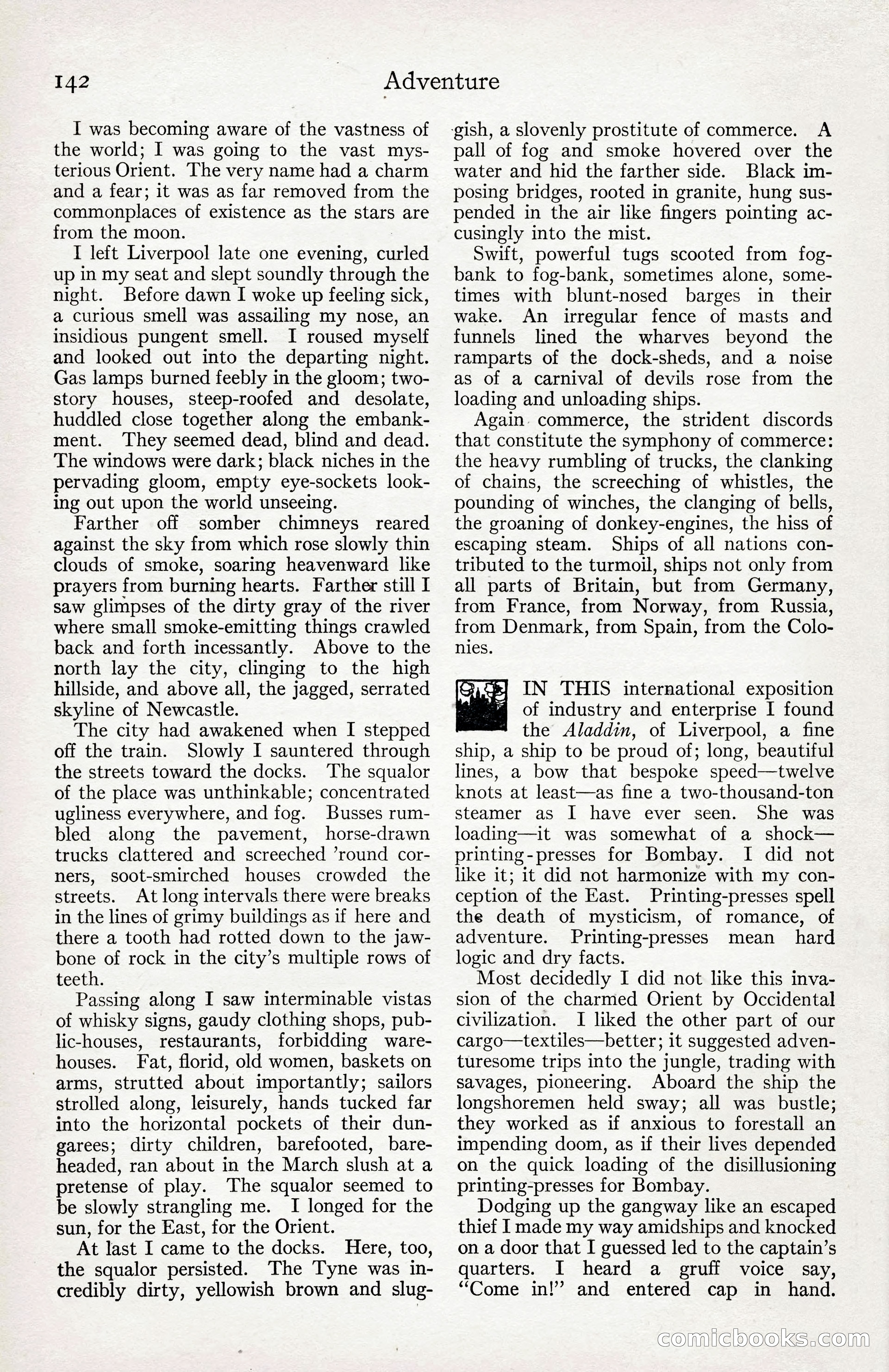
A restored page from Pulp Fiction, 1918. Page through the whole issue in the reader above.
📄 Transcribed text from this page (OCR, searchable)
Machine-transcribed from the original scan — historical spelling and the odd misread are preserved.
142 I was becoming aware of the vastness of the world; I was going to the vast mys- terious Orient. The very name had a charm and a fear; it was as far removed from the commonplaces of existence as the stars are from the moon. . I left Liverpool late one evening, curled up in my seat and slept soundly through the night. Before dawn I woke up feeling sick, a curious smell was assailing my nose, an insidious pungent smell. I roused myself and looked out into the departing night. Gas lamps burned feebly in the gloom; two- story houses, steep-roofed and desolate, huddled close together along the embank- ment. They seemed dead, blind and dead. The windows were dark; black niches in the pervading gloom, empty eye-sockets look- ing out upon the world unseeing. Farther off somber chimneys reared against the sky from which rose slowly thin clouds of smoke, soaring heavenward like prayers from burning hearts. Farther still I saw glimpses of the dirty gray of the river where small smoke-emitting things crawled back and forth incessantly. Above to the north lay the city, clinging to the high hillside, and above all, the jagged, serrated skyline of Newcastle. The city had awakened when I stepped off the train. Slowly I sauntered through the streets toward the docks. The squalor of the place was unthinkable; concentrated ugliness everywhere, and fog. Busses rum- bled along the pavement, horse-drawn trucks clattered and screeched ’round cor- ners, soot-smirched houses crowded the streets. At long intervals there were breaks in the lines of grimy buildings as if here and there a tooth had rotted down to the jaw- bone of rock in the city’s multiple rows of teeth. Passing along I saw interminable vistas of whisky signs, gaudy clothing shops, pub- lic-houses, restaurants, forbidding ware- houses. Fat, florid, old women, baskets on arms, strutted about importantly; sailors strolled along, leisurely, hands tucked far into the horizontal pockets of their dun- garees; dirty children, barefooted, bare- headed, ran about in the March slush at a pretense of play. The squalor seemed to be slowly strangling me. I longed for the sun, for the East, for the Orient. At last I came to the docks. Here, too, the squalor persisted. The Tyne was in- credibly dirty, yellowish brown and slug- Adventure gish, a slovenly prostitute of commerce. A pall of fog and smoke hovered over the water and hid the farther side. Black im- posing bridges, rooted in granite, hung sus- pended in the air like fingers pointing ac- cusingly into the mist. Swift, powerful tugs scooted from fog- bank to fog-bank, sometimes alone, some- times with blunt-nosed barges in their wake. An irregular fence of masts and funnels lined the wharves beyond the ramparts of the dock-sheds, and a noise as of a carnival of devils rose from the loading and unloading ships. Again. commerce, the strident discords that constitute the symphony of commerce: the heavy rumbling of trucks, the clanking of chains, the screeching of whistles, the pounding of winches, the clanging of bells, the groaning of donkey-engines, the hiss of escaping steam. Ships of all nations con- tributed to the turmoil, ships not only from all parts of Britain, but from Germany, from France, from Norway, from Russia, from Denmark, from Spain, from the Colo- nies. IN THIS international exposition of industry and enterprise I found , the Aladdin, of Liverpool, a fine ship, a ship to be proud of; long, beautiful lines, a bow that bespoke speed—twelve knots at least—as fine a two-thousand-ton steamer as I have ever seen. She was loading—it was somewhat of a shock— printing-presses for Bombay. I did not like it; it did not harmonize with my con- ception of the East. Printing-presses spell the death of mysticism, of romance, of adventure. Printing-presses mean hard logic and dry facts. Most decidedly I did not like this inva- sion of the charmed Orient by Occidental civilization. I liked the other part of our cargo—textiles—hetter; it suggested adven- turesome trips into the jungle, trading with savages, pioneering. Aboard the ship the longshoremen held sway; all was bustle; they worked as if anxious to forestall an impending doom, as if their lives depended on the quick loading of the disillusioning printing-presses for Bombay. Dodging up the gangway like an escaped thief I made my way amidships and knocked on a door that I guessed led to the captain’s quarters. I heard a gruff voice say, “Come in!” and entered cap in hand. GOmiiGsoo S (C@