
Pulp Fiction, 1917 · page 123 of 196
Adventure Magazine, Mid-September 1917 — page 123: what you’re looking at
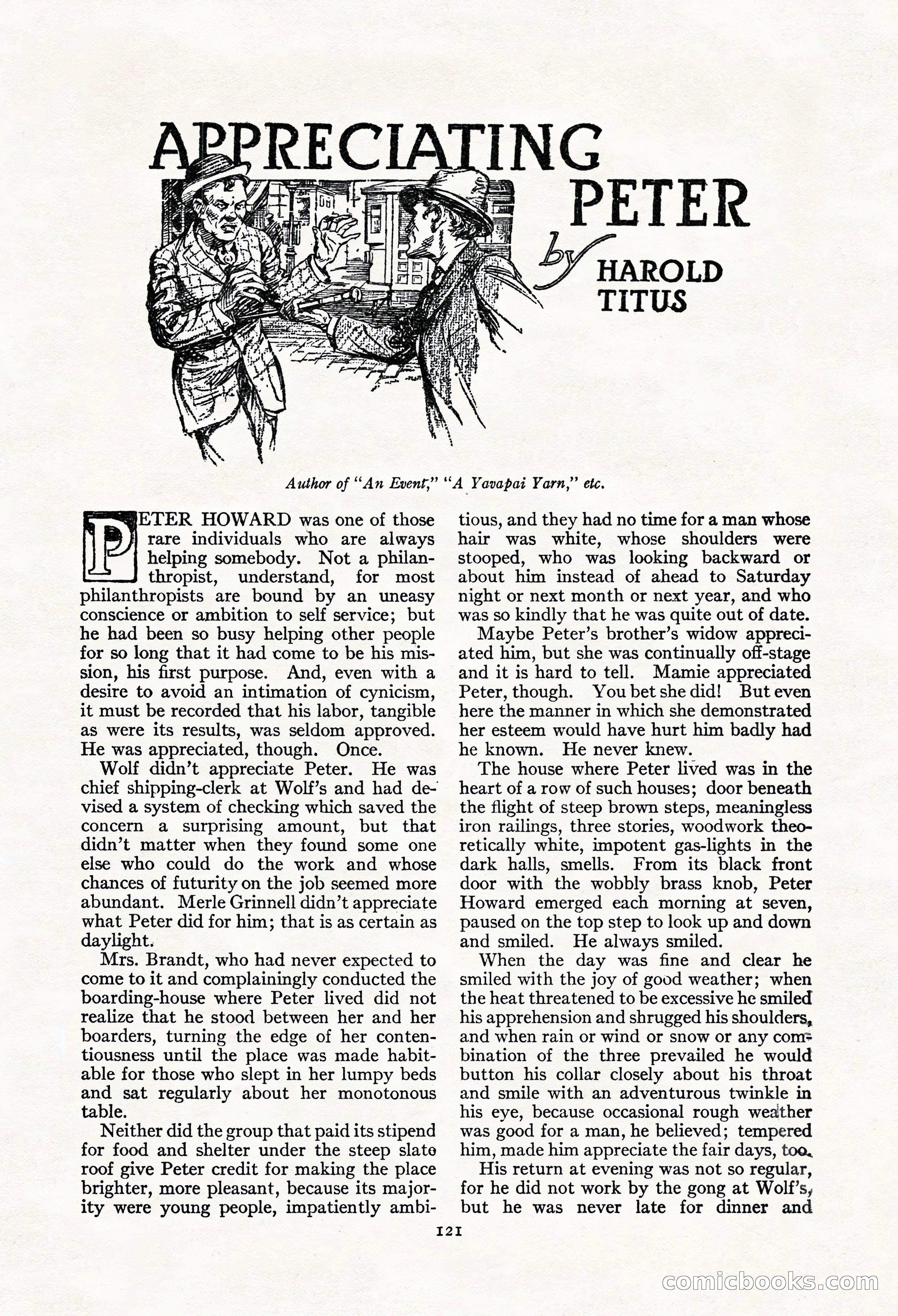
A restored page from Pulp Fiction, 1917. Page through the whole issue in the reader above.
📄 Transcribed text from this page (OCR, searchable)
Machine-transcribed from the original scan — historical spelling and the odd misread are preserved.
Author of “An Event,” “A Yavapai Yarn,” etc. SETTER HOWARD was one of those ! rare individuals who are always helping somebody. Not a philan- thropist, understand, for most philanthropists are bound by an uneasy conscience or ambition to self service; but he had been so busy helping other people for so long that it had come to be his mis- sion, his first purpose. And, even with a desire to avoid an intimation of cynicism, it must be recorded that his labor, tangible as were its results, was seldom approved. He was appreciated, though. Once. Wolf didn’t appreciate Peter. He was chief shipping-clerk at Wolf’s and had de- vised a system of checking which saved the concern a surprising amount, but that didn’t matter when they found some one else who could do the work and whose chances of futurity on the job seemed more abundant. Merle Grinnell didn’t appreciate what Peter did for him; that is as certain as daylight. Mrs. Brandt, who had never expected to come to it and complainingly conducted the boarding-house where Peter lived did not realize that he stood between her and her boarders, turning the edge of her conten- tiousness until the place was made habit- able for those who slept in her lumpy beds and sat regularly about her monotonous table. Neither did the group that paid its stipend for food and shelter under the steep slate roof give Peter credit for making the place brighter, more pleasant, because its major- ity were young people, impatiently ambi- tious, and they had no time for a man whose hair was white, whose shoulders were stooped, who was looking backward or about him instead of ahead to Saturday night or next month or next year, and who was so kindly that he was quite out of date. Maybe Peter’s brother’s widow appreci- ated him, but she was continually off-stage and it is hard to tell. Mamie appreciated Peter, though. Youbetshedid! Buteven here the manner in which she demonstrated her esteem would have hurt him badly had he known. He never knew. The house where Peter lived was in the heart of a row of such houses; door beneath the flight of steep brown steps, meaningless iron railings, three stories, woodwork theo- retically white, impotent gas-lights in the dark halls, smells. From its black front door with the wobbly brass knob, Peter Howard emerged each morning at seven, paused on the top step to look up and down and smiled. He always smiled. When the day was fine and clear he smiled with the joy of good weather; when the heat threatened to be excessive he smiled his apprehension and shrugged his shoulders, and when rain or wind or snow or any com= bination of the three prevailed he would button his collar closely about his throat and smile with an adventurous twinkle in his eye, because occasional rough weather was good for a man, he believed; tempered him, made him appreciate the fair days, too. His return at evening was not so regular, for he did not work by the gong at Wolf’s, but he was never late for dinner and I21I COmicloo C© =