
Pulp Fiction, 1922 · page 149 of 200
Adventure Magazine Cover, December 10, 1922 — page 149: what you’re looking at
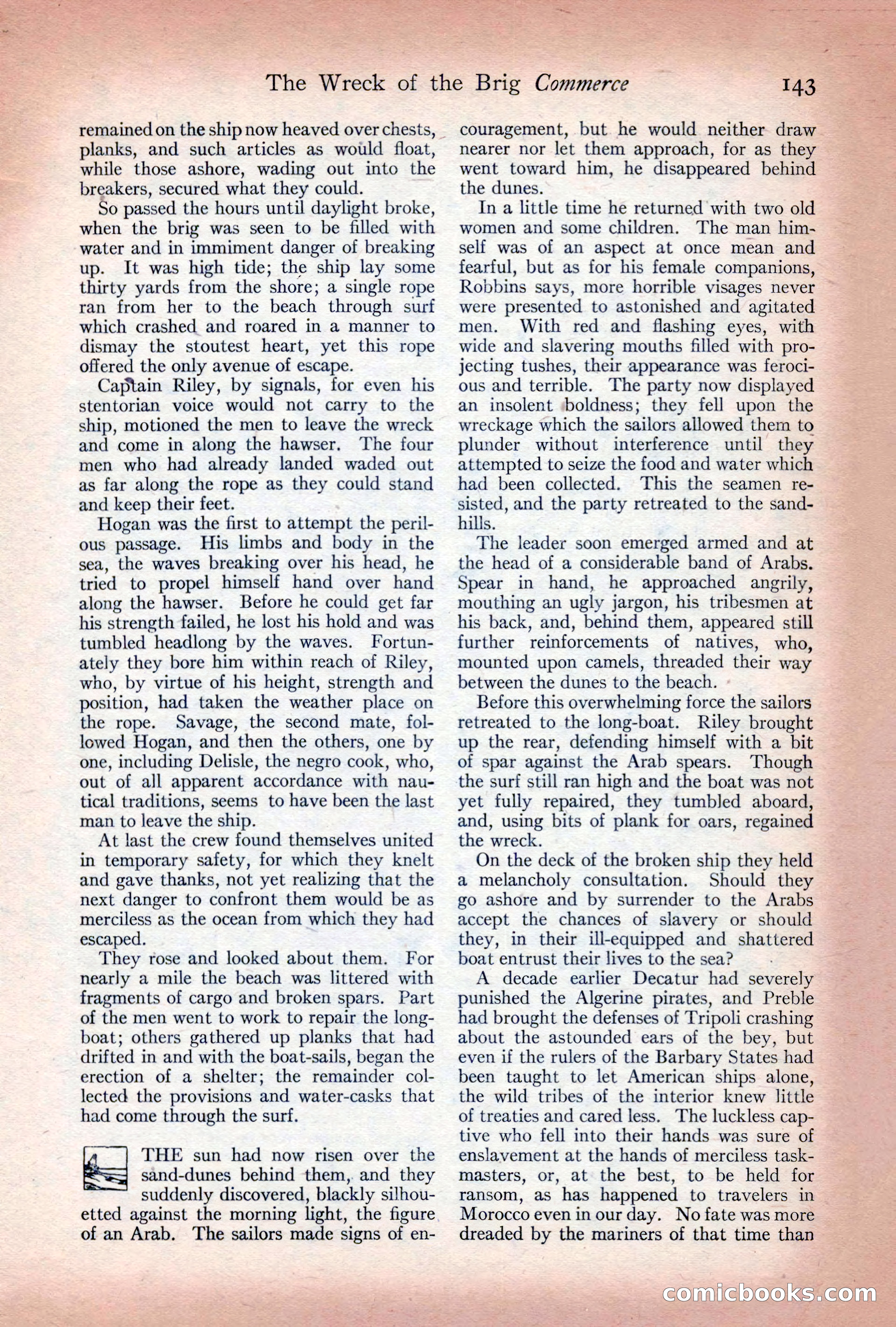
A restored page from Pulp Fiction, 1922. Page through the whole issue in the reader above.
📄 Transcribed text from this page (OCR, searchable)
Machine-transcribed from the original scan — historical spelling and the odd misread are preserved.
The Wreck of the Brig Commerce remained on the ship now heaved over chests, | planks, and such articles as would float, while those ashore, wading out into the breakers, secured what they could. So passed the hours until daylight broke, when the brig was seen to be filled with water and in immiment danger of breaking up. It was high tide; the ship lay some thirty yards from the shore; a single rope ran from her to the beach through surf which crashed and roared in a manner to dismay the stoutest heart, yet this rope offered the only avenue of escape. Captain Riley, by signals, for even his stentorian voice would not carry to the ship, motioned the men to leave the wreck and come in along the hawser. The four men who had already landed waded out as far along the rope as they could stand and keep their feet. Hogan was the first to attempt the peril- ous passage. His limbs and body in the sea, the waves breaking over his head, he tried to propel himself hand over hand along the hawser. Before he could get far his strength failed, he lost his hold and was tumbled headlong by the waves. Fortun- ately they bore him within reach of Riley, who, by virtue of his height, strength and position, had taken the weather place on the rope. Savage, the second mate, fol- lowed Hogan, and then the others, one by one, including Delisle, the negro cook, who, out of all apparent accordance with nau- tical traditions, seems to have been the last man to leave the ship. At last the crew found themselves united in temporary safety, for which they knelt and gave thanks, not yet realizing that the next danger to confront them would be as merciless as the ocean from which they had escaped. They rose and looked about them. For nearly a mile the beach was littered with fragments of cargo and broken spars. Part of the men went to work to repair the long- boat; others gathered up planks that had drifted in and with the boat-sails, began the erection of a shelter; the remainder col- lected the provisions and water-casks that had come through the surf. = sand-dunes behind them,. and they suddenly discovered, blackly silhou- etted against the morning light, the figure of an Arab. The sailors made signs of en- THE sun had now risen over the 143 couragement, but he would neither draw nearer nor let them approach, for as they went toward him, he disappeared behind the dunes. In a little time he returned with two old women and some children. The man him- self was of an aspect at once mean and fearful, but as for his female companions, Robbins says, more horrible visages never were presented to astonished and agitated men. With red and flashing eyes, with wide and slavering mouths filled with pro- jecting tushes, their appearance was feroci- ous and terrible. The party now displayed an insolent ‘boldness; they fell upon the wreckage which the sailors allowed them to plunder without interference until they attempted to seize the food and water which had been collected. This the seamen re- sisted, and the party retreated to the sand- hills. The leader soon emerged armed and at the head of a considerable band of Arabs. Spear in hand, he approached angrily, mouthing an ugly jargon, his tribesmen at his back, and, behind them, appeared still further reinforcements of natives, who, mounted upon camels, threaded their way between the dunes to the beach. Before this overwhelming force the sailors retreated to the long-boat. Riley brought up the rear, defending himself with a bit of spar against the Arab spears. Though the surf still ran high and the boat was not yet fully repaired, they tumbled aboard, and, using bits of plank for oars, regained the wreck. On the deck of the broken ship they held a melancholy consultation. Should they go ashore and by surrender to the Arabs accept the chances of slavery or should they, in their ill-equipped and shattered boat entrust their lives to the sea? A decade earlier Decatur had severely punished the Algerine pirates, and Preble had brought the defenses of Tripoli crashing about the astounded ears of the bey, but even if the rulers of the Barbary States had been taught to let American ships alone, the wild tribes of the interior knew little of treaties and cared less. The luckless cap- tive who fell into their hands was sure of enslavement at the hands of merciless task- masters, or, at the best, to be held for ransom, as has happened to travelers in Morocco even in our day. No fate was more dreaded by the mariners of that time than Gomichooks (eoy ee