
Pulp Fiction, 1922 · page 47 of 200
Adventure Magazine Cover — page 47: what you’re looking at
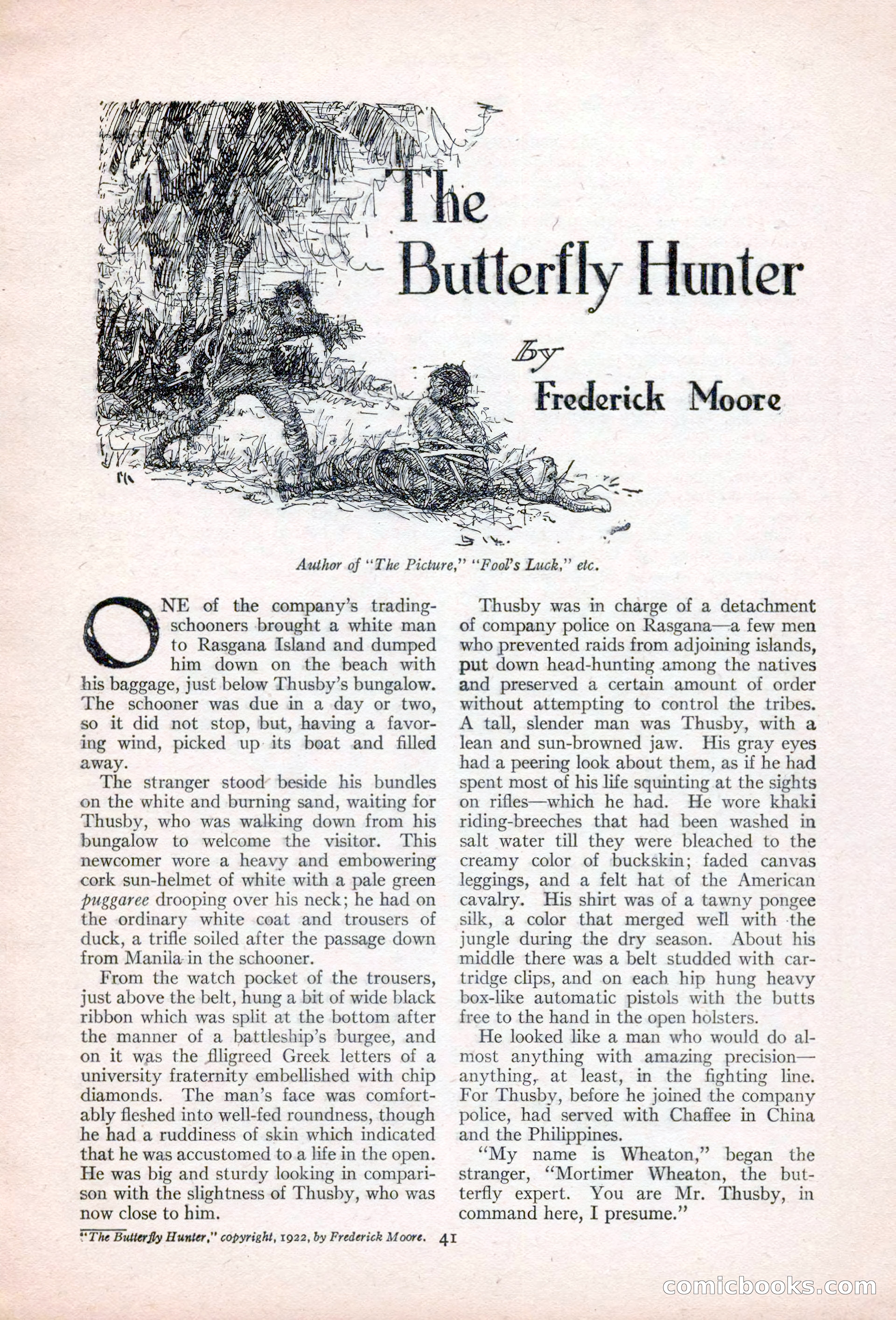
A restored page from Pulp Fiction, 1922. Page through the whole issue in the reader above.
📄 Transcribed text from this page (OCR, searchable)
Machine-transcribed from the original scan — historical spelling and the odd misread are preserved.
by Hs Wd an hy IAS ee fine Me ye a ht Author of ‘‘The Picture,” ‘‘Fool’s Luck,”’ etc. NE of the company’s trading- schooners brought a white man to Rasgana Island and dumped him down on the beach with his baggage, just below Thusby’s bungalow. The schooner was due in a day or two, so it did not stop, but, having a favor- ing wind, picked up its boat and filled away. The stranger stood beside his bundles on the white and burning sand, waiting for Thusby, who was walking down from his bungalow to welcome the visitor. This newcomer wore a heavy and embowering cork sun-helmet of white with a pale green puggaree drooping over his neck; he had on the ordinary white coat and trousers of duck, a trifle soiled after the passage down from Manila in the schooner. From the watch pocket of the trousers, just above the belt, hung a bit of wide black ribbon which was split at the bottom after the manner of a battleship’s burgee, and on it was the flligreed Greek letters of a university fraternity embellished with chip diamonds. The man’s face was comfort- ably fleshed into well-fed roundness, though he had a ruddiness of skin which indicated that he was accustomed to a life in the open. He was big and sturdy looking in compari- son with the slightness of Thusby, who was now close to him. “The Butterfly Hunter,” copyright, 1922, by Frederick Moore. Thusby was in charge of a detachment of company police on Rasgana—a few men who prevented raids from adjoining islands, put down head-hunting among the natives and preserved a certain amount of order without attempting to control the tribes. A tall, slender man was Thusby, with a lean and sun-browned jaw. His gray eyes had a peering look about them, as if he had spent most of his life squinting at the sights on rifles—which he had. He wore khaki riding-breeches that had been washed in salt water till they were bleached to the creamy color of buckskin; faded canvas leggings, and a felt hat of the American cavalry. His shirt was of a tawny pongee sik, a color that merged well with -the jungle during the dry season. About his middle there was a belt studded with car- tridge clips, and on each hip hung heavy box-like automatic pistols with the butts free to the hand in the open holsters. He looked like a man who would do al- most anything with amazing precision— anything, at least, in the fighting line. For Thusby, before he joined the company police, had served with Chaffee in China and the Philippines. “My name is Wheaton,” began the stranger, “Mortimer Wheaton, the but- terfly expert. You are Mr. Thusby, in command here, I presume.” > Pd GO .TOO = a (C@