
Pulp Fiction, 1922 · page 46 of 200
Adventure Magazine Cover — page 46: what you’re looking at
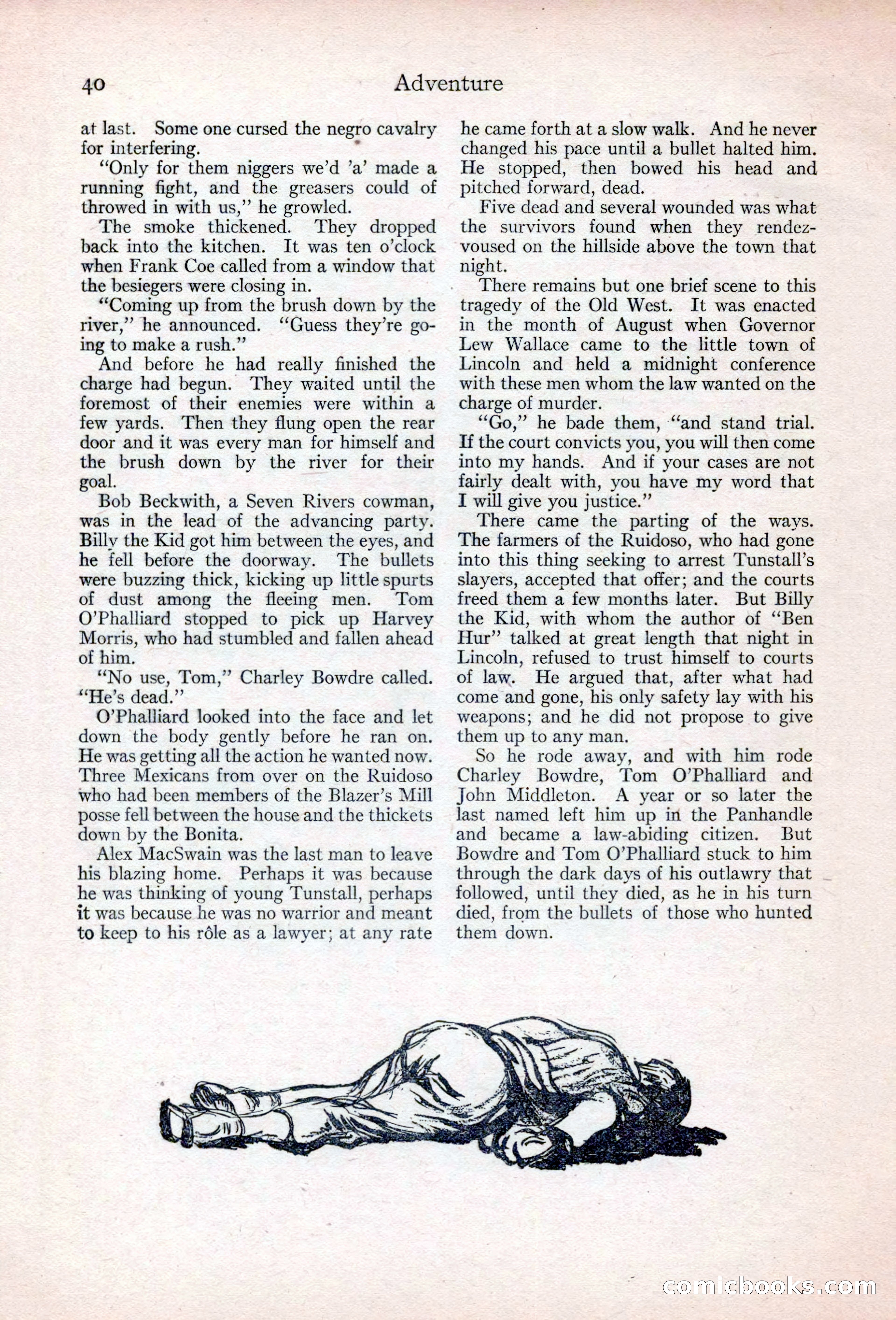
A restored page from Pulp Fiction, 1922. Page through the whole issue in the reader above.
📄 Transcribed text from this page (OCR, searchable)
Machine-transcribed from the original scan — historical spelling and the odd misread are preserved.
40 at last. Some one cursed the negro cavalry for interfering. “Only for them niggers we’d ’a’ made a running fight, and the greasers could of throwed in with us,” he growled. The smoke thickened. They dropped back into the kitchen. It was ten o’clock when Frank Coe called from a window that the besiegers were closing in. “Coming up from the brush down by the river,’ he announced. ‘Guess they’re go- ing to make a rush.” And before he had really finished the charge had begun. They waited until the foremost of their enemies were within a few yards. Then they flung open the rear door and it was every man for himself and the brush down by the river for their goal. Bob Beckwith, a Seven Rivers cowman, was in the lead of the advancing party. Billy the Kid got him between the eyes, and he fell before the doorway. The bullets were buzzing thick, kicking up little spurts of dust among the fleeing men. Tom O’Phalliard stopped to pick up Harvey Morris, who had stumbled and fallen ahead of him. “No use, Tom,” Charley Bowdre called. ““He’s dead.”’ O’Phalliard looked into the face and let down the body gently before he ran on. He was getting all the action he wanted now. Three Mexicans from over on the Ruidoso who had been members of the Blazer’s Mill posse fell between the house and the thickets down by the Bonita. Alex MacSwain was the last man to leave his blazing home. Perhaps it was because he was thinking of young Tunstall, perhaps it was because he was no warrior and meant to keep to his réle as a lawyer; at any rate Adventure he came forth at a slow walk. And he never changed his pace until a bullet halted him. He stopped, then bowed his head and pitched forward, dead. Five dead and several wounded was what the survivors found when they rendez- voused on the hillside above the town that night. There remains but one brief scene to this tragedy of the Old West. It was enacted in the month of August when Governor Lew Wallace came to the little town of Lincoln and held a midnight conference with these men whom the law wanted on the charge of murder. “Go,” he bade them, “and stand trial. If the court convicts you, you will then come into my hands. And if your cases are not fairly dealt with, you have my word that I will give you justice.” There came the parting of the ways. The farmers of the Ruidoso, who had gone into this thing seeking to arrest Tunstall’s slayers, accepted that offer; and the courts freed them a few months later. But Billy the Kid, with whom the author of ‘Ben Hur” talked at great length that night in Lincoln, refused to trust himself to courts of law. He argued that, after what had come and gone, his only safety lay with his weapons; and he did not propose to give them up to any man. So he rode away, and with him rode Chariey Bowdre, Tom O’Phalliard and John Middleton. A year or so later the last named left him up in the Panhandle and became a law-abiding citizen. But Bowdre and Tom O’Phalliard stuck to him through the dark days of his outlawry that followed, until they died, as he in his turn died, from the bullets of those who hunted them down. COnmmicloool< (C@)