
Pulp Fiction, 1916 · page 166 of 228
Adventure Magazine, March 1916 — page 166: what you’re looking at
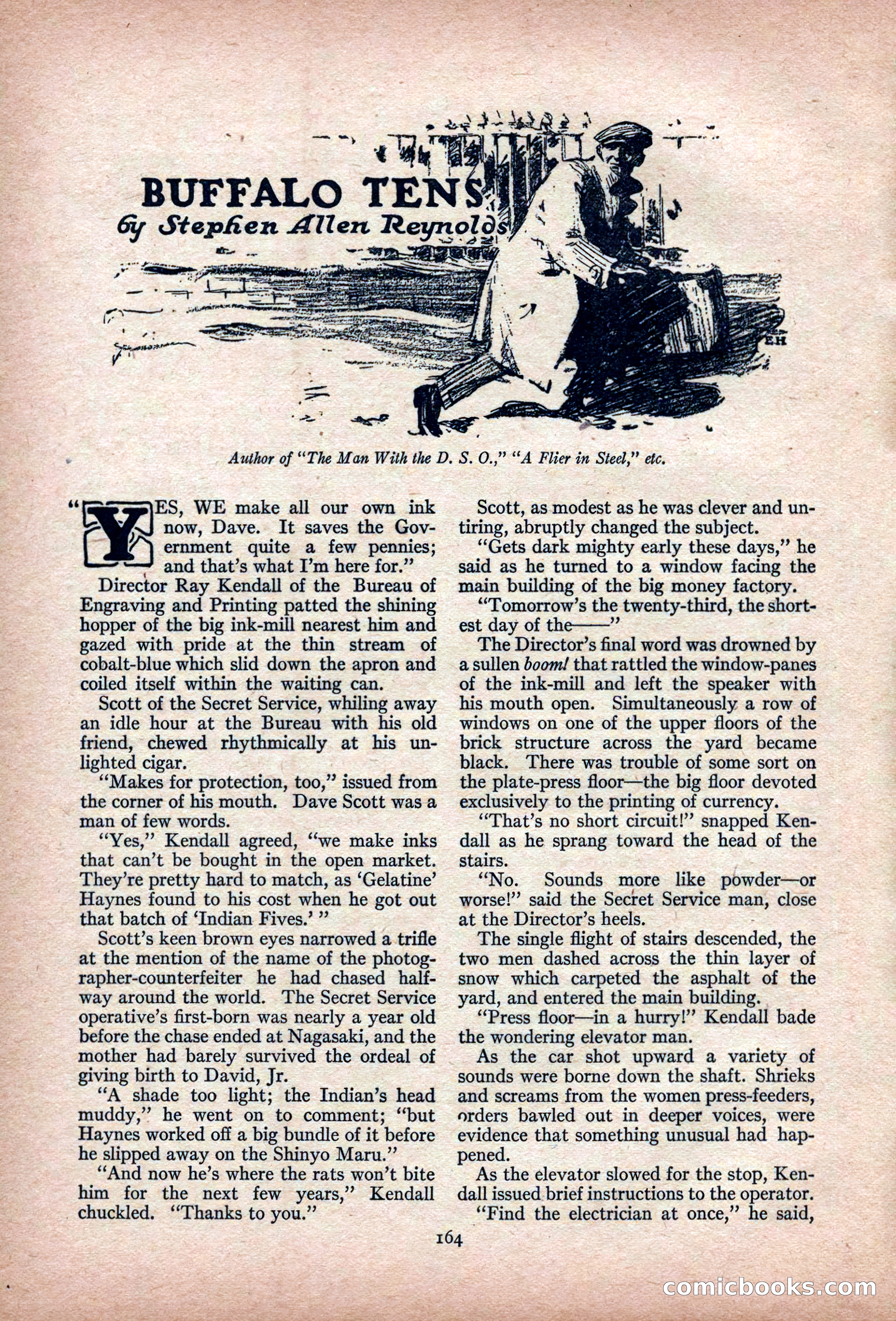
A restored page from Pulp Fiction, 1916. Page through the whole issue in the reader above.
📄 Transcribed text from this page (OCR, searchable)
Machine-transcribed from the original scan — historical spelling and the odd misread are preserved.
ee 4. BUFFALO TENS! Y Sispesn AA ler Reynolse) Author of “The Man With the D. S. 0.,” “A Flier in Steel,” etc. aby dee. WE make all our own ink ws now, Dave. It saves the Gov- [ @ ernment quite a few pennies; ~ and that’s what I’m here for.” Director Ray Kendall of the Bureau of Engraving and Printing patted the shining hopper of the big ink-mill nearest him and gazed with pride at the thin stream of cobalt-blue which slid down the apron and coiled itself within the waiting can. Scott of the Secret Service, whiling away an idle hour at the Bureau with his old friend, chewed rhythmically at his un- lighted cigar. “Makes for protection, too,” issued from the corner of his mouth. Dave Scott was a man of few words. “Ves,” Kendall agreed, ‘“‘we make inks that can’t be bought in the open market. They’re pretty hard to match, as ‘Gelatine’ Haynes found to his cost when he got out that batch of ‘Indian Fives.’ ” Scott’s keen brown eyes narrowed a trifle at the mention of the name of the photog- rapher-counterfeiter he had chased half- way around the world. The Secret Service operative’s first-born was nearly a year old before the chase ended at Nagasaki, and the mother had barely survived the ordeal of giving birth to David, Jr. “A shade too light; the Indian’s head muddy,” he went on to comment; “but Haynes worked off a big bundle of it before he slipped away on the Shinyo Maru.” ‘“‘And now he’s where the rats won’t bite him for the next few years,’ Kendall _ chuckled. ‘‘Thanks to you.” 164 Scott, as modest as he was clever and un- tiring, abruptly changed the subject. “Gets dark mighty early these days,’ he said as he turned to a window facing the main building of the big money factory. “Tomorrow’s the twenty-third, the short- est day of the——” The Director’s final word was drowned by a sullen boom! that rattled the window-panes of the ink-mill and left the speaker with his mouth open. Simultaneously a row of windows on one of the upper floors of the brick structure across the yard became black. There was trouble of some sort on the plate-press floor—the big floor devoted exclusively to the printing of currency. ‘“‘That’s no short circuit!”’? snapped Ken- dall as he sprang toward the head of the stairs. “No. Sounds more like powder—or worse!’’ said the Secret Service man, close at the Director’s heels. The single flight of stairs descended, the two men dashed across the thin layer of snow which carpeted the asphalt of the yard, and entered the main building. “Press floor—in a hurry!’’ Kendall bade the wondering elevator man. As the car shot upward a variety of sounds were borne down the shaft. Shrieks and screams from the women press-feeders, orders bawled out in deeper voices, were evidence that something unusual had hap- pened. As the elevator slowed for the stop, Ken- dall issued brief instructions to the operator. “Find the electrician at once,” he said, Eomichoo Ce” =a a ee, ee ee 2S a eee ee, ee (E(0)