
Pulp Fiction, 1883 · page 103 of 142
Stories with a Vengeance — page 103: what you’re looking at
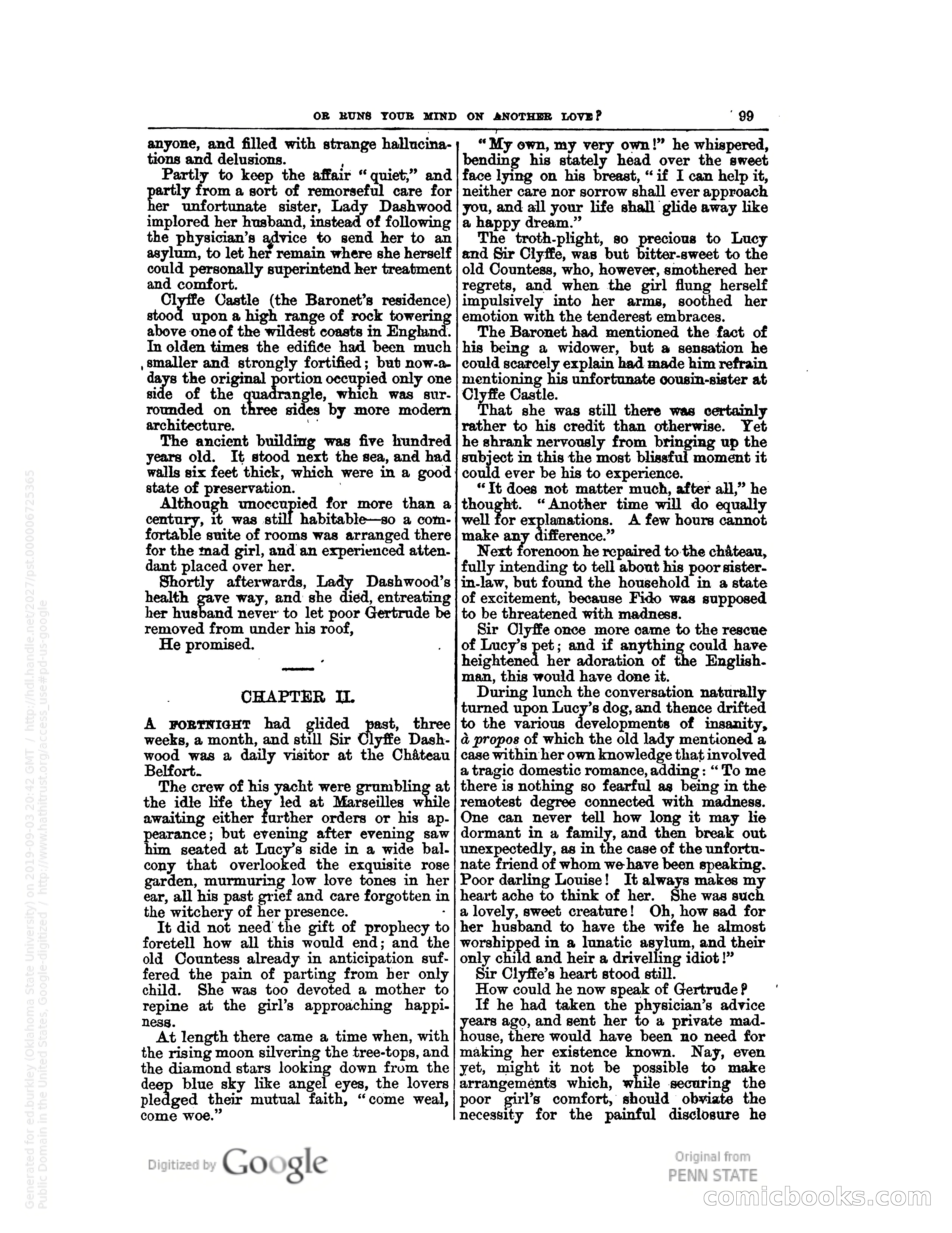
A restored page from Pulp Fiction, 1883. Page through the whole issue in the reader above.
📄 Transcribed text from this page (OCR, searchable)
Machine-transcribed from the original scan — historical spelling and the odd misread are preserved.
OR RUNS YOUR MIND anyone, and filled with strange hallucina- tions and. delusions. Partly to keep the affair “quiet,” and partly from a sort of remorseful care for her unfortunate sister, Lady Dashwood implored her husband, instead of following the physician’s advice to send her to an asylum, to let her remain where she herself could personally superintend her treatment and comfort. Clyffe Castle (the Baronet’s residence) stood upon a high range of rock towerin above one of the wildest coasts in Englund. In olden times the edifi¢e had been much ,smaller and strongly fortified; but now-a- days the original portion oecupied only one side of the nadrangle, which was sur- rounded on t sides by more modern architecture. The ancient building was five hundred years old. It stood next the sea, and had walls six feet thick, which were in a good: state of preservation. Although unoccupied for more than a century, 1t was still habitable—so a com- fortable suite of rooms was arranged there for the mad girl, and an experienced atten- dant placed over her. Shortly afterwards, Lady Dashwood’s health gave way, and she died, entreating her husband never’ to let poor Gertrude be removed from under his roof, He promised. ea CHAPTER II. A ¥ForrnicHtT had glided past, three weeks, a month, and still Sir Clyffe Dash- wood was a daily visitor at the Chateau Belfort. The crew of his yacht were grumbling at the idle life they led at Marseilles while awaiting either further orders or his ap- pearance; but evening after evening saw him seated at Lucy’s side in a wide bal- cony that overlooked the exquisite rose garden, murmuring low love tones in her ear, all his past grief and care forgotten in the witchery of her presence. ; It did not need’ the gift of prophecy to foretell how all this would end; and the old Countess already in anticipation suf- fered the pain of parting from her only child. She was too devoted a mother to repine at the girl’s approaching happi- ness. At length there came a time when, with the rising moon silvering the tree-tops, and the diamond stars looking down from the deep blue sky like angel eyes, the lovers pledged their mutual faith, “come weal, come woe.” Google {rather to his credit than otherwise. ON ANOTHER LOVE? ' 99 “My own, my very own!” he whispered, bending his stately head over the sweet face lying on his breast, “if I can help it, neither care nor sorrow shall ever approach you, and all your life shall glide away like a happy dream.” The troth-plight, so precious to Lucy and Sir Clyffe, was but bitter-sweet to the old Countess, who, however, smothered her regrets, and when the girl flung herself impulsively into her arms, soothed her emotion with the tenderest embraces. The Baronet had mentioned the fact of his being a widower, but a sensation he could scarcely explain had made him refrain mentioning his unfortunate cousin-sister at Clyffe Castle. hat she was still there was a y et he shrank nervously from bringing up the subject in this the most blissful moment it could ever be his to experience. _ “It does not matter much, after all,” he thought. “Another time will do equally well for explanations. A few hours cannot make any difference.” Next forenoon he repaired to the chateau, fully intending to tell about his poor sister- in-law, but found the household in a state of excitement, because Fido was supposed to be threatened with madness. Sir Olyffe once more came to the rescue of Lucy’s pet; and if anything could have heightened her adoration of the English. man, this would have done it. During lunch the conversation naturally turned upon Lucy’s dog, and thence drifted to the various developments of insanity, a propos of which the old lady mentioned a case within her own knowledge that involved a tragic domestic romance, adding : “To me there is nothing so fearful ag being in the remotest degree connected with madness. One can never tell how long it may he dormant in a family, and then break out unexpectedly, as in the case of the unfortu- nate friend of whom we have been speaking. Poor darling Louise! It always makes my heart ache to think of her. She was such a lovely, sweet creature! Oh, how sad for her husband to have the wife he almost worshipped in a lunatic asylum, and their only child and heir a drivelling idiot !” Sir Clyffe’s heart stood still. How could he now speak of Gertrude P If he had taken the physician’s advice years ago, and sent her to a private mad- house, there would have been no need for making her existence known. Nay, even yet, might it not be possible to make arrangements which, while securing the poor girl’s comfort, should obviate the necessity for the painful disclosure he CY, JOO S CO)