
Pulp Fiction, 1943 · page 82 of 100
12 Sports Aces, May 1943 — page 82: what you’re looking at
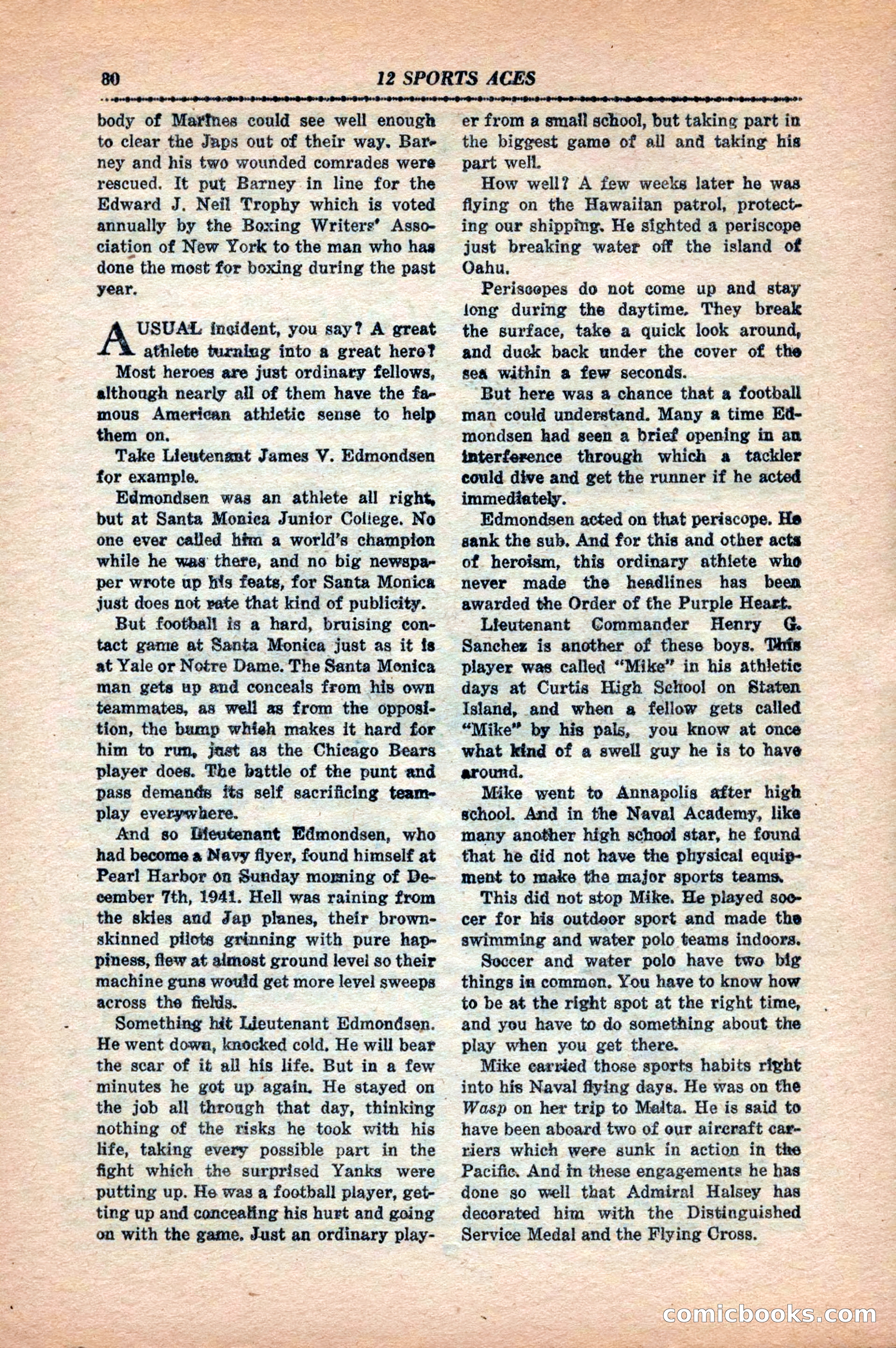
A restored page from Pulp Fiction, 1943. Page through the whole issue in the reader above.
📄 Transcribed text from this page (OCR, searchable)
Machine-transcribed from the original scan — historical spelling and the odd misread are preserved.
80 | 12 SPORTS ACES body of Martnes could see well enough to clear the Japs out of their way. Bare ney and his two wounded comrades were rescued. It put Barney in line for the Edward J. Neil Trophy which is voted annually by the Boxing Writers’ Asso- ciation of New York to the man who has done the most for boxing during the past year. : USUAL incident, you say? A great athlete turning into a great hero? Most heroes are just ordinary fellows, although nearly all of them have the fa- mous American athietic sense to help them on. Take Lieutenant James V. Edmondsen for example. Edmondsen was an athlete all right, but at Santa Monica Junior Coliege. No one ever called him a world’s champion while he was there, and no big newspa- per wrote up his feats, for Santa Monica just does not vate that kind of publicity. But football is a hard, bruising con- tact game at Santa Monica just as it fs at Yale or Notre Dame. The Santa Monica man gets up and conceals from his own teammates, as well as from the opposi- tion, the bump whieh makes it hard for him to run, jast as the Chicago Bears player does. The battle of the punt and pass demands its self sacrificing team- play everywhere. And so Dfeutenant Edmondsen, who had become a Navy fiyer, found himself at Pearl Harbor on Sunday morning of De- cember 7th, 1941. Hell was raining from the skies and Jap planes, their brown- skinned pilots grinning with pure hap- piness, flew at almost ground levei so their machine guns would get more level sweeps across the fields. Something hit Lieutenant Edmondsen. He went down, knocked cold, He will bear the scar of it ali his life. But in a few “minutes he got up again. He stayed on the job all through that day, thinking © nothing of the risks he took with his life, taking every possible part in the fight which the surprised Yanks were _ putting up. He was a football player, get- ting up and concealing his hurt and going on with the game. Just an ordinary play- er from a smail school, but takine part in the biggest game of all and taking his part well. How well? A few weeks later he was flying on the Hawaiian patrol, protect- ing our shipping. He sighted a periscope just breaking water off the island of Oahu, Periscepes do not come up and stay long during the daytime. They break the surface, take a quick look around, and duck back under the cover of the sea within a few seconds. But here was a chance that a football man could understand. Many a time Ké- mondsen had seen a brief opening in an interference through which a tackler could dive and get the runner if he acted immediately. Edmondsen acted on that periscope. He sank the sub, And for this and other acts of heroism, this ordinary athiete who never made the headlines has been awarded the Order of the Purple Heart. Lieutenant Commander Henry G. Sanchez is another of these boys. This player was called “Mike” in his athietic days at Curtis High Sehool on Staten Island, and when a fellow gets called “Mike” by his pals, you know at once what kind of a swell guy he is to have around, Mike went to Annapolis after high school. And in the Naval Academy, like © many another high school star, he found that he did not have the physical equip- ment to make the major sports teams. This did not stop Mike. He played soc- cer for his outdeor sport and made the swimming and water polo teams indoors. Seccer and water polo have two big things in commen. You have to know how to be at the right spot at the right time, and you have to do something about the play when you get there. Mike earried those sports habits right into his Naval flying days. He was on the Wasp on her trip to Malta. He is said to have been aboard two of our aireraft car- riers which were sunk in action in the Pacific. And in these engagements he has done so well that Admiral Halsey has decorated him with the Distinguished Service Medal and the Flying Cross. : comicbook com ~ f Se ~ o PE — th ee