
Pulp Fiction, 1931 · page 49 of 68
10-Story Book, July 1931 — page 49: what you’re looking at
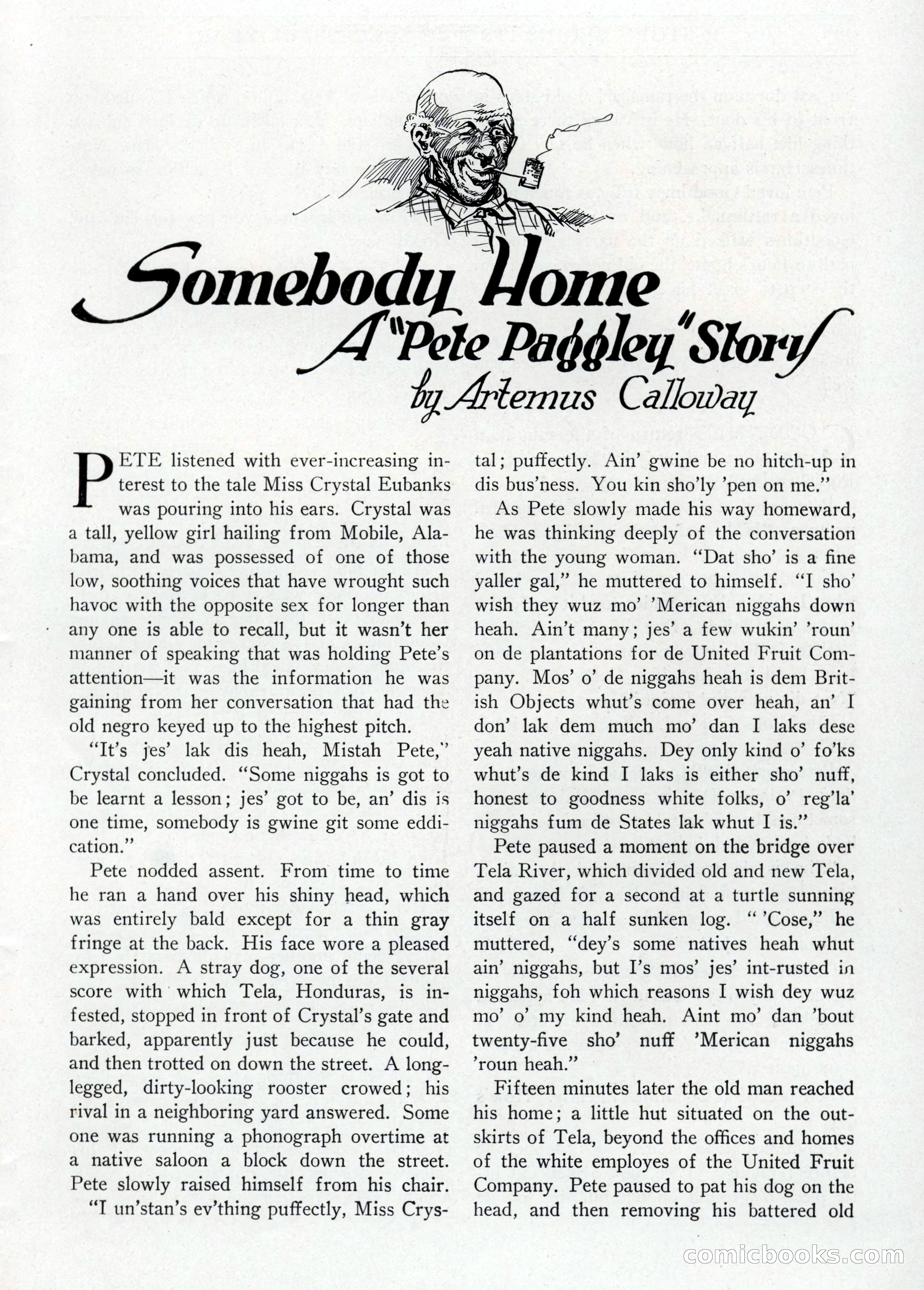
A restored page from Pulp Fiction, 1931. Page through the whole issue in the reader above.
📄 Transcribed text from this page (OCR, searchable)
Machine-transcribed from the original scan — historical spelling and the odd misread are preserved.
~~ Thii S PW er LINN Li aN ome * terest to the tale Miss Crystal Eubanks was pouring into his ears. Crystal was a tall, yellow girl hailing from Mobile, Ala- bama, and was possessed of one of those low, soothing voices that have wrought such havoc with the opposite sex for longer than any one is able to recall, but it wasn’t her manner of speaking that was holding Pete’s attention—it was the information he was gaining from her conversation that had the old negro keyed up to the highest pitch. “it’s. jes’ lak dis. heah, Mistah Pete,’ Crystal concluded. “Some niggahs is got to be learnt a lesson; jes’ got to be, an’ dis is one time, somebody is gwine git some eddi- cation.” Pete nodded assent. From time to time he ran a hand over his shiny head, which was entirely bald except for a thin gray fringe at the back. His face wore a pleased expression. A stray dog, one of the several score with which Tela, Honduras, is in- fested, stopped in front of Crystal’s gate and barked, apparently just because he could, and then trotted on down the street. A long- legged, dirty-looking rooster crowed; his rival in a neighboring yard answered. Some one was running a phonograph overtime at a native saloon a block down the street. Pete slowly raised himself from his chair. “T un’stan’s ev’thing puffectly, Miss Crys- Pp ETE listened with ever-increasing in- _ — — Somebody "Pele Pagd ae ty Artem 11S ley" Story/ Calloway tal; puffectly. Ain’ gwine be no hitch-up in dis bus’ness. You kin sho’ly ’pen on me.” As Pete slowly made his way homeward, he was thinking deeply of the conversation with the young woman. “Dat sho’ is a fine yaller gal,” he muttered to himself. “I sho’ wish they wuz mo’ ’Merican niggahs down heah. Ain’t many; jes’ a few wukin’ ’roun’ on de plantations for de United Fruit Com- pany. Mos’ o’ de niggahs heah is dem Brit- ish Objects whut’s come over heah, an’ | don’ lak dem much mo’ dan I laks dese yeah native niggahs. Dey only kind o’ fo’ks whut’s de kind I laks is either sho’ nuff, honest to goodness white folks, o’ reg’la’ niggahs fum de States lak whut I is.” Pete paused a moment on the bridge over Tela River, which divided old and new Tela, and gazed for a second at a turtle sunning itself on a half sunken log. “’Cose,” he muttered, “dey’s some natives heah whut ain’ niggahs, but I’s mos’ jes’ int-rusted in niggahs, foh which reasons I wish dey wuz mo’ o' my kind heah. Aint mo’ dan ’bout twenty-five sho’ nuff ’Merican niggahs ’roun heah.” — Fifteen minutes later the old man reached his home; a little hut situated on the out- skirts of Tela, beyond the offices and homes of the white employes of the United Fruit Company. Pete paused to pat his dog on the head, and then removing his battered old COMICLOOOKS.CO im