
Pulp Fiction, 1938 · page 53 of 148
10 Short Novels Magazine — page 53: what you’re looking at
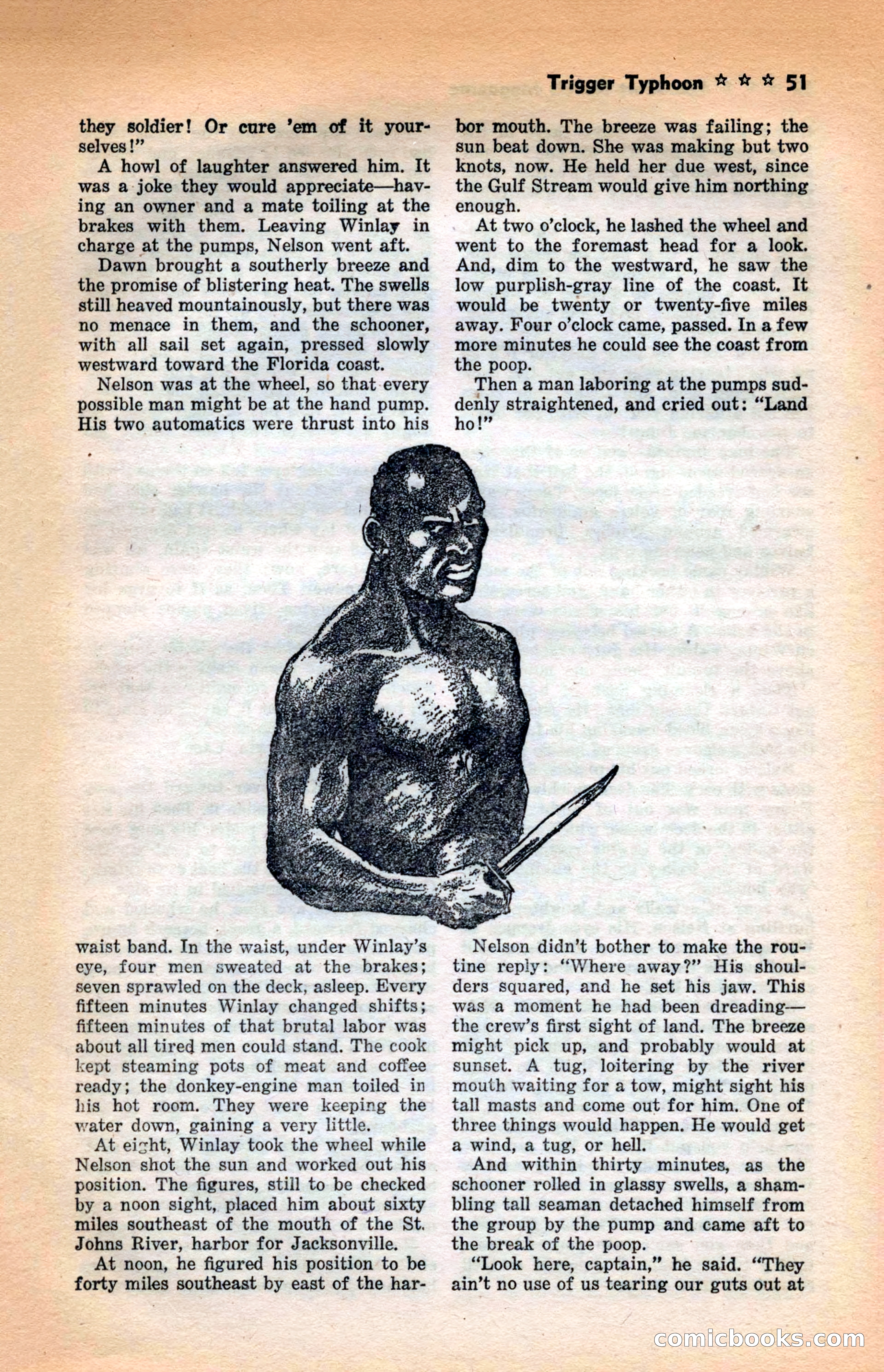
A restored page from Pulp Fiction, 1938. Page through the whole issue in the reader above.
📄 Transcribed text from this page (OCR, searchable)
Machine-transcribed from the original scan — historical spelling and the odd misread are preserved.
selves!” A howl of laughter answered him. It was a joke they would appreciate—hav- ing an owner and a mate toiling at the brakes with them. Leaving Winlay in charge at the pumps, Nelson went aft. Dawn brought a southerly breeze and the promise of blistering heat. The swells still heaved mountainously, but there was no menace in them, and the schooner, with all sail set again, pressed slowly westward toward the Florida coast. Nelson was at the wheel, so that every possible man might be at the hand pump. His two automatics were thrust into his waist band. In the waist, under Winlay’s eye, four men sweated at the brakes; seven sprawled on the deck; asleep. Every fifteen minutes Winlay changed shifts; fifteen minutes of that brutal labor was about all tired men could stand. The cook kept steaming pots of meat and coffee ready; the donkey-engine man toiled in his hot room. They were keeping the water down, gaining a very little. At eicht, Winlay took the wheel while Nelson shot the sun and worked out his position. The figures, still to be checked by a noon sight, placed him about sixty miles southeast of the mouth of the St. Johns River, harbor for Jacksonville. At noon, he figured his position to be - forty miles southeast by east of the har- Rees Ss 3 bor mouth. The ie was failing: { the sun beat down. She was making but two knots, now. He held her due west, since the Gulf Stream would give him northing enough. At two o’clock, he lashed the wheel and went to the foremast head for a look. And, dim to the westward, he saw the low purplish-gray line of the coast. It would be twenty or twenty-five miles away. Four o’clock came, passed. In a few more minutes he could see the coast from the poop. Then a man laboring at the pumps sud- denly straightened, and cried out: “Land ho!” Nelson didn’t bother to make the rou- tine reply: “Where away?” His shoul- ders squared, and he set his jaw. This was a moment he had been dreading— the crew’s first sight of land. The breeze might pick up, and probably would at sunset. A tug, loitering by the river mouth waiting for a tow, might sight his tall masts and come out for him. One of three things would happen. He would get a wind, a tug, or hell. And within thirty minutes, as the schooner rolled in glassy swells, a sham- bling tall seaman detached himself from the group by the pump and came aft to the break of the poop. “Look here, captain,” he said. “They ain’t no use of us tearing our guts out at COMMICLOOOKS (E@