
Penny Dreadfuls, 1900 · page 305 of 399
The Mysteries of the Court of London — page 305: what you’re looking at
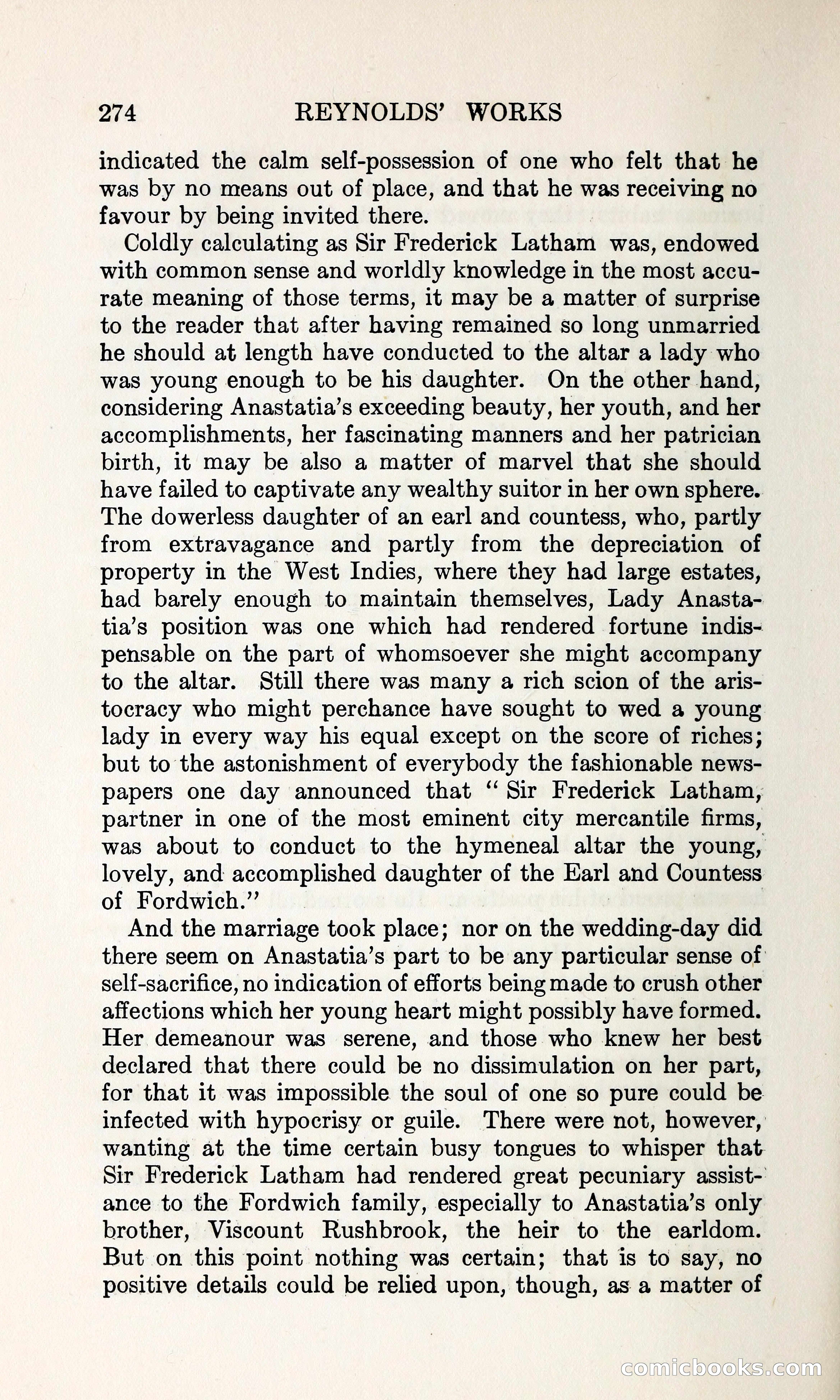
A restored page from Penny Dreadfuls, 1900. Page through the whole issue in the reader above.
📄 Transcribed text from this page (OCR, searchable)
Machine-transcribed from the original scan — historical spelling and the odd misread are preserved.
274 REYNOLDS’ WORKS indicated the calm self-possession of one who felt that he was by no means out of place, and that he was receiving no favour by being invited there. Coldly calculating as Sir Frederick iathenid was, endowed with common sense and worldly knowledge in the most accu- rate meaning of those terms, it may be a matter of surprise to the reader that after having remained so long unmarried he should at length have conducted to the altar a lady who was young enough to be his daughter. On the other hand, considering Anastatia’s exceeding beauty, her youth, and her accomplishments, her fascinating manners and her patrician birth, 1t may be also a matter of marvel that she should have failed to captivate any wealthy suitor in her own sphere. The dowerless daughter of an earl and countess, who, partly from extravagance and partly from the depreciation of property in the West Indies, where they had large estates, had barely enough to maintain themselves, Lady Anasta- tia’s position was one which had rendered fortune indis- pensable on the part of whomsoever she might accompany to the altar. Still there was many a rich scion of the aris- tocracy who might perchance have sought to wed a young lady in every way his equal except on the score of riches; but to the astonishment of everybody the fashionable news- papers one day announced that “ Sir Frederick Latham, partner in one of the most eminent city mercantile firms, was about to conduct to the hymeneal altar the young, lovely, and accomplished ee of the = and Countess of Fordwich.” And the marriage took place; nor on the rockin did there seem on Anastatia’s part to be any particular sense of self-sacrifice, no indication of efforts being made to crush other affections which her young heart might possibly have formed. Her demeanour was serene, and those who knew her best declared that there could be no dissimulation on her part, for that it was impossible the soul of one so pure could be infected with hypocrisy or guile. There were not, however, wanting at the time certain busy tongues to whisper that Sir Frederick Latham had rendered great pecuniary assist- ance to the Fordwich family, especially to Anastatia’s only brother, Viscount Rushbrook, the heir to the earldom. But on this point nothing was certain; that is to say, no positive details could be relied upon, though, as a matter of ECORNIClIOOKS (E(0)