
A ComicBooks.com exhibition · East
The Eastern Line
The Roots of Manga — from a 12th-century scroll of frolicking animals, through the comic brush of Edo and Meiji, to the sketchbooks of Hokusai that gave the medium its very name.
Two Rivers, One Sea
We tell the story of comics as if it began at a Western newspaper press — the Sunday strip, the speech balloon, the color supplement. That story is true, and you can walk it in our companion wing, Before the Comic Book. But it is only half the map. The art of telling stories in expressive, sequential line has not one source but two great root systems, and the second rises far to the east — an unbroken current running from a 12th-century Buddhist temple, through the print shops of Edo, to the sketchbooks that gave the medium its very name: manga.
The Line Through Three Galleries
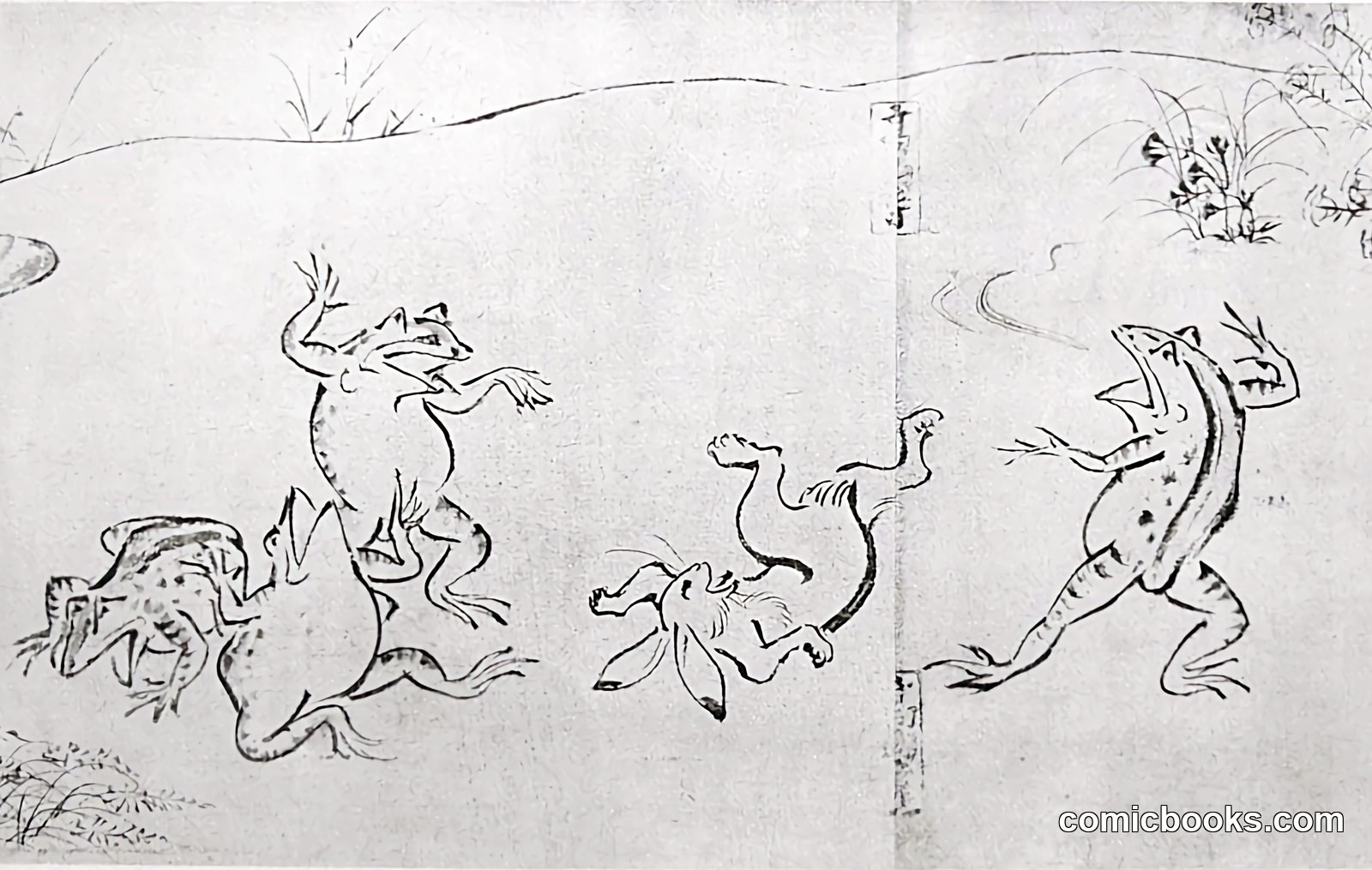
We begin with the Chōjū-giga, the "Scrolls of Frolicking Animals" — ink paintings from the 1100s in which rabbits, frogs, and monkeys bathe, wrestle, and pray in gleeful parody of human life. Long treasured among Japan's national masterpieces, they are often called the first manga: no words, yet unmistakably a story told in motion and mischief.
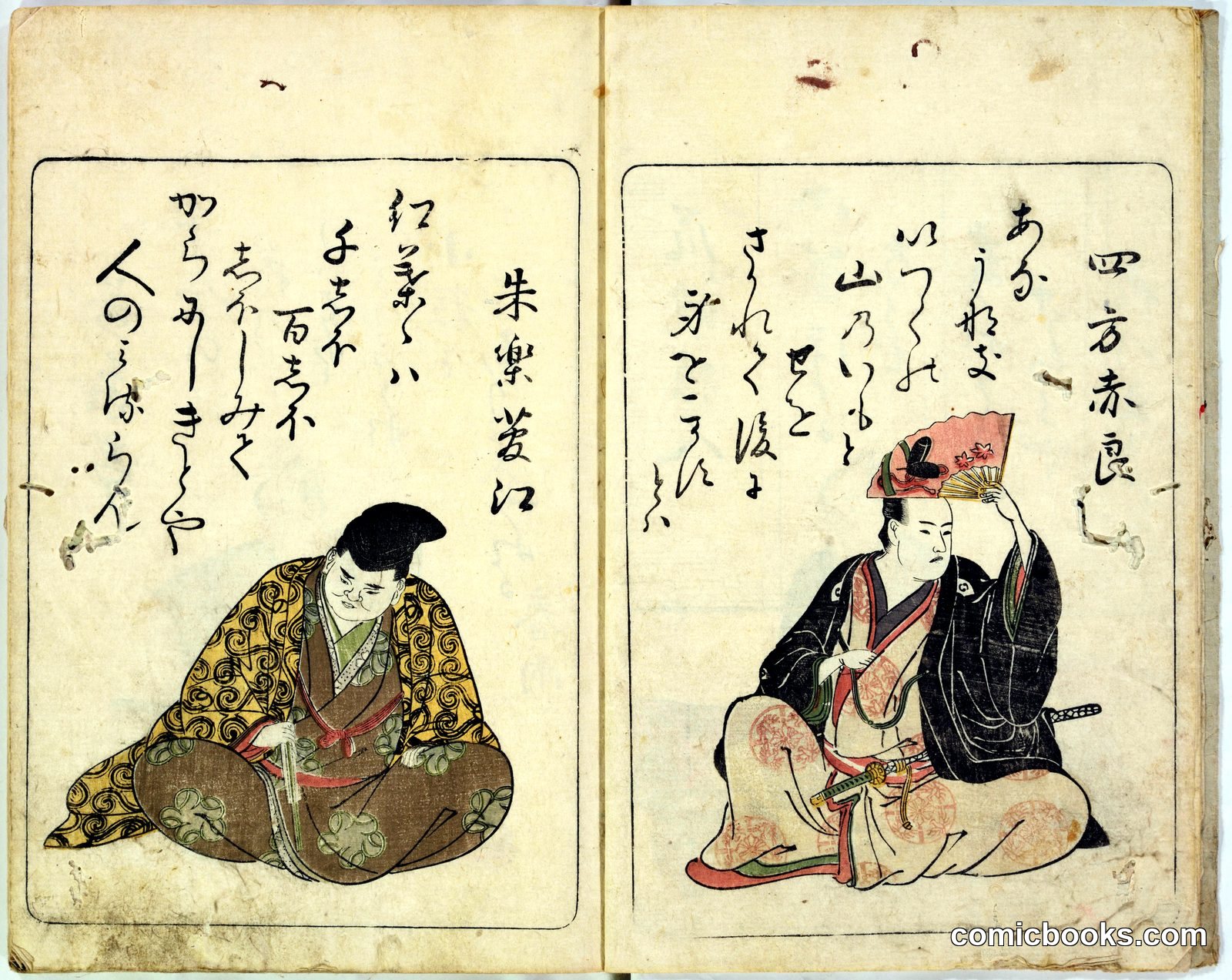
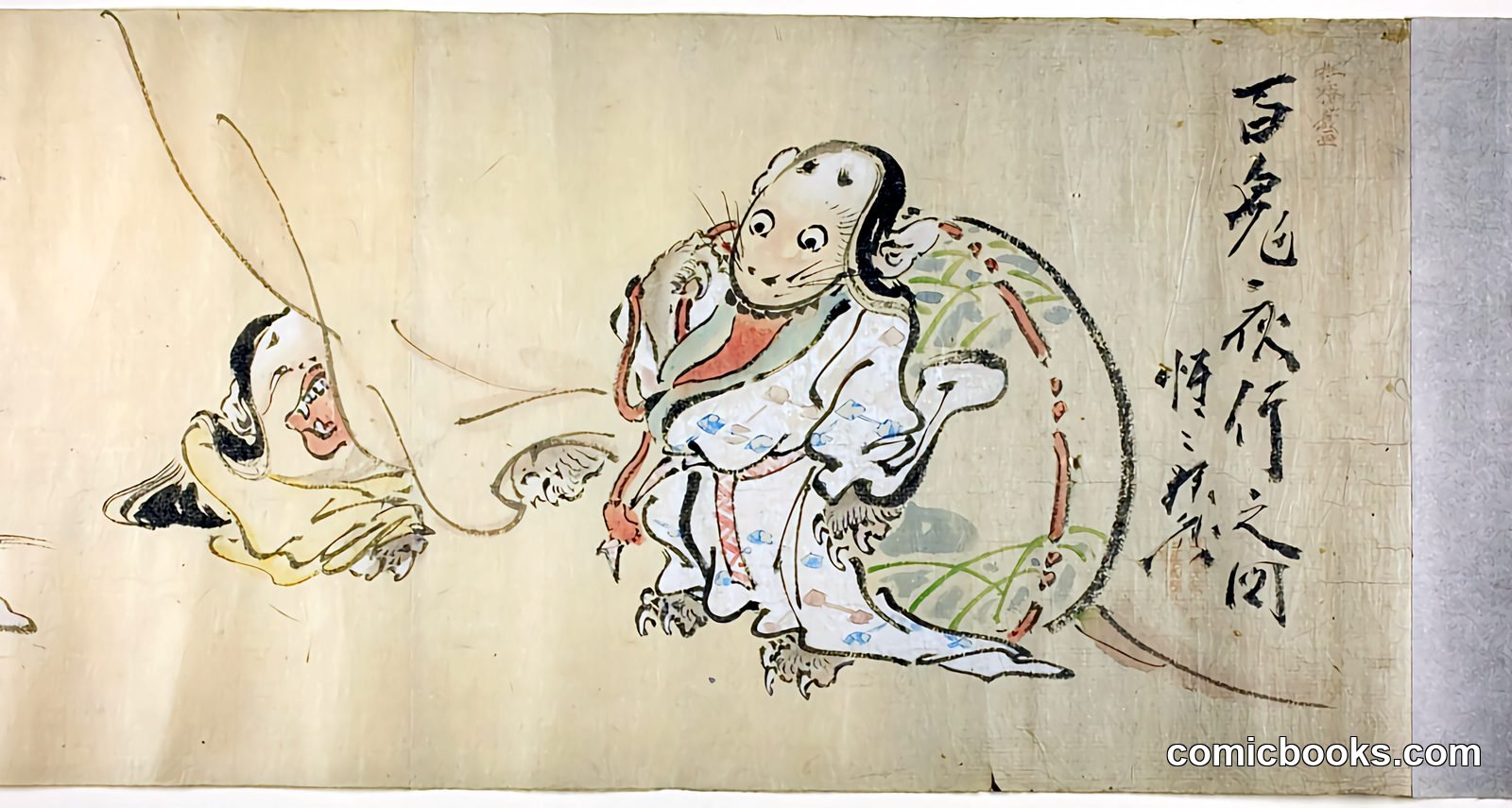
From there we enter The Comic Brush, the caricature tradition of the Edo and Meiji eras — the playful toba-e picture books, the exuberant ukiyo-e woodblock print, and the ferocious wit of Kawanabe Kyōsai, a painter of dazzling skill who turned satire into fine art in a rapidly modernizing Japan.
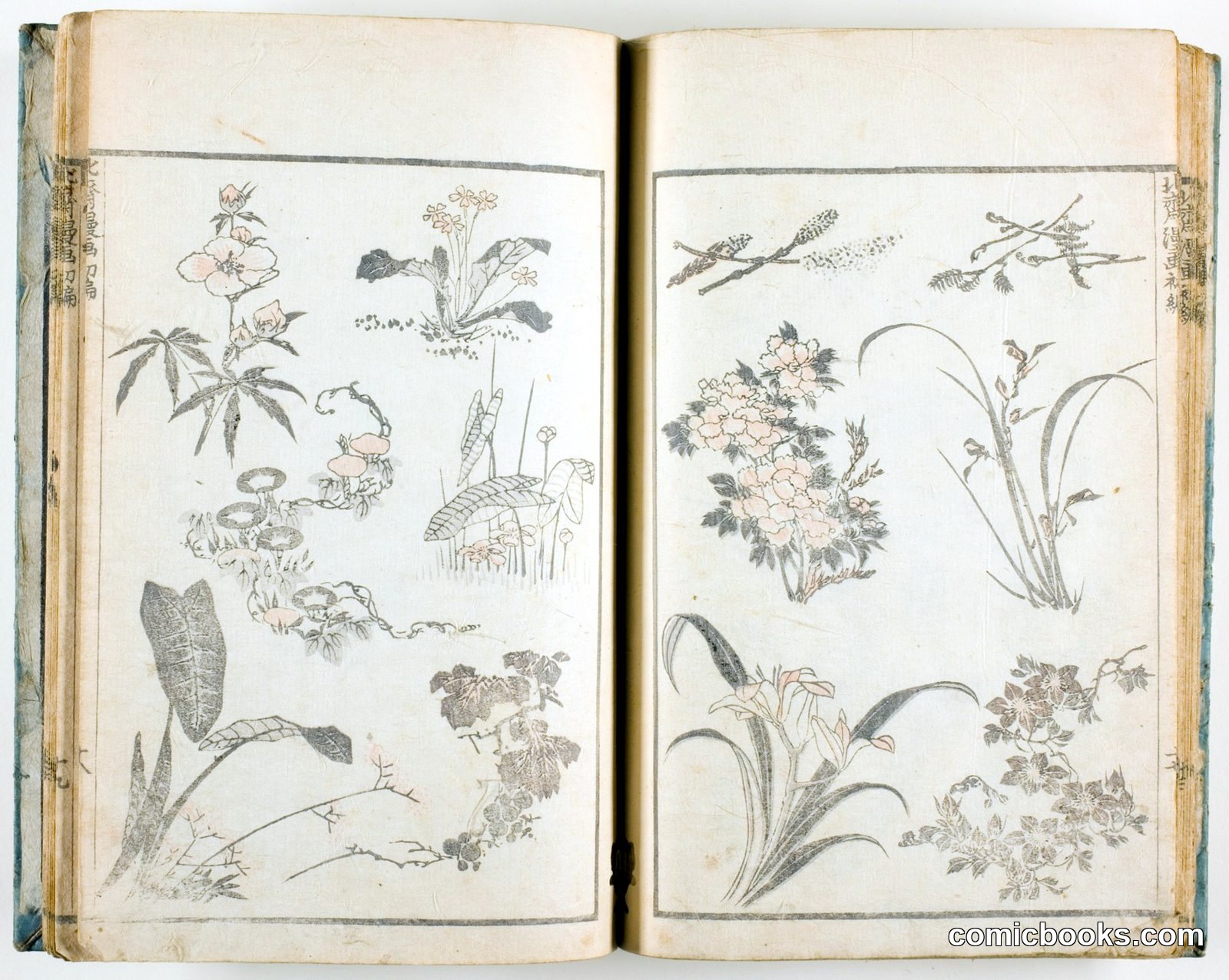
And we arrive at Hokusai Manga, the sketchbooks Katsushika Hokusai began publishing in 1814. Thousands of drawings — dancers and demons, waves and workmen, wrestlers and birds — poured out across fifteen volumes. It was these that carried the word manga into wide use, binding it forever to the whimsical, the observed, the endlessly various line.
Everything here is in the public domain. Every scroll and page you see we have restored ourselves and now show freely, because comicbooks.com exists to be the cultural home of the whole medium — East and West, ancient and modern, high art and Sunday funny alike.
When you have walked this wing, cross to Before the Comic Book to follow the Western river. And do not leave without visiting our Reading Room, where you can turn the pages of complete Hokusai Manga volumes yourself — the very sketchbooks that named an art form, open at last to everyone.
A timeline of the manga line
- 1150s–1250sThe Chōjū-giga animal scrolls are painted; later revered among Japan's national treasures and often called its first manga.
- 1600sUkiyo-e woodblock printing flourishes in Edo, spreading affordable pictures of the 'floating world' to a mass urban public.
- 1700sToba-e comic picture books — named for the Chōjū-giga's legendary painter — popularize quick, humorous caricature figures.
- 1760Katsushika Hokusai is born; he will become one of Japan's most influential ukiyo-e artists.
- 1798The term 'manga' appears in printed Japanese books, well before Hokusai; its meaning then was closer to 'sundry sketches.'
- 1814Hokusai publishes the first volume of Hokusai Manga in Nagoya — thousands of sketches of people, nature, and the supernatural.
- 1831Kawanabe Kyōsai, master caricaturist of the coming Meiji era, is born.
- 1849Hokusai dies; further volumes of his Manga keep appearing, the fifteenth published posthumously in 1878.
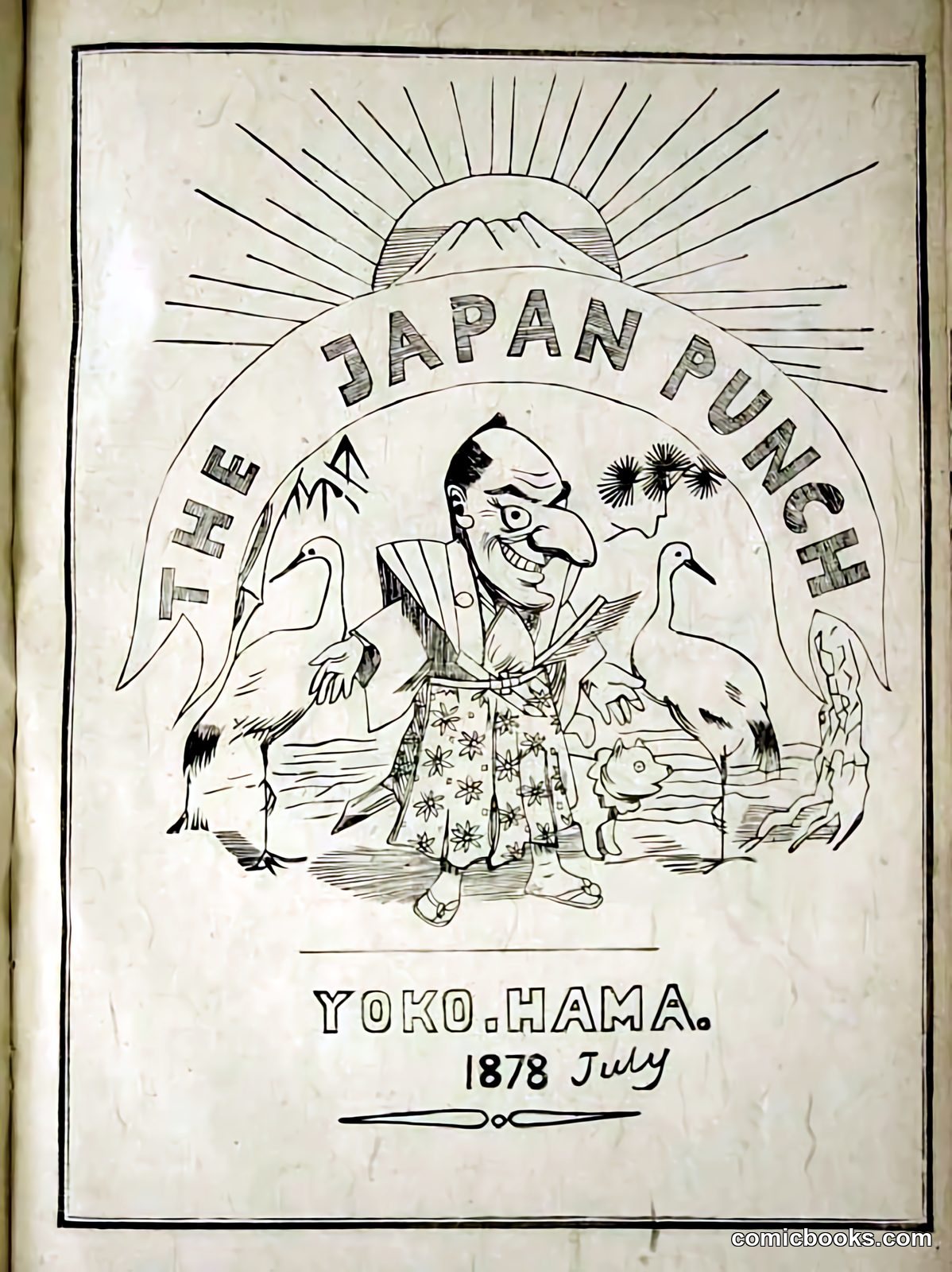
- 1862British artist Charles Wirgman launches Japan Punch in Yokohama, introducing the Western cartoon to Japan.
- 1876Kitazawa Rakuten, often called the father of modern Japanese cartooning, is born.
- 1877Meiji satirical magazines emerge, such as Marumaru Chinbun, fusing Japanese brushwork with imported cartoon styles.
- 1889Kawanabe Kyōsai dies, celebrated for uniting classical painting skill with biting, comic satire.
- 1905Kitazawa Rakuten founds the color satirical magazine Tokyo Puck, helping establish 'manga' in its modern sense.
- 1931Serialized comic strips for children flourish; Suihō Tagawa's popular Norakuro begins its long run.
- 1947 onwardPostwar story-manga is born, led by Osamu Tezuka; this modern, copyrighted era lives on the page, not in this wing.
Why It Is Free
Some heritage belongs to everyone. The works in this wing outlived their creators by centuries, passed out of copyright long ago, and became — rightly — the common inheritance of the world. That is why we could restore them, and why we can give them back to you without gate or fee. Public-domain art is not lesser art; it is art that has earned its place in the commons, and preserving it is a debt the present owes the past.
The eastern line did not end with Hokusai. It runs on through the satirical presses of the Meiji era, through the pioneers of the early twentieth century, and into the modern story-manga that today reaches readers on every continent. That later chapter remains under copyright, and so it lives where it belongs — on the page you can buy and hold — not on these walls. What we can offer is the headwaters.
So linger here. Then step into our Reading Room and page through complete public-domain volumes of Hokusai Manga, the sketchbooks that named an art. The brush was laid down long ago; the line goes on.