
Kibyōshi: The Picture-Books Before Hokusai
Edo's word-and-image books, two generations before Hokusai named manga.
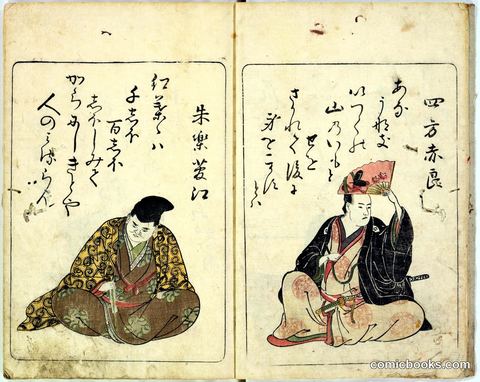
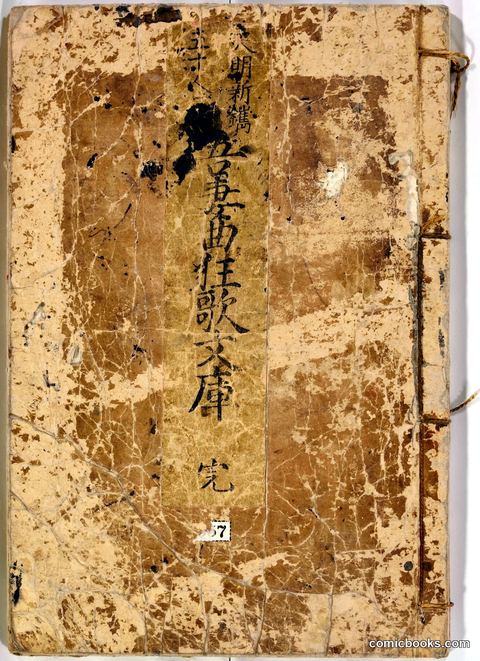
Two generations before Hokusai gave the word manga to the world in 1814, the readers of Edo already had a mature picture-culture of their own. Its books were cheap, funny, and made for adults: the kibyōshi, or "yellow-cover" booklets, in which a story ran through pictures and words printed together on every page, and the reader followed it in sequence, opening to opening. The star of this world was Santō Kyōden, who signed his drawings with the artist name Kitao Masanobu. He wrote the text and drew the pictures, and his public followed him the way a later public would follow a novelist.
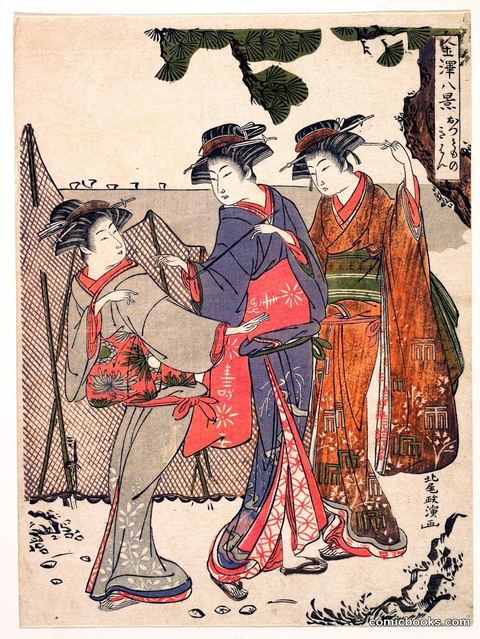
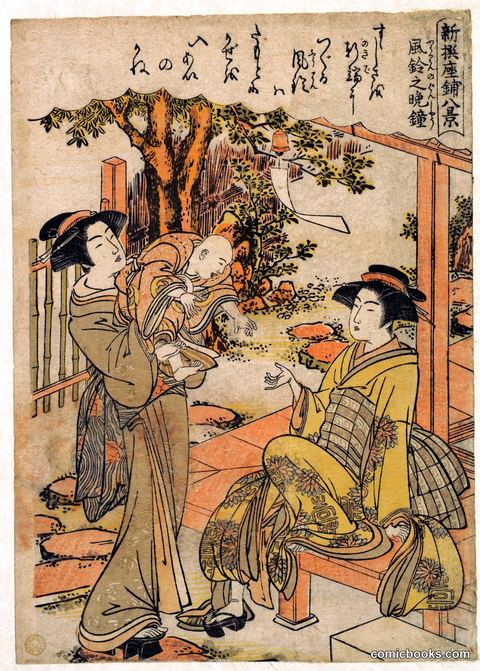
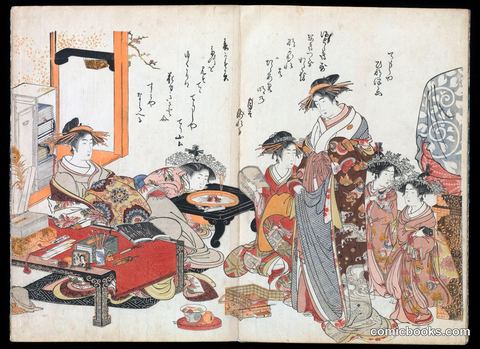
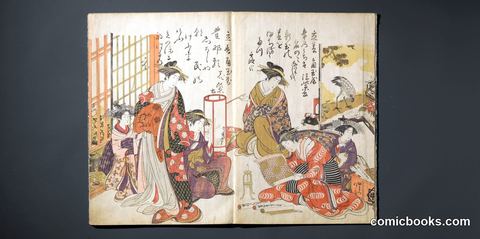
Kyōden worked at every level of the trade. He designed single color prints of beauties, luxurious kyōka poetry albums with courtesans' verses in their own hands, and the paper-covered comic books that were the ordinary reading of the city. In all of them, image and word share one surface and are meant to be taken together.
This is the ground Hokusai grew out of. The sketchbooks he titled Hokusai Manga in 1814 belong to the same commercial, printed, sequential book-culture shown here. The line from these pages to the comics on the rest of these walls is direct.
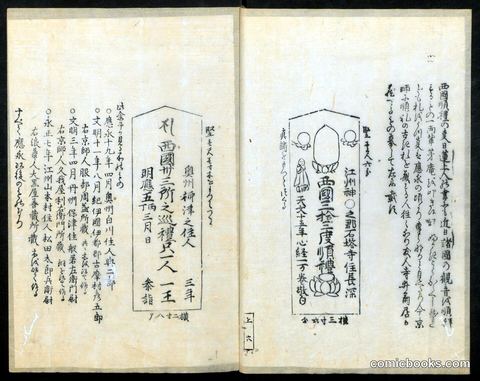
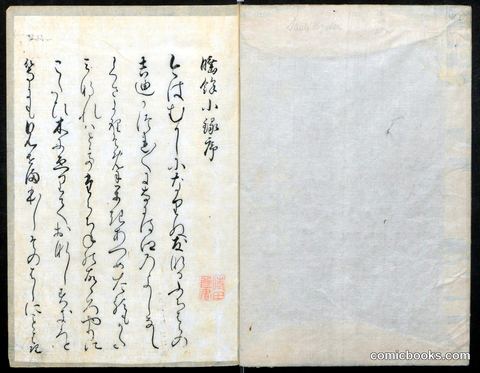
All works shown are in the public domain, digitally restored by ComicBooks.com.