
The Comic Brush: Edo & Meiji
A brush trained in the temple and the tavern alike—Kyōsai carries the joke from old Japan into the modern age.
From Toba-e to the Modern Cartoon
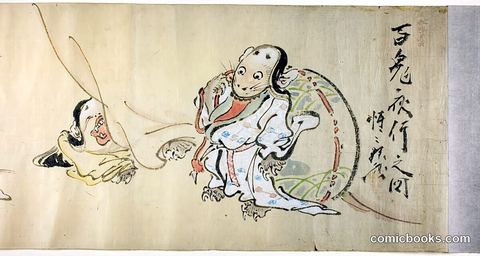
Between the frolicking animals of the medieval scrolls and the manga of the modern era runs a long, unbroken current of Japanese comic drawing. In the Edo period (1603–1868) it surfaced as toba-e—rubbery, rapid-fire humorous pictures named in homage to Toba Sōjō—and more broadly as giga, "playful pictures." Woodblock printing put such images into the hands of ordinary townspeople, and caricature became a popular language of its own: satirical, irreverent, and gloriously unafraid of the powerful.
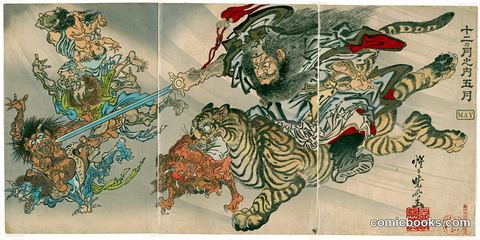
No single artist embodies the passage of that spirit into the modern age more vividly than Kawanabe Kyōsai (1831–1889). Trained first in the studio of the ukiyo-e master Utagawa Kuniyoshi and then in the rigorous Kanō school of classical painting, Kyōsai commanded the full range of the brush—from solemn, exquisitely finished paintings to lightning-fast comic sketches dashed off in a moment. He moved between registers with a freedom that scandalized some and delighted many.
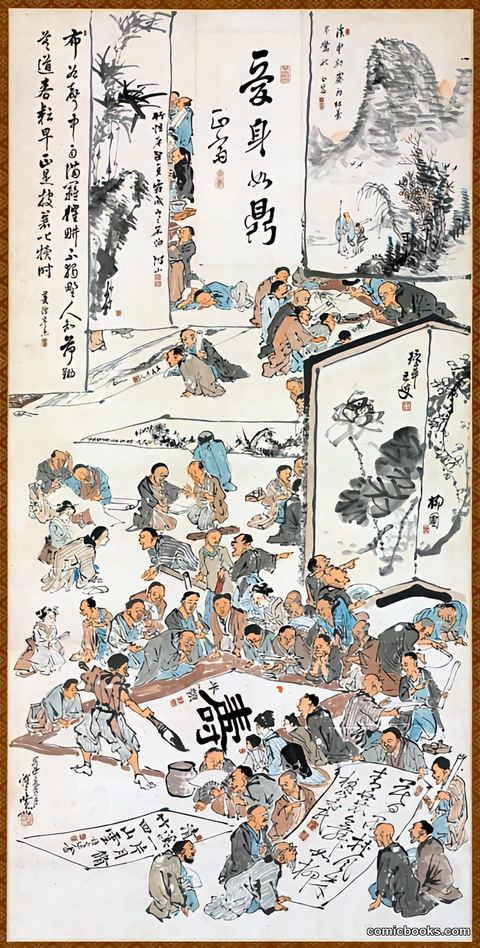
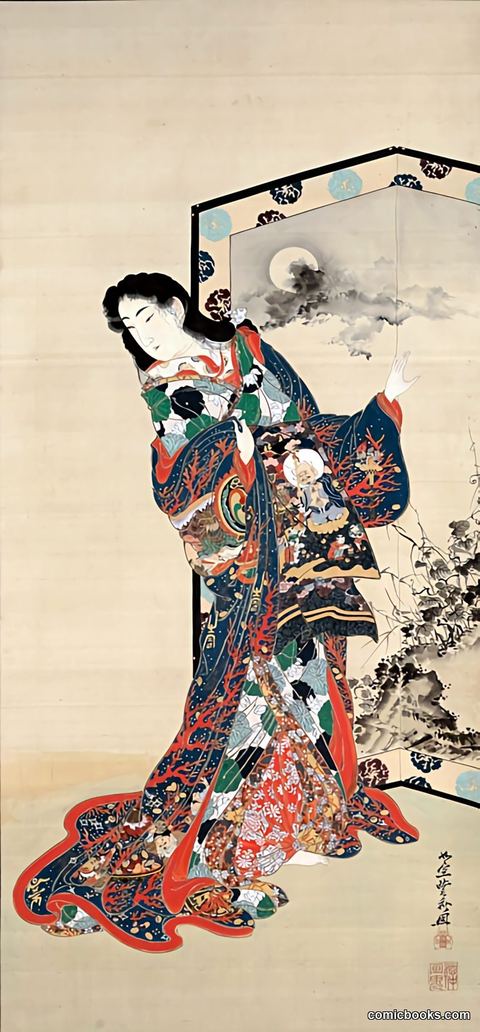
Kyōsai worked squarely across the hinge of Japanese history, spanning the last decades of the Tokugawa shogunate and the upheavals of the Meiji Restoration. His art absorbed it all: the ghosts and demons of old folklore, the pieties of Buddhist hell, the courtesans of the pleasure quarters, and the sharp political satire that more than once drew official displeasure. He is legendary, too, for the raucous shogakai—calligraphy-and-painting parties where he performed before crowds, sometimes deep in drink, filling paper with astonishing speed.
It is this union of technical mastery and comic daring that earns Kyōsai his frequent billing as a forefather of modern manga and cartooning. He treated the funny picture as a serious art and the serious picture as fair game for wit. In his hands the old giga tradition did not merely survive the coming of the modern world—it stepped into it, brush flying, ready to become something new.
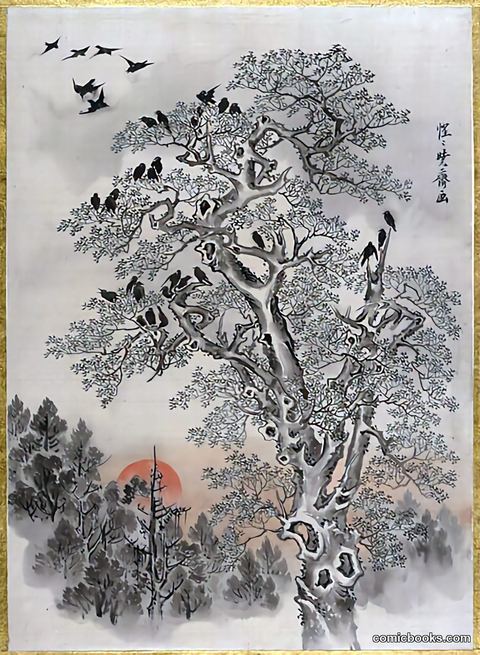
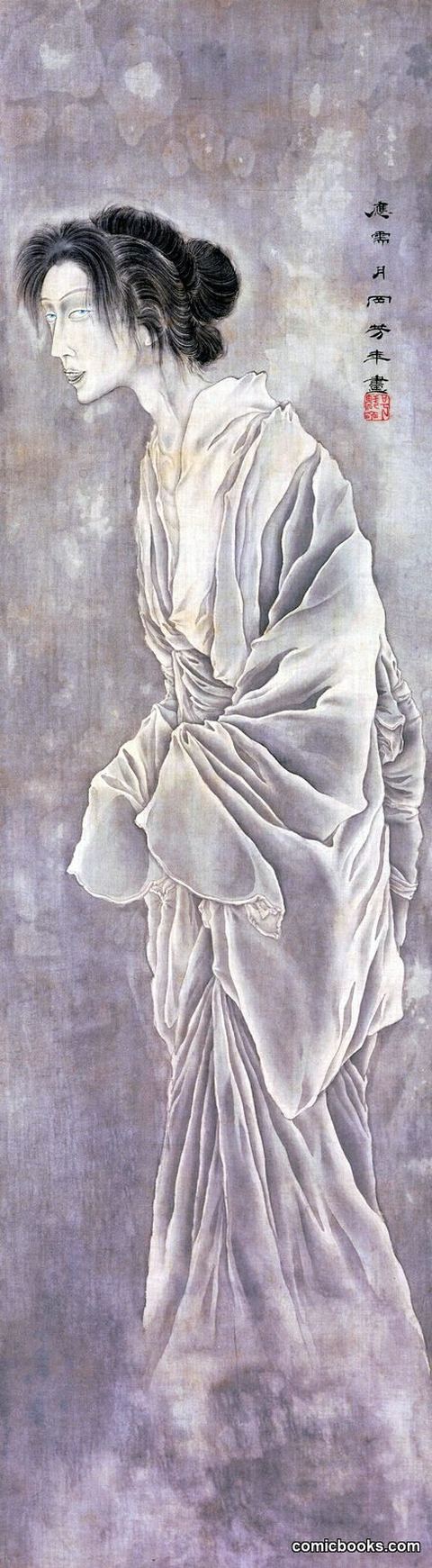
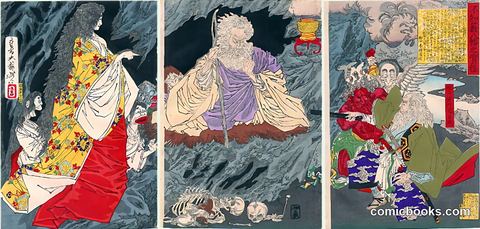
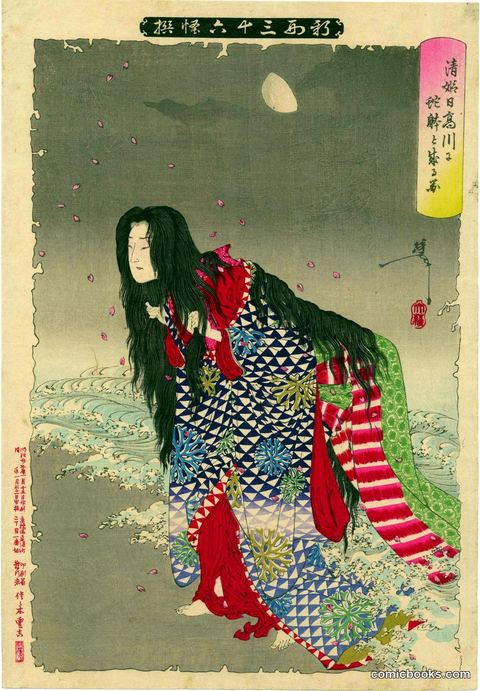
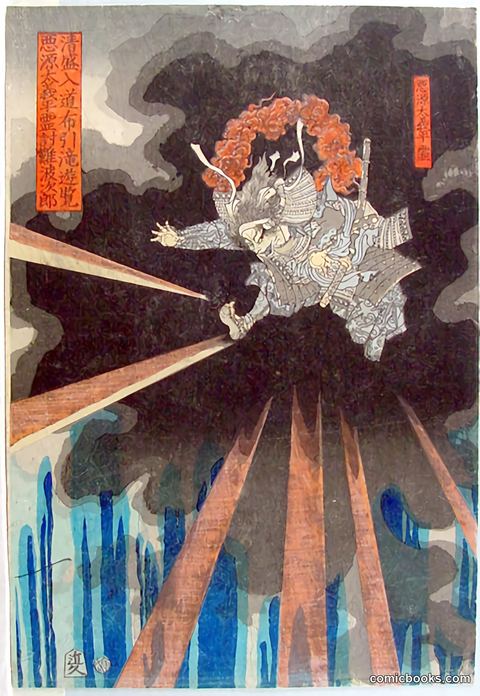
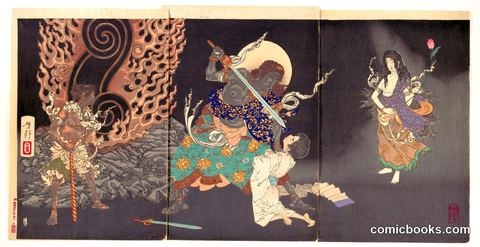
All works shown are in the public domain, digitally restored by ComicBooks.com.