
Life, 1928-09-21 · page 19 of 36
Life — September 21, 1928 — page 19: what you’re looking at
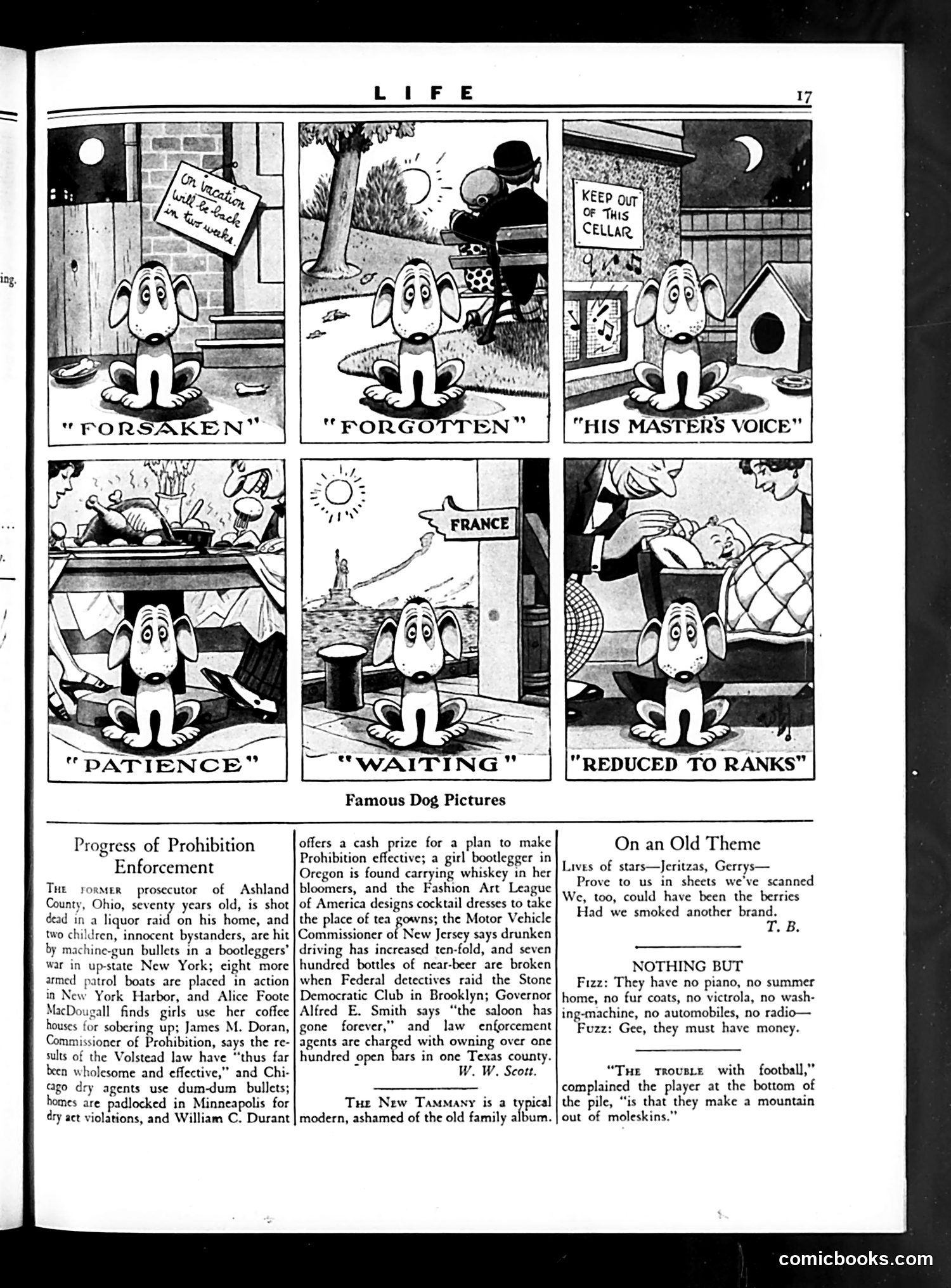
What you’re looking at
This six-panel cartoon depicts a dog's emotional journey through Prohibition enforcement. The dog experiences abandonment ("Forsaken"), memory loss ("Forgotten"), isolation from his owner ("His Master's Voice"—a reference to the famous RCA Victor trademark), then endures hardship with "Patience," "Waiting," and finally degradation ("Reduced to Ranks"). The implicit satire: the dog represents ordinary Americans suffering under Prohibition laws (1920-1933). The progression humorously dramatizes how the policy separated families, caused economic hardship, and reduced citizens' status. The accompanying news items about Prohibition enforcement—bootleggers, confiscated whiskey, and Federal raids—reinforce the cartoon's criticism of the era's unpopular alcohol ban and its disruptive social consequences.
📄 Transcribed text from this page (OCR, searchable)
Machine-transcribed from the original scan — historical spelling and the odd misread are preserved.
"DATIENCE” Progress of Prohibition Enforcement Tut rormer prosecutor of Ashland County, Ohio, seventy years old, is shot dead in a liquor raid on his home, and two children, innocent bystanders, are hit by machine-gun bullets in a bootleggers’ war in up-state New York; eight more armed patrol boats are placed in action in New York Harbor, and Alice Foote MacDougall finds girls use her coffee houses for sobering up; James M. Doran, Commissioner of Prohibition, says the re- sults of the Volstead law have “thus far been wholesome and effective,” and Chi- cago dry agents use dum-dum bullets; homes are padlocked in Minneapolis for dry act violations, and William C. Durant Famous Dog Pictures offers a cash prize for a plan to make Prohibition effective; a girl bootlegger in Oregon is found carrying whiskey in her bloomers, and the Fashion Art League of America designs cocktail dresses to take the place of tea gowns; the Motor Vehicle Commissioner of New Jersey says drunken driving has increased ten-fold, and seven hundred bottles of near-beer are broken when Federal detectives raid the Stone Democratic Club in Brooklyn; Governor Alfred E. Smith says “the saloon has gone forever,” and law enforcement agents are charged with owning over one hundred open bars in one Texas county. W. W. Scott. Tue New Tammany is a ‘yeicel modern, ashamed of the old family album. On an Old Theme Lives of stars—Jeritzas, Gerrys— Prove to us in sheets we've scanned We, too, could have been the berries Had we smoked another brand. T. B. NOTHING BUT Fizz: They have no piano, no summer home, no fur coats, no victrola, no wash- ing-machine, no automobiles, no radio— Fuzz: Gee, they must have money. “Tue trovste with football,” complained the player at the bottom of the pile, “is that they make a mountain out of moleskins.” comicbooks.com