
Life, 1928-02-02 · page 26 of 38
Life — February 2, 1928 — page 26: what you’re looking at
What you’re looking at
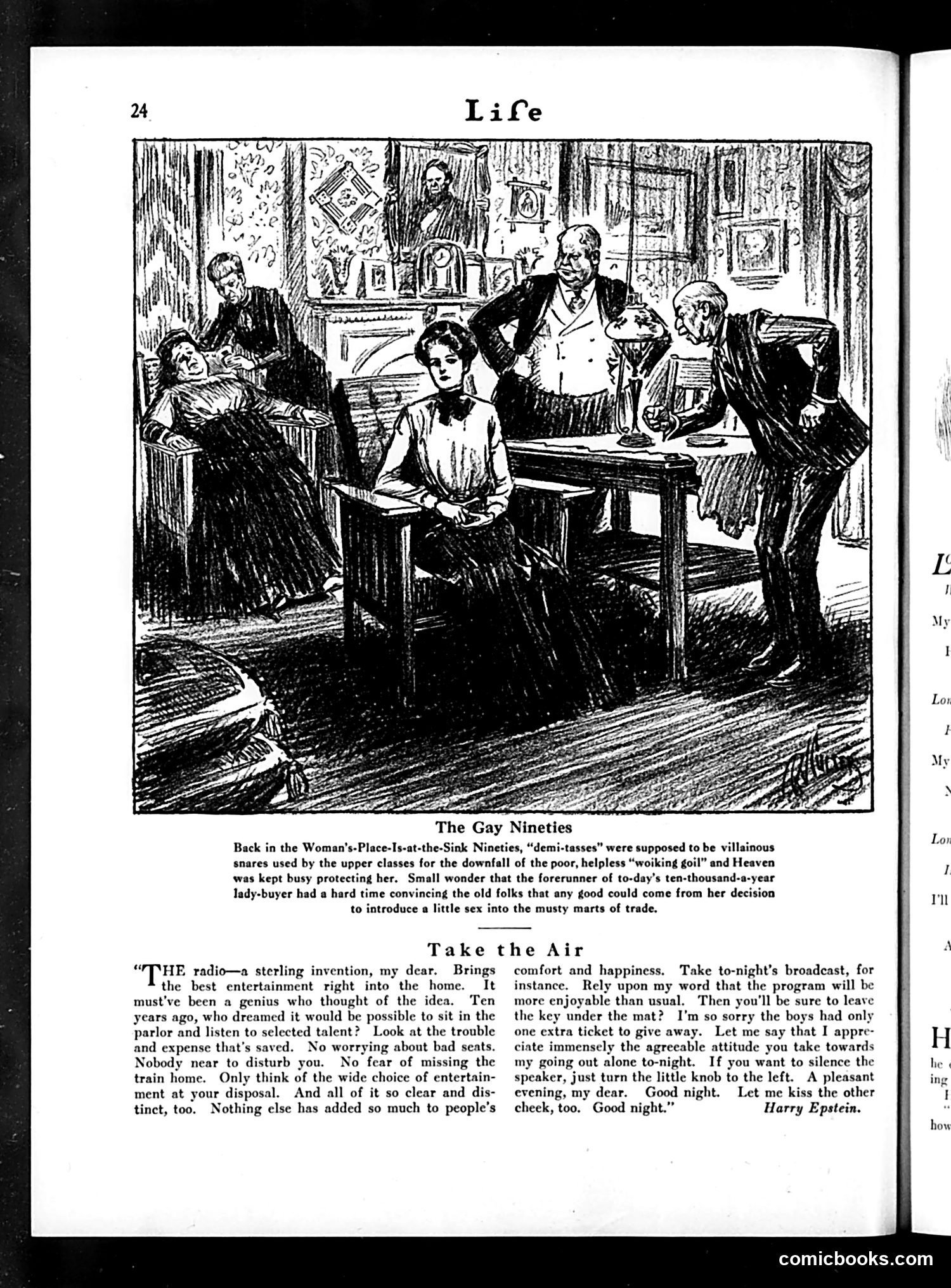
This page contains two satirical pieces from Life magazine mocking social hypocrisy. **"The Gay Nineties"** cartoon depicts upper-class men introducing young working-class women ("demi-tasses," French coffee cups, a period slur) into department stores as saleswomen. The caption mocks how 1890s moralists—who believed such women needed protection from "villainy"—struggled to accept this as legitimate work. The satire targets prudish attitudes that saw any mixing of classes as morally dangerous, yet allowed economic exploitation. **"Take the Air"** is a darkly comedic monologue by a man using radio as an excuse to go out alone while leaving his wife at home. He patronizingly praises radio's convenience, then casually mentions giving his ticket to someone else and asking her to stay put. The final "let me kiss the other cheek" suggests infidelity. Epstein's satire exposes how men weaponized new technology to justify neglecting their wives while maintaining a facade of modern sophistication.
📄 Transcribed text from this page (OCR, searchable)
Machine-transcribed from the original scan — historical spelling and the odd misread are preserved.
The Gay Nineties Back in the Woman’s-Place-Is-at-the-Sink Nineties, “demi-tasses” were supposed to be villainous snares used by the upper classes for the downfall of the poor, helpless “woiking goil” and Heaven was kept busy protecting her. Small wonder that the forerunner of to-day’s ten-thousand-a-year lady-buyer had a hard time convincing the old folks that any good could come from her decision to introduce a little sex into the musty marts of trade, Take the Air ‘“TTHE radio—a sterling invention, my dear. Brings the best entertainment right into the home. It must've been a genius who thought of the idea. Ten years ago, who dreamed it would be possible to sit in the parlor and listen to selected talent? Look at the trouble and expense that’s saved. No worrying about bad seats. Nobody near to disturb you. No fear of missing the train home. Only think of the wide choice of entertain- ment at your disposal. And all of it so clear and dis- tinct, too. Nothing else has added so much to people’s comfort and happiness. Take to-night’s broadcast, for instance. Rely upon my word that the program will be more enjoyable than usual. Then you'll be sure to leave the key under the mat? I’m so sorry the boys had only one extra ticket to give away. Let me say that I appre- ciate immensely the agreeable attitude you take towards my going out alone to-night. If you want to silence the speaker, just turn the little knob to the left. A pleasant evening, my dear. Good night. Let me kiss the other cheek, too. Good night.” Harry Epstein. H he | ing how comicbooks.com