
Life, 1926-05-13 · page 30 of 52
Life — May 13, 1926 — page 30: what you’re looking at
What you’re looking at
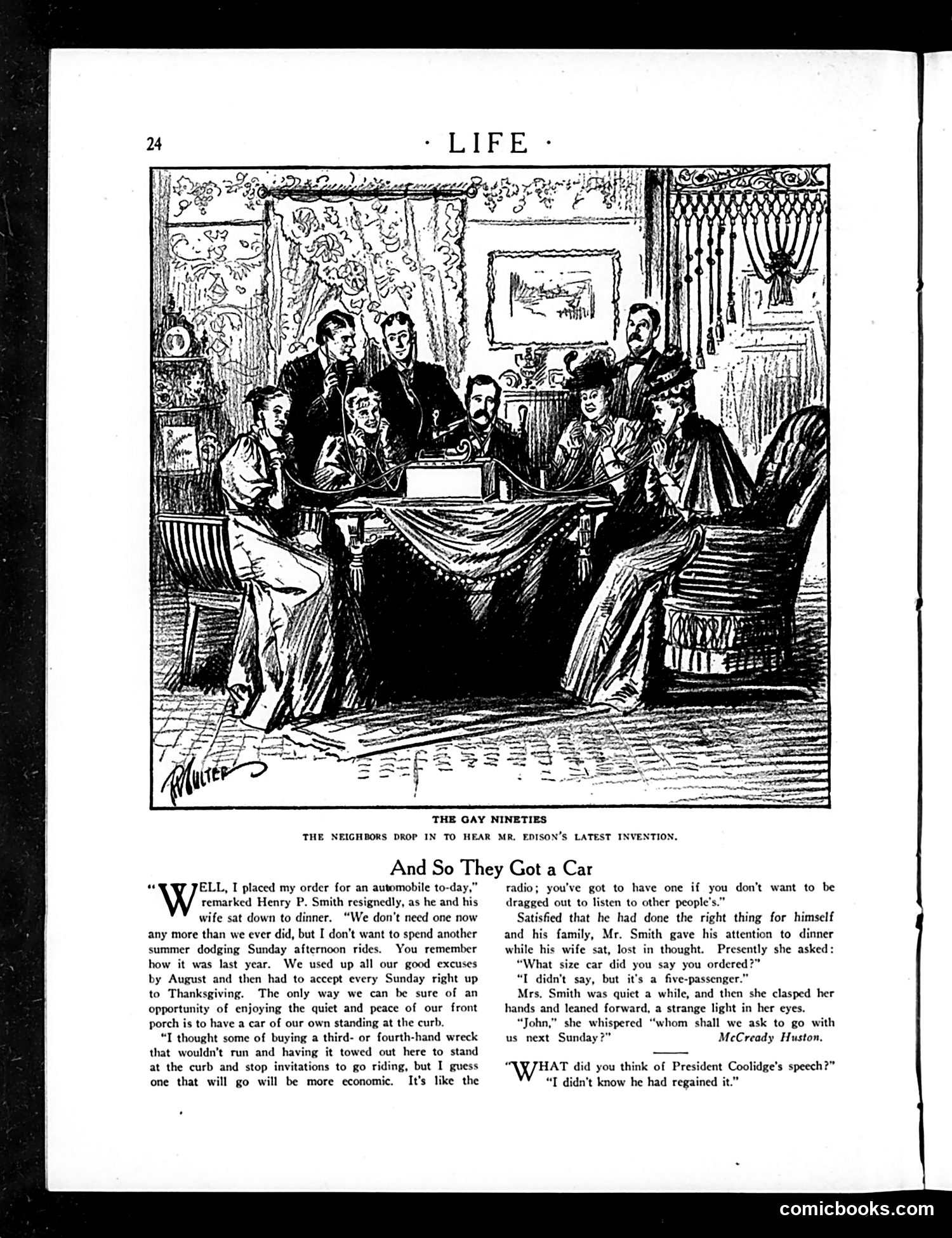
This 1920s-era piece satirizes the rapid adoption of automobiles and radios as status symbols and social obligations rather than genuine desires. **The Setup:** Henry P. Smith buys a car specifically to *avoid* being invited on neighbors' Sunday drives—a common social pressure. Paradoxically, he reasons that owning his own automobile will protect him from having to ride in others' vehicles. **The Joke:** The satire cuts deeper when his wife immediately grasps the real problem: now that they own a car, they're socially obligated to invite *others* along, perpetuating the same cycle he sought to escape. **The Reference:** The cartoon's title, "The Gay Nineties," ironically contrasts that quieter era with the modern 1920s invasion of technology-driven social expectations. The mention of radio enforces this theme—people felt compelled to own modern conveniences whether they wanted them or not. **The Point:** Ownership doesn't bring freedom; it creates new social obligations and peer pressure in an increasingly consumer-driven society.
📄 Transcribed text from this page (OCR, searchable)
Machine-transcribed from the original scan — historical spelling and the odd misread are preserved.
— ‘_— (ys H ‘ WO: PANE? THE GAY NINETIES THE NEIGHBORS DROP IN TO HEAR MR. EDISON’S LATEST INVENTION, And So They Got a Car “ ELL, I placed my order for an automobile to-day,” W remarked Henry P. Smith resignedly, as he and his wife sat down to dinner. “We don't need one now any more than we ever did, but I don’t want to spend another summer dodging Sunday afternoon rides. You remember how it was last year. We used up all our good excuses by August and then had to accept every Sunday right up to Thanksgiving. The only way we can be sure of an opportunity of enjoying the quiet and peace of our front porch is to have a car of our own standing at the curb. “I thought some of buying a third- or fourth-hand wreck that wouldn’t run and having it towed out here to stand at the curb and stop invitations to go riding, but I guess one that will go will be more economic. It's like the radio; you've got to have one if you don’t want to be dragged out to listen to other people's.” Satisfied that he had done the right thing for himself and his family, Mr. Smith gave his attention to dinner while his wife sat, lost in thought. Presently she asked: “What size car did you say you ordered?” “I didn't say, but it’s a five-passenger.” Mrs, Smith was quiet a while, and then she clasped her hands and leaned forward, a strange light in her eyes. “John,” she ispered “whom shall we ask to go with us next Sunda; McCready Huston, “WHT did you think of President Coolidge’s speech?” “T didn’t know he had regained it.” comicbooks.com