
Life, 1924-06-19 · page 35 of 40
Life — June 19, 1924 — page 35: what you’re looking at
What you’re looking at
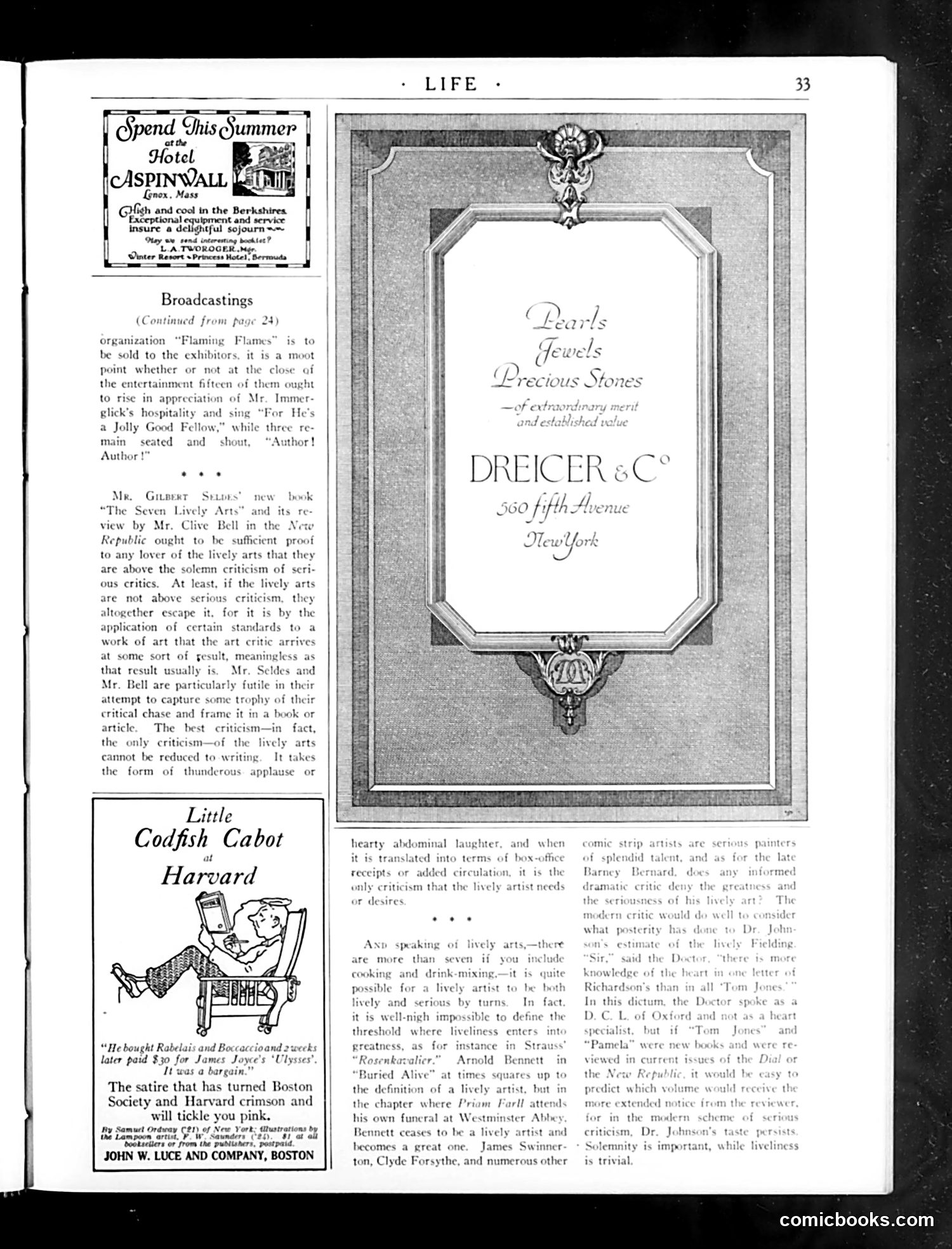
This cartoon satirizes wealthy Boston society and Harvard students through the character of "Codfish Cabot," a nouveau riche Harvard undergraduate who ostentatiously collects rare books. The joke centers on his purchasing behavior: he buys expensive literary classics (Rabelais, Boccaccio, James Joyce) not for genuine appreciation but as status symbols—spending $30 on Joyce's *Ulysses* merely to display his wealth and sophistication. The "codfish" reference alludes to the Cabot family's old Boston money derived from the cod fishing trade, suggesting irony: despite inherited wealth, this character lacks authentic cultural refinement. The satire targets both nouveau riche pretension and Harvard's role in marketing elite status rather than genuine intellectual development. The accompanying text about "lively arts" criticism reinforces the theme: true appreciation of art cannot be reduced to mere possession or financial outlay.
📄 Transcribed text from this page (OCR, searchable)
Machine-transcribed from the original scan — historical spelling and the odd misread are preserved.
pend Shis Summer Hotel i CASPINWALL Ggnox. Mass GOiligh and cool in the Berkshires Exceptional equipment and service insure a delightful sojourn =~ J Broadcastings (Conti frow 24) organization Flames be sold to the exhibitors, it is 3 point whether or not at the the entertainment fifteen of them ought to rise in appreciation of Mr. Immer- glick’s hospitality and sing “For He's a Jolly Good Fellow,” while three and shout, * “The Seven Live d * and view by Mr. Clive Bell in. the Republic oug' be sufficient to any lover of the lively arts that they are above the solemn criticism of s ous critics. At least, if the lively arts are not above serious criticism, they altogether escape for it is by the application of certain standards to a work of art that the art critic arrives at some sort of fesult, meaningless as that result usually is. Mr. Seldes Mr. Bell are particu tile in their attempt to capture some trophy of their critical chase and frame it in a book or article. The be criticism—in fact, the only criticism—of the lively arts cannot be reduced to writir takes the form of thunderous. appli or Little C odfish Cabot Harvard “He bought Rabelais and Boccaccioan later paid $30 for James Joyce's * It was a b in?” The satire that has turned Boston Society and Harvard crimson and will tickle you pink. Ry Samuel Ordway (21) of New York: {dtustrations by the Lampoon artist, P. W 31 at all JOHN W. LUCE AND COMPANY, BOSTON DREICER sC° 4, criticism that the seven ink-mixing the definition of a lively 3 the chapter where Priam Farll atter his own funeral at Westminster Abbx Bennett ceases to be a lively ar critici hecomes a great one. James Swinner- * Solemnity is impx ton, Clyde Forsythe, and numerous other is trivial comicbooks.com