
Life, 1924-06-12 · page 27 of 44
Life — June 12, 1924 — page 27: what you’re looking at
What you’re looking at
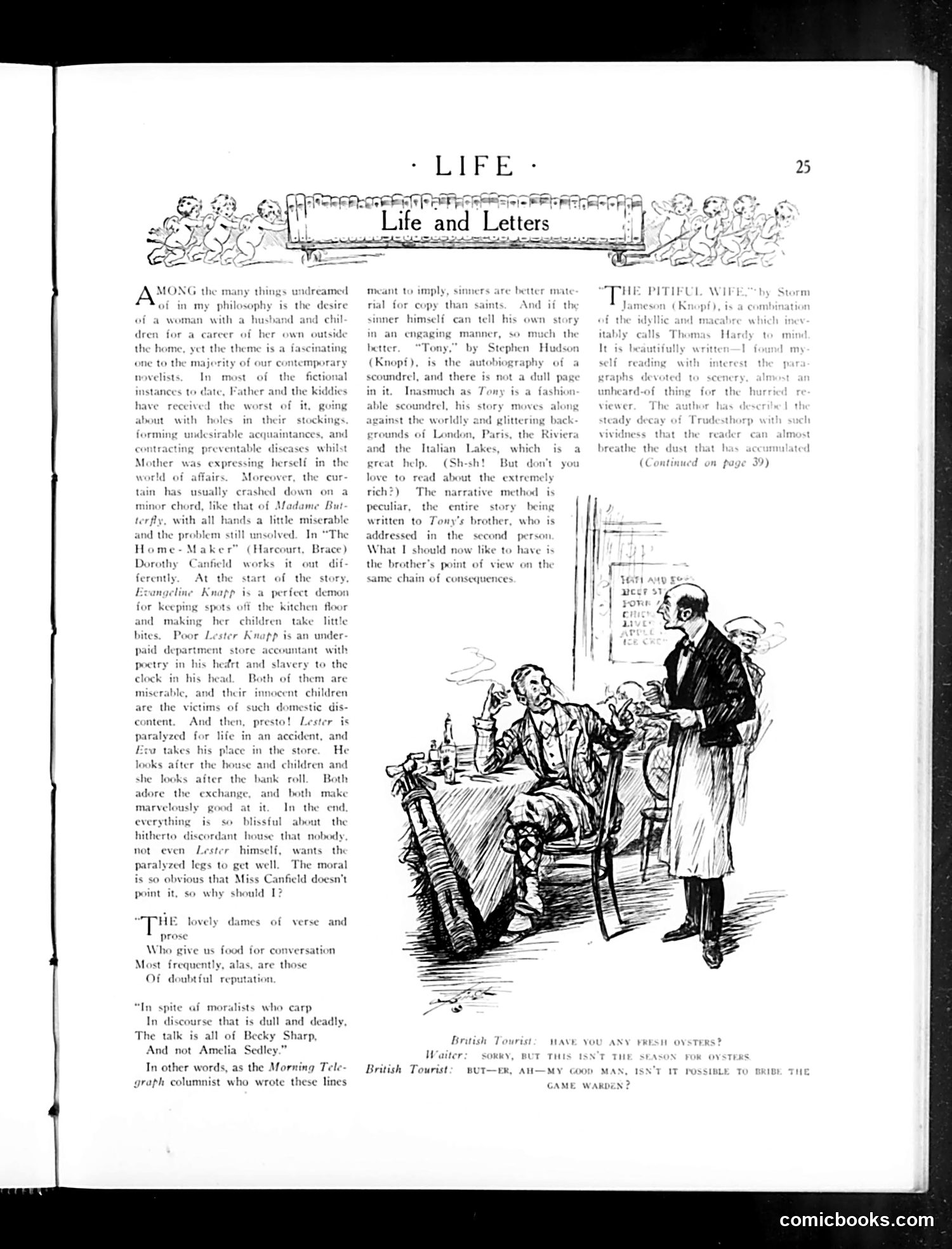
This page from *Life* magazine features a literary review column alongside a cartoon joke. The main cartoon depicts a British tourist asking a waiter about "fresh oysters," apparently unaware of seasonal restrictions. The waiter explains it's not oyster season and suggests bribing "the game warden" instead—a satirical jab at British attitudes toward rules and aristocratic privilege. The humor relies on the stereotype of wealthy British tourists expecting to circumvent regulations through money or connections. The literary review discusses contemporary novels, including Stephen Hudson's *Tony* and Dorothy Canfield's *The Home-Maker*, critiquing their moral messaging and narrative choices. A quoted poem mocks the public's fascination with morally questionable literary figures like Becky Sharp (from *Vanity Fair*) over virtuous heroines like Amelia Sedley.
📄 Transcribed text from this page (OCR, searchable)
Machine-transcribed from the original scan — historical spelling and the odd misread are preserved.
Life and Letters A MONG the many t Ireamed == meant t of in my philosophy , rial for copy of a woman with a nd 3 sinner himself dren for a career of her « n in an engaging manner, so the home, yet the theme is a fascinating r. “Tony,” by Stephen one te ity of our (Knopf), is the autobiogray f novelists most of th 1 scoundrel, and there is not a dull page instances to Father and the kiddi in it. Inasmuch as Tony is a fas about wt hol ih heir t s inst the worldly and form 1 le acquain and rounds of Lone contracting preventable diseases whilst and the Italian’ Lakes, which expressing herself it at help. Sh-sh! But don't ffairs. Moreover, the cur- love to a the extremely usually er. a rich?) 7 ative method is rd, like that of Madame B peculiar, terfly, with b le miserable written to Tony's nd the proble Tunsolved. In “The addressed in the second per Home- Maker” t, Brace) What I should now like to have Dorothy Canfield it out dif- the brother's point of view on ferently. At the s of the story, same chain of consequences Evangelin sa perfect demon for keepir fi kitchen floor and) maki hildren take little napp is an under accountant with slavery to the clock in his Joth of them are . and their t children tims of 1 domestic dis- content. And then, presto! Lester is paralyzed for life in an accident, and Eva takes his place in the store. He ks after house and children and she looks hank roll. Both adore th and both make In the end. ssful about the rdant house that nobody not even Lester himself, wants th paralyzed legs to get well. The moral is so obvious that Miss Canfield doesn’t point it, so why st I? ~The lovely dames of verse and prose Who give us food for conversation Most freque those OF doubtiul rep “In spite af moralists who carp In discourse is dull and deadly, The talk is all of Becky Sharp, And not Amelia Sedley.” HAVE Waiter SORRY, BUT THIS In other words, as the Morning Tele British Tourist: sutT—ex, AU—MY Coon MA graph columnist who wrote these lines GAME WARDEN? comicbooks.com