
Life, 1923-10-11 · page 11 of 36
Life — October 11, 1923 — page 11: what you’re looking at
What you’re looking at
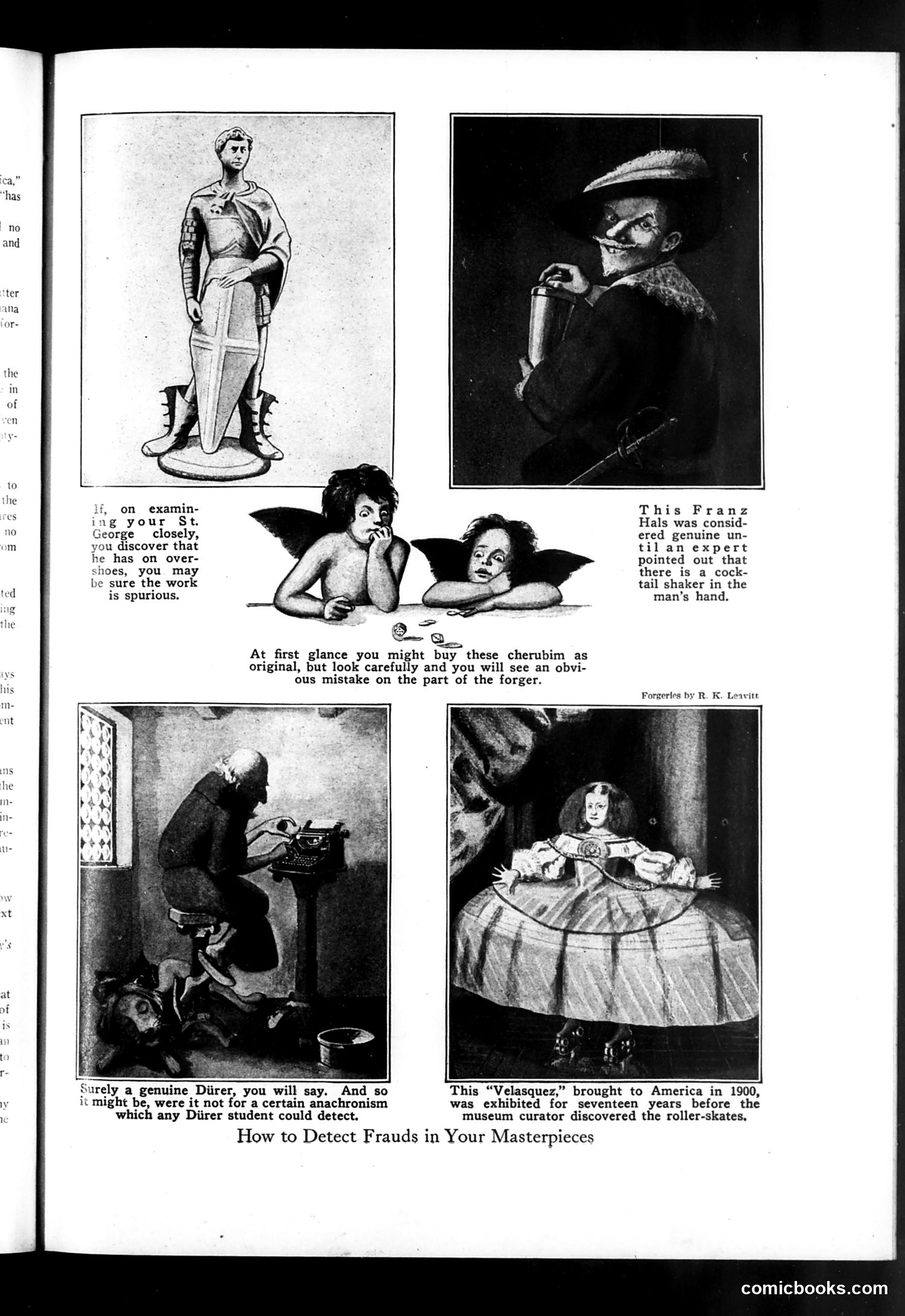
This page presents satirical illustrations about art forgery detection. The top image shows a classical statue of Saint George; the accompanying text advises examining such works closely, as counterfeit shoes might indicate forgery. The cherub illustration warns that forged Renaissance-style angels contain obvious mistakes visible to careful observers. A lower image depicts someone hunched over a typewriter (labeled as "Surely a Dürer, they will say"), satirizing how forgers might use anachronistic tools—a typewriter wouldn't exist in Dürer's era (15th-16th century)—yet might still deceive casual buyers. The "Velasquez" portrait shows a child with a doll, revealed as a 1900 American forgery after seventeen years of exhibition. The satire targets wealthy collectors' gullibility regarding artwork authenticity.
📄 Transcribed text from this page (OCR, searchable)
Machine-transcribed from the original scan — historical spelling and the odd misread are preserved.
if, on examin- ing your St. George closely, you discover that he has on over- shoes, you may be sure the work is spurious. —— At first glance you might buy these cherubim as original, but look carefully and you will see an obvi- ous mistake on the part of the forger. This Franz Hals was consid- ered genuine un- tilan expert pointed out that there is a cock- tail shaker in the man’s hand. Forgerles by R. K. Leav itt Surely a genuine Diirer, you will say. And so This “Velasquez,” brought to America in 1900, it might be, were it not for a certain anachronism which any Diirer student could detect. How to Detect Frauds in Your Masterpieces was exhibited for seventeen years before the museum curator discovered the roller-skates, comicbooks.com