
Life, 1923-03-15 · page 36 of 36
Life — March 15, 1923 — page 36: what you’re looking at
What you’re looking at
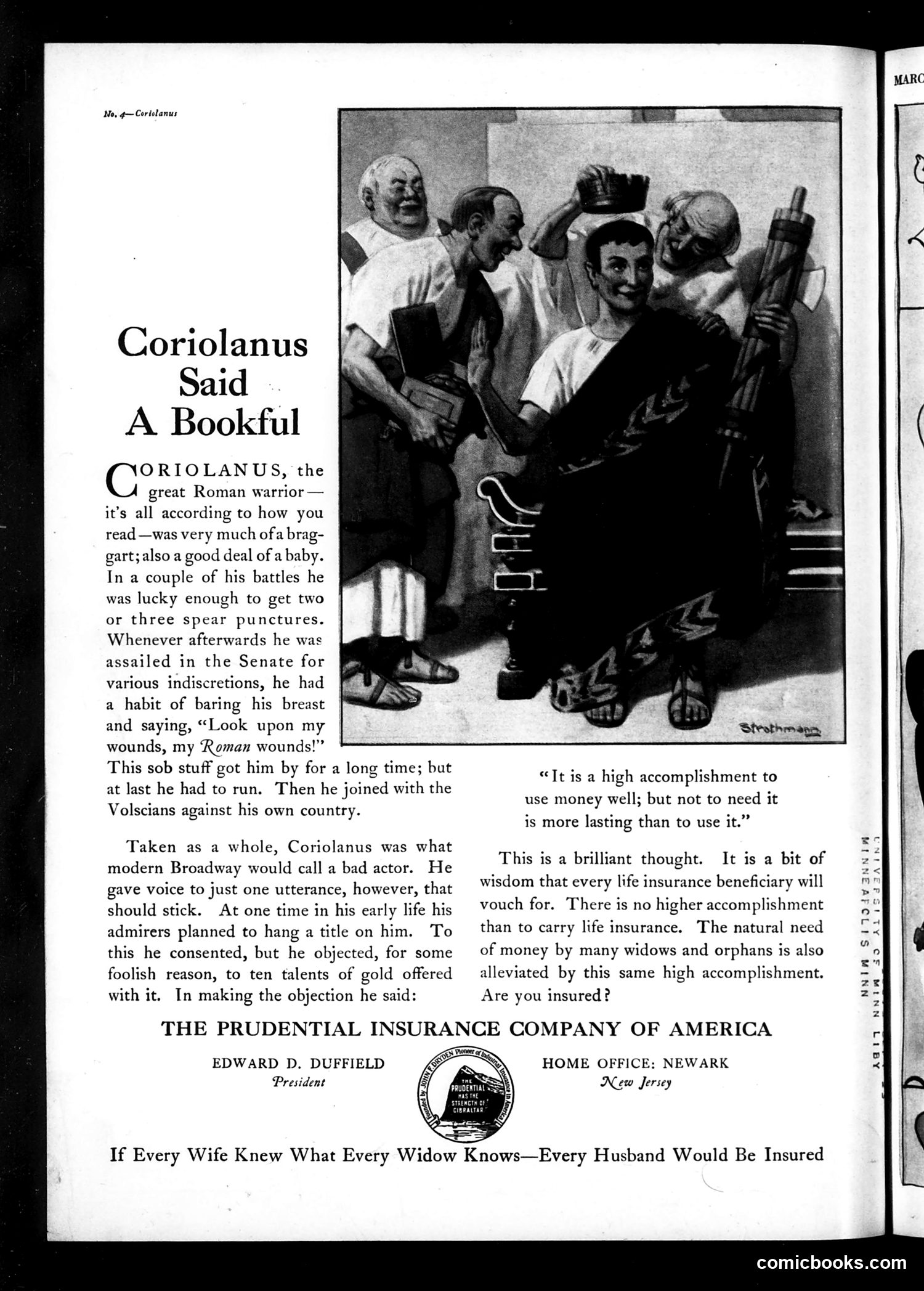
This is a Life magazine advertisement disguised as literary satire. The piece mocks the Roman general Coriolanus (from Shakespeare's play) as a self-pitying braggart who constantly displayed his war wounds to escape political accountability—then betrayed Rome itself when criticized. The satire's point: Coriolanus represents someone who talks endlessly about past accomplishments while avoiding real responsibility. The punchline pivots to life insurance. The text quotes Coriolanus rejecting payment (refusing ten talents of gold), reframing this as wisdom about financial independence. The ad then co-opts this to argue that *carrying* life insurance—not avoiding it—is the true accomplishment, because it protects widows and orphans. The closing tagline drives home the message: husbands should insure themselves so their wives understand insurance's necessity. It's clever advertising that uses classical literature and moral philosophy to sell Prudential Insurance through emotional appeal and gentle social pressure.
📄 Transcribed text from this page (OCR, searchable)
Machine-transcribed from the original scan — historical spelling and the odd misread are preserved.
No, g—Coriolanus Coriolanus Said A Bookful ORIOLANUS, the great Roman warrior — it’s all according to how you read —was very much ofa brag- gart; also a good deal of a baby. In a couple of his battles he was lucky enough to get two | or three spear punctures. Whenever afterwards he was assailed in the Senate for various indiscretions, he had a habit of baring his breast and saying, “Look upon my wounds, my ‘Roman wounds!” This sob stuff got him by for a long time; but at last he had to run. Then he joined with the Volscians against his own country. Taken as a whole, Coriolanus was what modern Broadway would call a bad actor. He gave voice to just one utterance, however, that should stick. At one time in his early life his admirers planned to hang a title on him. To this he consented, but he objected, for some foolish reason, to ten talents of gold offered with it. In making the objection he said: “Tt is a high accomplishment to use money well; but not to need it is more lasting than to use it.” This is a brilliant thought. It is a bit of wisdom that every life insurance beneficiary will vouch for. There is no higher accomplishment than to carry life insurance. The natural need of money by many widows and orphans is also alleviated by this same high accomplishment. Are you insured ? THE PRUDENTIAL INSURANCE COMPANY OF AMERICA EDWARD D. DUFFIELD President HOME OFFICE: NEWARK New Jersey If Every Wife Knew What Every Widow Knows—Every Husband Would Be Insured comicbooks.com NNIn S179 AGI NNIW 35 A145