
Life, 1922-03-30 · page 6 of 34
Life — March 30, 1922 — page 6: what you’re looking at
What you’re looking at
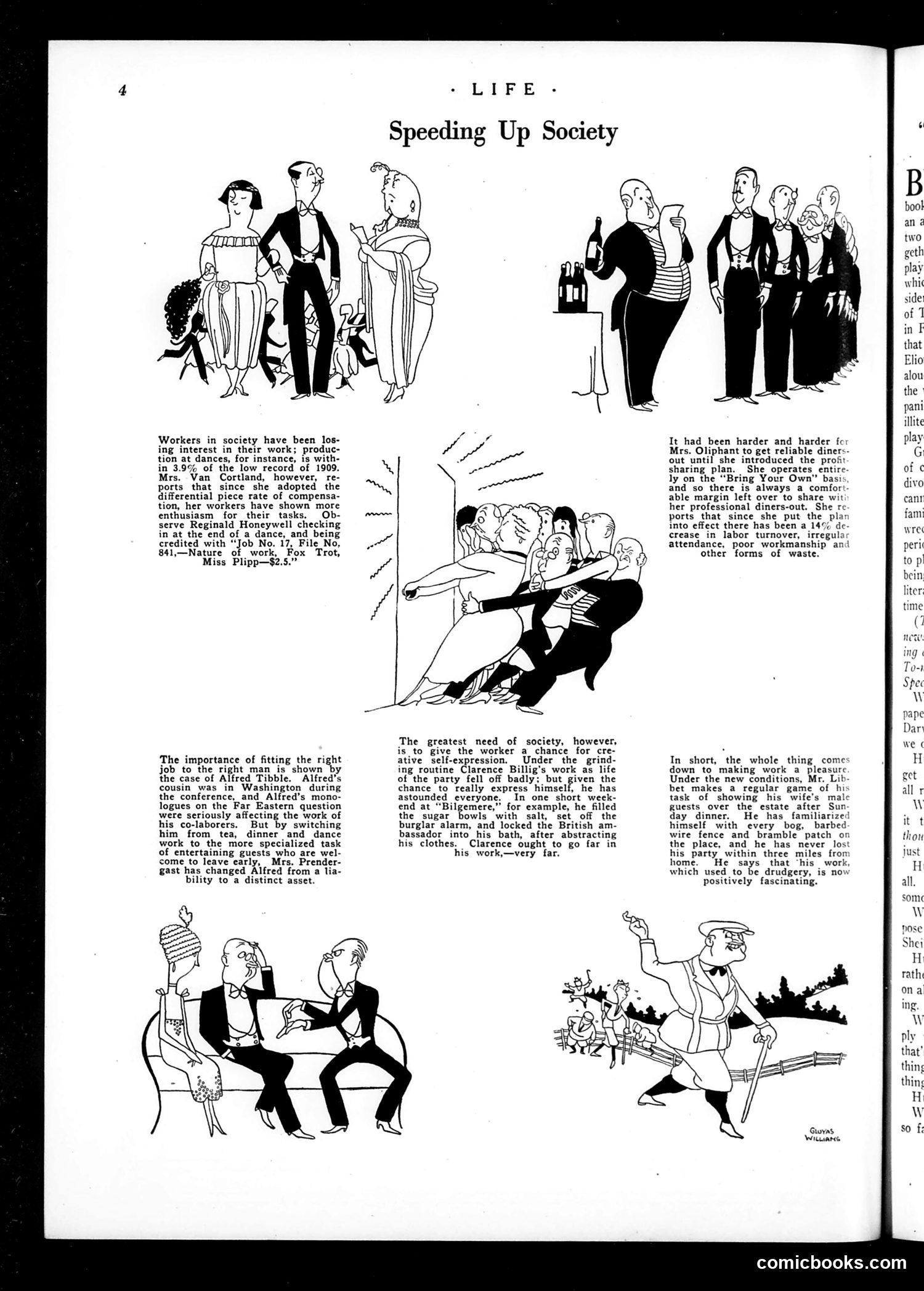
This page satirizes early-20th-century efforts to rationalize work and increase productivity. The text references Mrs. Van Cortland implementing "differential piece compensation" to boost worker enthusiasm at dances and entertainments. The cartoons mock this obsession with efficiency. One illustration shows a man literally "stretching" his dinner companions—visually exaggerating the metaphorical idea of "speeding up" social interaction. Another depicts a man energetically conducting a dinner party like an orchestra, suggesting hosts now treat social gatherings as productivity exercises rather than leisure. The underlying satire targets the era's "scientific management" movements (like Taylorism), which attempted to optimize every aspect of life—including recreation and socializing—for maximum efficiency. The magazine mocks how this mechanized thinking had invaded even intimate, personal social spaces.
📄 Transcribed text from this page (OCR, searchable)
Machine-transcribed from the original scan — historical spelling and the odd misread are preserved.
Workers in society have been los- ing interest in their work; produ tion at dances, for instance, is with- in 3.9% of the low record of 1909. Mrs. Van Cortland, however, re- ports that since she adopted the differential piece rate of compensa- tion, her workers have shown more enthusiasm for their tasks. Ob- serve Reginald Honeywell checking in at the end of a dance, and being credited with “Job No. 17, File No, 841,—Nature of work, Fox Trot, Miss Plipp—$2.5.” ‘The importance of fitting the right job to the right man is shown by the case of Alfred Tibble. Alfred’s cousin was in Washington during the conference, and Alfred’s mono- logues on the Far Eastern question were seriously affecting the work of his co-laborers. But by switching him from tea, dinner and dance work to the more specialized task of entertaining guests who are wel- come to leave early, Mrs. Prender- gast has changed Alfred from a lia- bility to a distinct asset. - LIFE - Speeding Up Society The greatest need of society, however, is to give the worker a chance for cre- ative self-expression. Under the grind- ing routine Clarence Billig’s work as life of the party fell off badly: but given the chance to really express himself, he has astounded everyone, In one short week- end at “Bilgemere,” for example, he filled the sugar bowls with salt, set off the burglar alarm, and locked the British am- bassador into his bath, after abstracting his clothes. Clarence ought to go far in his work,—very far. It had been harder and harder fc Mrs. Oliphant to get reliable diners- out until she introduced the pros sharing plan. She operates, entire- ly on the “Bring Your Own” basi and so there is always a comfort able margin left over to share wit her professional diners-out. She r ports that since she put the into effect there has been a 14% de- crease in labor turnover, irregula attendance, poor workmanship. and other forms of waste. In short, the whole thing come down to’ making work a pleasure Under the new conditions, Mr. Lit bet makes a regular game of his task of showing his wife's malc guests over the estate after Sun day dinner. He has familiarized himself with every bog, barbed wire fence and bramble patch on the place, and he has never lost his party within three miles from home. He says that “his work, which used to be drudgery, is now positively fascinating. Gwoyas Wikians, pla: whic side of 1 in F that Elio alou the ’ pani illite play G of ¢ divo fami wre peric to pl bein; liter: rath ona comicbooks.com