
Life, 1922-02-09 · page 7 of 34
Life — February 9, 1922 — page 7: what you’re looking at
What you’re looking at
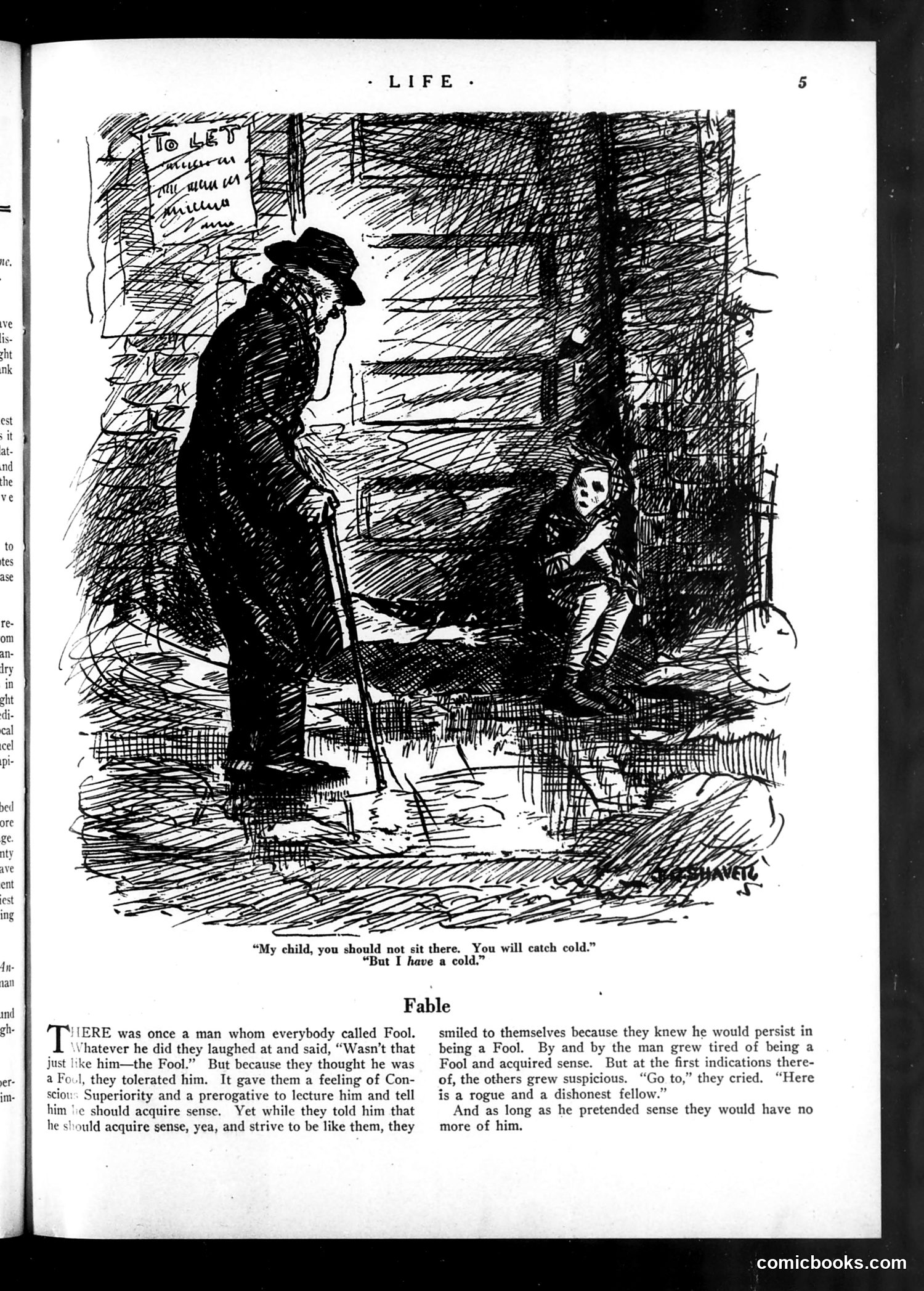
This page contains an illustration and a short fable. The sketch shows an adult and child at a doorway with a "TO LET" sign, depicting the caption's exchange: "My child, you should not sit there. You will catch cold." / "But I love a cold." The accompanying fable explains the satirical point: a man everyone called "Fool" was tolerated by his community because they believed their mockery would teach him sense. However, he grew comfortable with his foolish status and acquired a dishonest character. When the community finally rejected him as "a rogue and a dishonest fellow," it was too late—he'd internalized their low expectations. This is moral satire about how society enables dysfunction through enabling toleration, and how people can become what others assume them to be.
📄 Transcribed text from this page (OCR, searchable)
Machine-transcribed from the original scan — historical spelling and the odd misread are preserved.
——. as ae SE “My child, you should not sit there. You will catch cold.” “But I have a cold.” Fable “le \ERE was once a man whom everybody called Fool. Vhatever he did they laughed at and said, “Wasn’t that just like him—the Fool.” But because they thought he was a Foul, they tolerated him. It gave them a feeling of Con- scious Superiority and a prerogative to lecture him and tell him ‘ie should acquire sense. Yet while they told him that he should acquire sense, yea, and strive to be like them, they smiled to themselves because they knew he would persist in being a Fool. By and by the man grew tired of being a Fool and acquired sense. But at the first indications there- of, the others grew suspicious. “Go to,” they cried. “Here is a rogue and a dishonest fellow.” And as long as he pretended sense they would have no more of him. comicbooks.com