
Life, 1922-01-26 · page 7 of 34
Life — January 26, 1922 — page 7: what you’re looking at
What you’re looking at
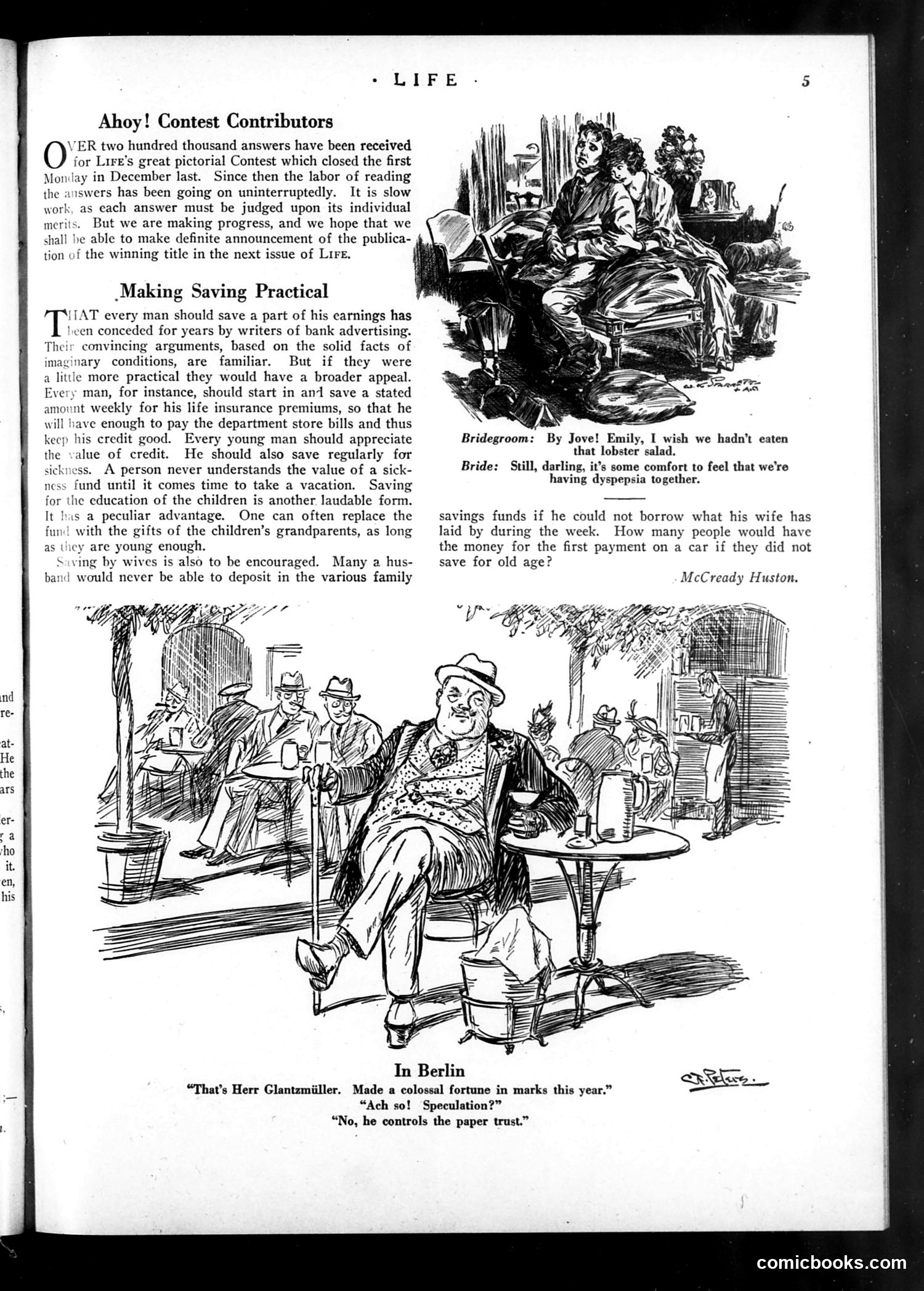
This cartoon satirizes **Herr Glanztmiller**, a Berlin financier who made enormous profits (in marks) through speculation. The joke's setup suggests he profited through shrewd market speculation, but the punchline reveals the real source: he "controls the paper trust"—meaning he monopolizes paper production. The satire targets **monopolistic business practices** and suggests that wealth accumulation isn't always based on legitimate market skill but rather on controlling essential commodities (paper). The cartoon implies that Glanztmiller's fortune comes from controlling supply rather than fair competition. This reflects 1920s-era concerns about **economic trusts and monopolies**, particularly relevant during post-WWI inflation in Germany, when speculation and commodity control created vast fortunes amid economic instability.
📄 Transcribed text from this page (OCR, searchable)
Machine-transcribed from the original scan — historical spelling and the odd misread are preserved.
- LIFE Ahoy! Contest Contributors \'ER two hundred thousand answers have been received O ior Lire's great pictorial Contest which closed the first Monday in December last. Since then the labor of reading the answers has been going on uninterruptedly. It is slow work, as each answer must be judged upon its individual mer But we are making progress, and we hope that we shall | tion of the winning title in the next issue of LiFe. .Making Saving Practical T IAT every man should save a part of his earnings has leen conceded for years by writers of bank advertising. Their convincing arguments, based on the solid facts of imaginary conditions, are familiar. But if they were le more practical they would have a broader appeal. man, for instance, should start in and save a stated nt weekly for his life insurance premiums, so that he ave enough to pay the department store bills and thus his credit good. Every young man should appreciate alue of credit. He should also save regularly for ess. A person never understands the value of a sick- s fund until it comes time to take a vacation. Saving the education of the children is another laudable form. has a peculiar advantage. One can often replace the with the gifts of the children’s grandparents, as long ey are young enough. ving by wives is also to be encouraged. Many a hus- | would never be able to deposit in the various family able to make definite announcement of the publica- j Bridegroom: By Jove! Emily, I wish we hadn't eaten that lobster salad. Bride: Still, darling, it’s some comfort to feel that we're having dyspepsia together. savings funds if he could not borrow what his wife has laid by during the week. How many people would have the money for the first payment on a car if they did not save for old age? McCready Huston. In Berlin “That’s Herr Glantzmiiller. Made a colossal fortune in marks this year.” “Ach so! Speculation?” “No, he controls the paper trust.” comicbooks.com