
Life, 1921-09-08 · page 15 of 36
Life — September 8, 1921 — page 15: what you’re looking at
What you’re looking at
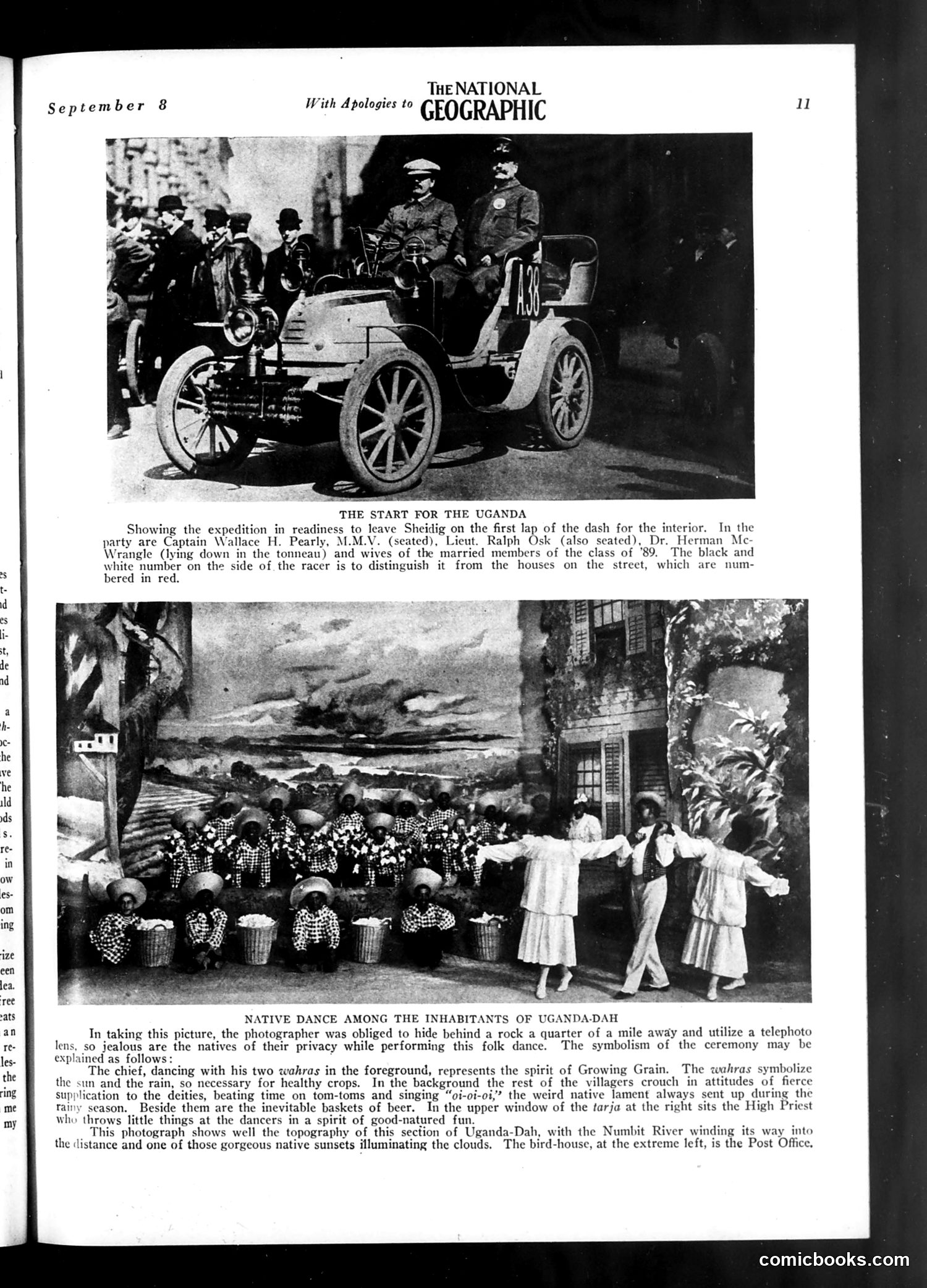
This is **not a political cartoon** but rather a **travel/expedition documentary** from *National Geographic* (the masthead reads "With Apologies to The National Geographic"). The page shows two photographs: 1. **Top image**: "The Start for the Uganda" — an early automobile expedition departing Shelby with passengers including Captain Wallace H. Pearly and Lieutenant Ralph Osk, among others. 2. **Bottom image**: "Native Dance Among the Inhabitants of Uganda-dah" — depicts local people performing a traditional dance, with anthropological notes explaining the symbolism (growing grain, sun, rain, etc.). The "apologies" in the header suggests this is satirizing *National Geographic's* earnest ethnographic documentation style, though the actual content appears straightforward rather than satirical.
📄 Transcribed text from this page (OCR, searchable)
Machine-transcribed from the original scan — historical spelling and the odd misread are preserved.
THE NATIONAL Septem ber 8 With Apologies to GEOGRAPHIC THE START FOR THE UGANDA Showing the expedition in readiness to leave Sheidig on the first lap of the dash for the interior. In_the party are Captain Wallace H. Pearly, M.M.V. (seated), Lieut. Ralph Osk (also seated), Dr. Herman Mc- Wrangle (lying down in the tonneau) and wives of the married members of the class of ‘89. The black and 5 white number on the side of the racer is to distinguish it from the houses on the street, which are num- 3 bered in red. i- NATIVE DANCE AMONG THE INHABITANTS OF UGANDA-DAH an In taking this picture, the photographer was obliged to hide behind a rock a quarter of a mile away and utilize a telephoto re- lens, so jealous are the natives of their privacy while performing this folk dance. The symbolism of the ceremony may be les- explained as follows: | . . . . . the The chief, dancing with his two wahras in the foreground, represents the spirit of Growing Grain. The wahras symbolize the sun and the rain, so necessary for healthy crops. In the background the rest of the villagers crouch in attitudes of fierce supplication to the deities, beating time on tom-toms and singing “oi-oi-oi,’ the weird native lament always sent up during the me rainy season. Beside them are the inevitable baskets of beer. In the upper window of the farja at the right sits the High Priest my who throws little things at the dancers in a spirit of good-natured fun. ” _ This photograph’ shows well the topography of this section of Uganda-Dah, with the Numbit River winding its way into the distance and one of those gorgeous native sunsets illuminating the clouds. The bird-house, at the extreme left, is the Post Office, comicbooks.com