
Life, 1921-07-28 · page 11 of 34
Life — July 28, 1921 — page 11: what you’re looking at
What you’re looking at
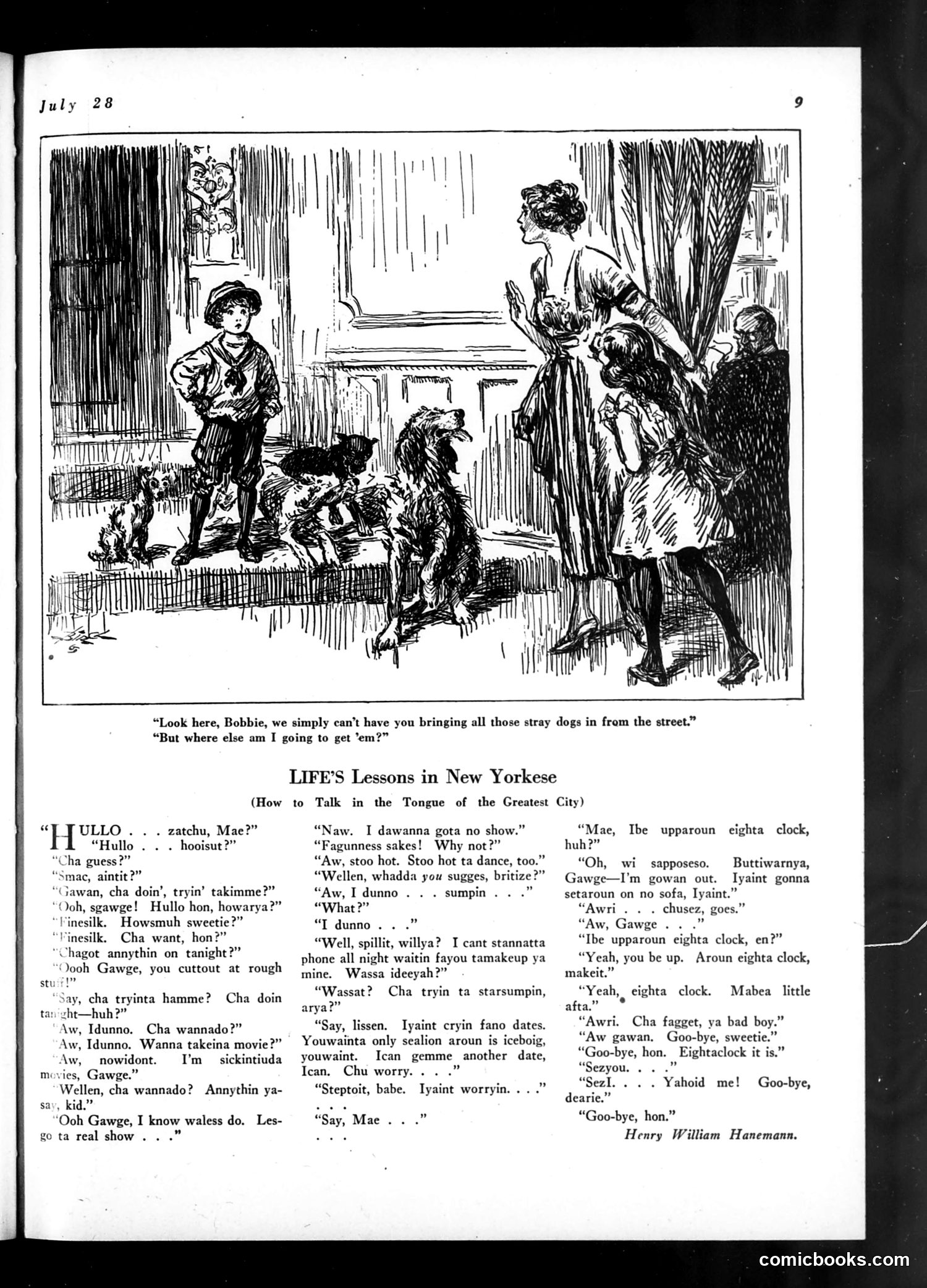
This page from *Life* magazine features a cartoon and linguistic humor piece titled "Life's Lessons in New Yorkese (How to Talk in the Tongue of the Greatest City)." The cartoon depicts a domestic scene where a boy named Bobbie has brought stray dogs into the house. An adult woman (likely his mother) protests: "Look here, Bobbie, we simply can't have you bringing all those stray dogs in from the street." Bobbie responds: "But where else am I going to get 'em?" The satire mocks both parental exasperation at children's logic and, more broadly, New York City street life—suggesting strays are plentiful in urban areas. The accompanying text is comedic linguistic commentary translating exaggerated New York working-class and immigrant-influenced dialect into standard English, satirizing how distinctive New York speech patterns appeared to outsiders.
📄 Transcribed text from this page (OCR, searchable)
Machine-transcribed from the original scan — historical spelling and the odd misread are preserved.
\ \ i Hit i “Look here, Bobbie, we simply can’t have you bringing all those stray dogs in from the street.” “But where else am I going to get ’em?” LIFE’S Lessons in New Yorkese (How to Talk in the Tongue of the Greatest City) “Smac, aintit?” “Gawan, cha doin’, tryin’ takimme?” “Ooh, sgawge! Hullo hon, howarya?” *Vinesilk. Howsmuh sweetie?” ULLO . ... zatchu, Mae?” “Hullo . . . hooisut?” Cha guess?” Vinesilk. Cha want, hon?” “Chagot annythin on tanight?” Oooh Gawge, you cuttout at rough Say, cha tryinta hamme? Cha doin zht—huh?” Aw, Idunno. Cha wannado?” Aw, Idunno. Wanna takeina movie?” Aw, nowidont. I’m _ sickintiuda ovies, Gawge.” Wellen, cha wannado? Annythin ya- , kid.” ‘Ooh Gawge, I know waless do. ta real show . . .” Les- “Naw. I dawanna gota no show.” “Fagunness sakes! Why not?” “Aw, stoo hot. Stoo hot ta dance, too.” “Wellen, whadda you sugges, britize?” “Aw, I dunno . . . sumpin . . .” “What?” “T dunno... “Well, spillit, willya? I cant stannatta phone all night waitin fayou tamakeup ya mine. Wassa ideeyah?” “Wassat? Cha tryin ta starsumpin, arya?” “Say, lissen. Iyaint cryin fano dates. Youwainta only sealion aroun is iceboig, youwaint. Ican gemme another date, Ican. Chu worry... .” “Steptoit, babe. Iyaint worryin. . . . ” “Say, Mae. . . “Mae, Ibe upparoun eighta clock, huh?” “Oh, wi sapposeso. Buttiwarnya, Gawge—I’m gowan out. Iyaint gonna setaroun on no sofa, Iyaint.” “Awri . . . chusez, goes.” “Aw, Gawge . . .” “Ibe upparoun cighta clock, en?” “Yeah, you be up. Aroun eighta clock, makeit.” “Yeah, eighta clock. Mabea little afta.” “Awri. Cha fagget, ya bad boy.” “Aw gawan, Goo-bye, sweetie.” “Goo-bye, hon. Eightaclock it is.” “Sezyou. . . .” “SezI. . . . Yahoid me! Goo-bye, dearie.” “Goo-bye, hon.” Henry William Hanemann. comicbooks.com